Virtual asset tax delay fuels policy credibility concerns
Real estate tax revisions possible during Assembly review
Economic chief's policy identity and resolve put to the test
"We haven't even properly gotten started, and already there's talk of one retreat after another. What worries me even more is that there are still plenty more reversals to come."
The government's decision to delay taxation of virtual asset income by another two years has set off alarm bells in official circles over a string of about-faces on tax policy. Coming after revisions to real estate tax measures and an ISA overhaul plan, the latest postponement of the virtual asset levy has drawn criticism that policy consistency and predictability are eroding.
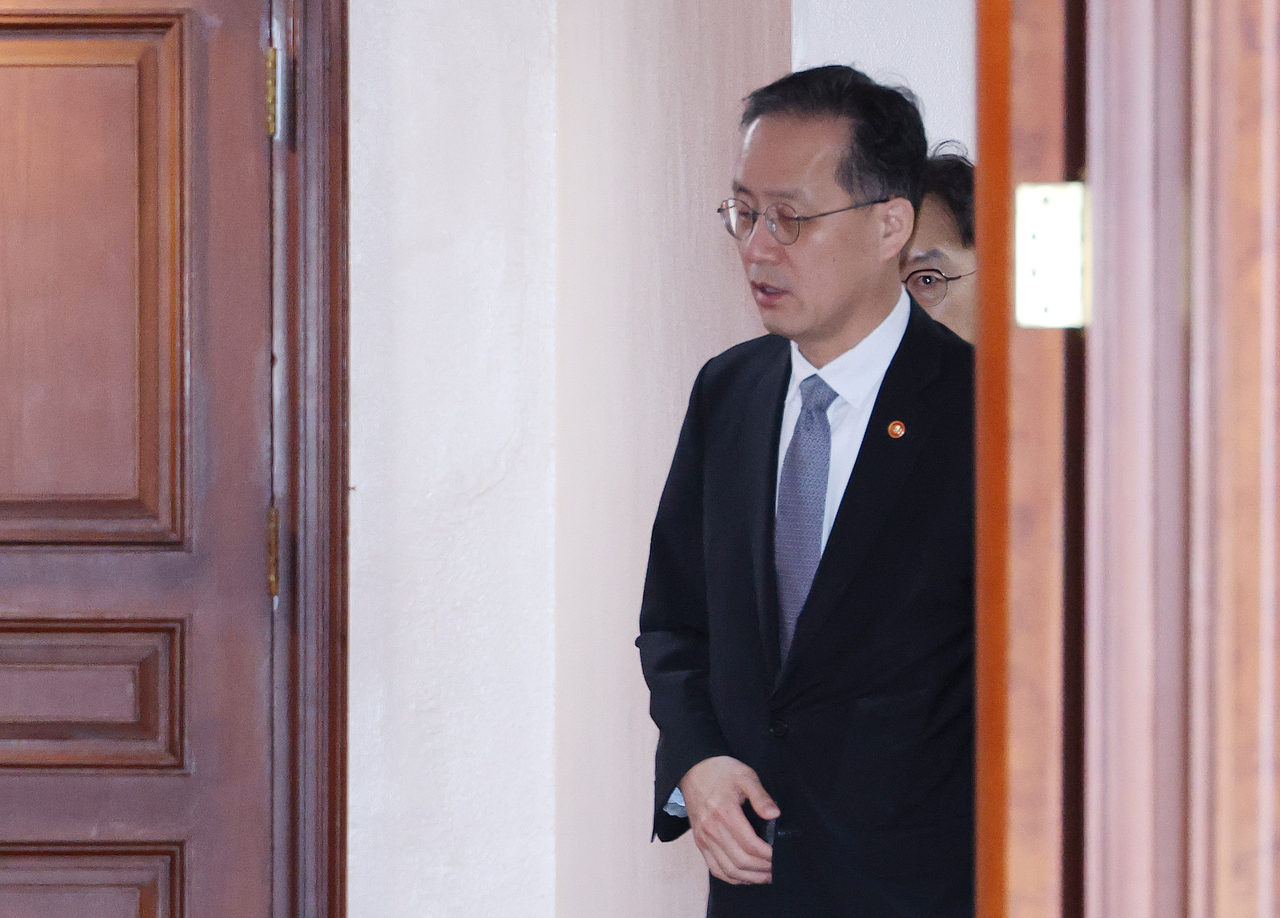
Deputy Prime Minister and Minister of Economy and Finance Lee Hyung-il, who took office in September, has been caught up in a succession of policy-reversal controversies before he has had a chance to put his own stamp on economic policy — a situation observers say is weighing on his credibility as the country's top economic steward.
The government officially announced Thursday that it would push back the virtual asset income tax — originally set to take effect in January next year — to 2029, a two-year delay. It is the fourth time the levy, first scheduled for introduction in 2022, has been postponed.
The government cited the need to secure overseas transaction data and to revamp the regulatory framework in line with forthcoming digital asset legislation. But the reversal, coming just two months before the tax was due to take effect, sparked a fresh debate over policy credibility — particularly given the government's repeated insistence on the principle that income should be taxed wherever it arises.
This is not the first time the current government has reversed course on tax policy.
In a tax law revision package announced in August, the government had planned to reduce the basic deduction for the comprehensive real estate tax on non-resident single-homeowners from the current 1.2 billion won ($894,000) to 900 million won. The idea was to raise the deduction for owner-occupiers to 1.4 billion won while cutting it for non-residents, building a tax system centered on actual residence.
Resistance from parts of the ruling party and the market — on the grounds that taxing people differently based on residency was unfair — intensified, and just 29 days after the announcement the government reversed course, keeping the non-resident deduction at the current 1.2 billion won. A plan to raise the cap on the comprehensive real estate tax burden from 150 percent to 200 percent was also scrapped.
The government also walked back plans to limit ISA contract periods and ban the carryover of unused contribution limits. A heavy capital gains tax surcharge on multi-homeowners, which had been suspended for four years before being reinstated in May, was again temporarily eased less than three months later.
Earlier, last year, a plan to lower the threshold for defining a major shareholder subject to stock capital gains tax — from 5 billion won to 1 billion won — was withdrawn 46 days after it was announced.
All of those decisions were made before Lee took office. Even so, observers say the continued policy reversals since he moved from his previous role as first vice minister of the Ministry of Economy and Finance to the top economic post represent a significant burden.
A further reversal is also being discussed in connection with the domestic production tax credit. The government had initially maintained that the electric vehicle industry would benefit indirectly from the credit, since batteries and other components used in EVs were already covered. But with industry groups and the National Assembly pressing for finished electric vehicles to be included as well, the government is now reviewing supplementary measures.
Additional revisions to the government's tax bill are also possible during the Assembly's review process. Concerns have been raised over the potential side effects of raising the comprehensive real estate tax rate and restructuring the long-term holding deduction around residency. The extent of any changes will depend on how the Assembly deliberations unfold.
In official circles, there is growing concern that this pattern of reversals could undermine Lee's policy leadership.
Unlike his predecessor, who championed AI industry development as a signature policy agenda, Lee has yet to establish a clear policy identity since taking office — and the retreats keep coming.
Some observers acknowledge that incorporating the views of stakeholders and markets during tax reform is necessary, but warn that repeatedly changing direction shortly after a policy announcement risks sapping the government's ability to drive future initiatives. There are also concerns that if Lee fails to break the cycle of tax policy revisions that predates his tenure, questions about the economic team's capacity to manage policy will only deepen.
"The bigger problem is not the revisions themselves but the fact that the principles and direction originally set out keep changing," a government official said. "What will matter going forward is how firmly Lee can hold the center as the country's top economic steward."

y2k@heraldcorp.com