Average deposit per 3.3 sq. m. rises in 18 of Seoul's 25 districts
Dongdaemun-gu up 25.18%, Jung-gu 17.66%, Mapo-gu 13.76%
Apartment shortage drives demand into villa market
Experts call for faster supply of non-apartment housing
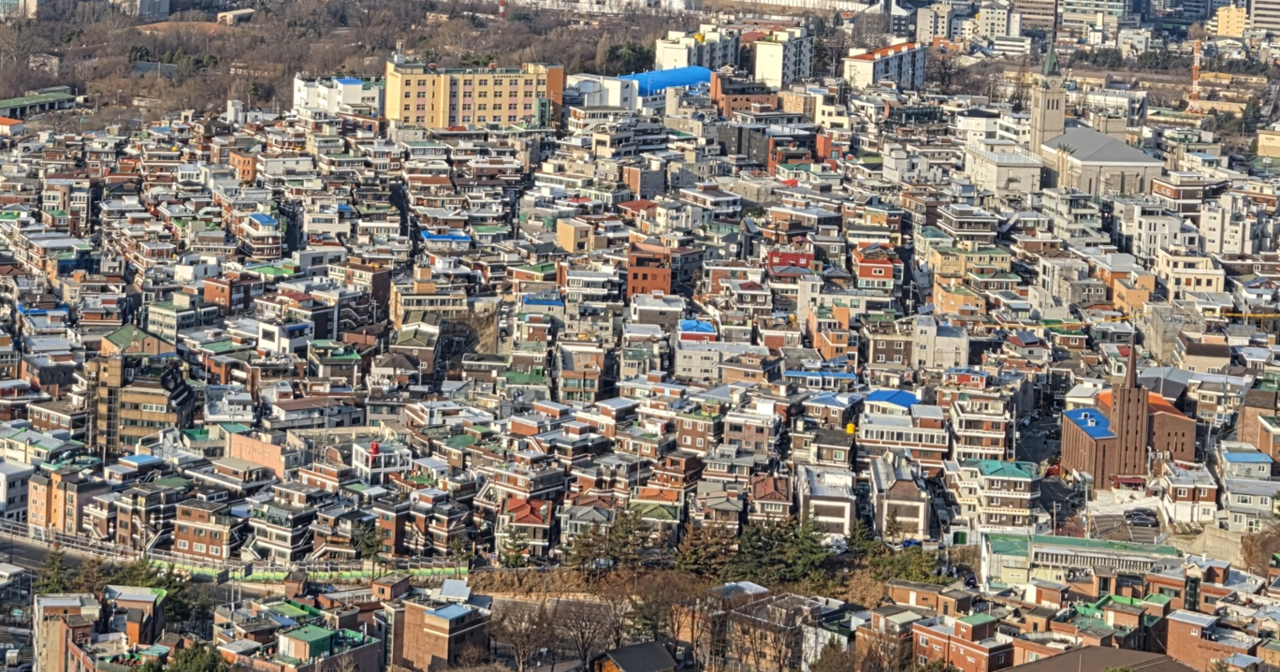
As Seoul's apartment jeonse shortage drags on, supply-demand imbalances are spreading to the relatively more affordable row house and multi-family home market, pushing jeonse deposits sharply higher. In Dongdaemun-gu, new jeonse deposits jumped more than 25 percent in a single year.
An analysis of average jeonse deposits per 3.3 square meters for new contracts on Seoul row houses and multi-family homes, commissioned from real estate big data firm Budongsan Planet, found that the figure reached 22.1 million won ($16,500) in August — up 4.05 percent from 21.24 million won in January.
The year-on-year comparison makes the upward trend even more striking. In January last year, the per-3.3-square-meter deposit stood at around 20.94 million won, but by August of that year it had edged down to 20.61 million won.
On a month-by-month basis, the average deposit of 21.24 million won in January dipped slightly in February before turning upward from March. From June through August, it held in the 22 million won range. The August figure was 7.19 percent above the same month last year, when the deposit stood at 20.61 million won.
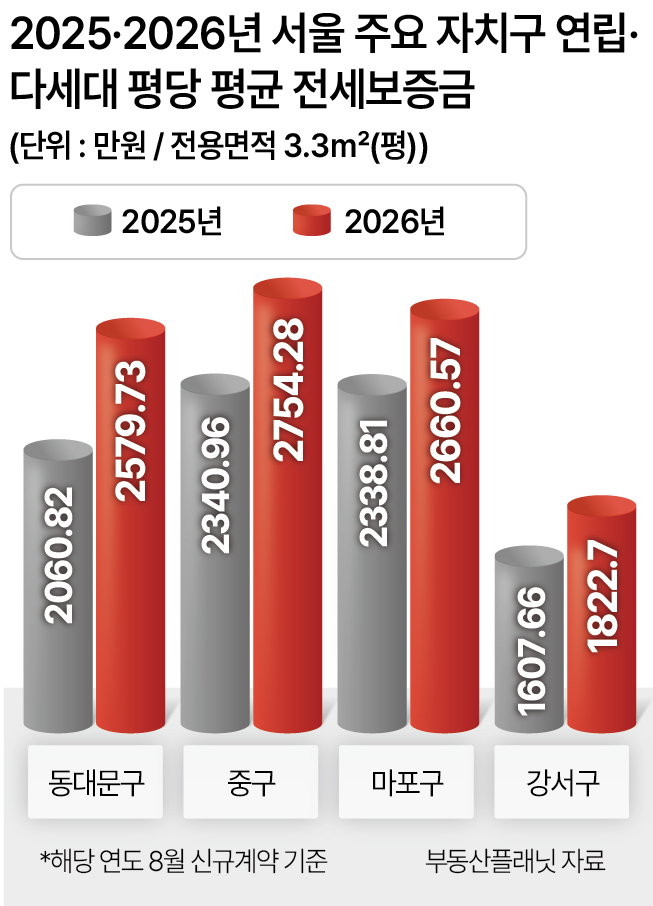
Among individual districts, Dongdaemun-gu stood out. In August, 18 of Seoul's 25 districts recorded higher average per-3.3-square-meter deposits for new villa jeonse contracts than a year earlier. Dongdaemun-gu's deposit rose from 20.61 million won in August last year to 25.8 million won this August — a jump of 25.18 percent, or roughly 5.19 million won per 3.3 square meters. For a unit with an exclusive use area of 40 square meters, that translates to a deposit difference of roughly 62.9 million won.
Double-digit increases were recorded elsewhere as well. Jung-gu climbed 17.66 percent, from 23.41 million won in August last year to 27.54 million won this year. Over the same period, Mapo-gu rose from 23.39 million won to 26.61 million won (13.76 percent), and Gangseo-gu climbed from 16.08 million won to 18.23 million won (13.38 percent). Seongbuk-gu (12.03 percent), Gangdong-gu (11.46 percent) and Gangbuk-gu (11.00 percent) also posted significant gains.
Analysts attribute the trend to tenants priced out of the apartment jeonse market turning to the cheaper non-apartment sector. That shift has in turn stoked demand for villa jeonse, deepening the imbalance across Seoul's broader rental market.
According to the Korea Real Estate Board, Seoul's apartment jeonse supply-demand index — which stood at 97.7, indicating a supply surplus, in January last year — climbed to 105.5 in January this year and surged to 127.5 in July before settling at 124.0 in September. Demand-side pressure has become equally pronounced in the non-apartment segment: the jeonse supply-demand index for Seoul row houses and multi-family homes rose from 96.9 in January last year to 103.6 in January this year, reaching 111.7 in September.
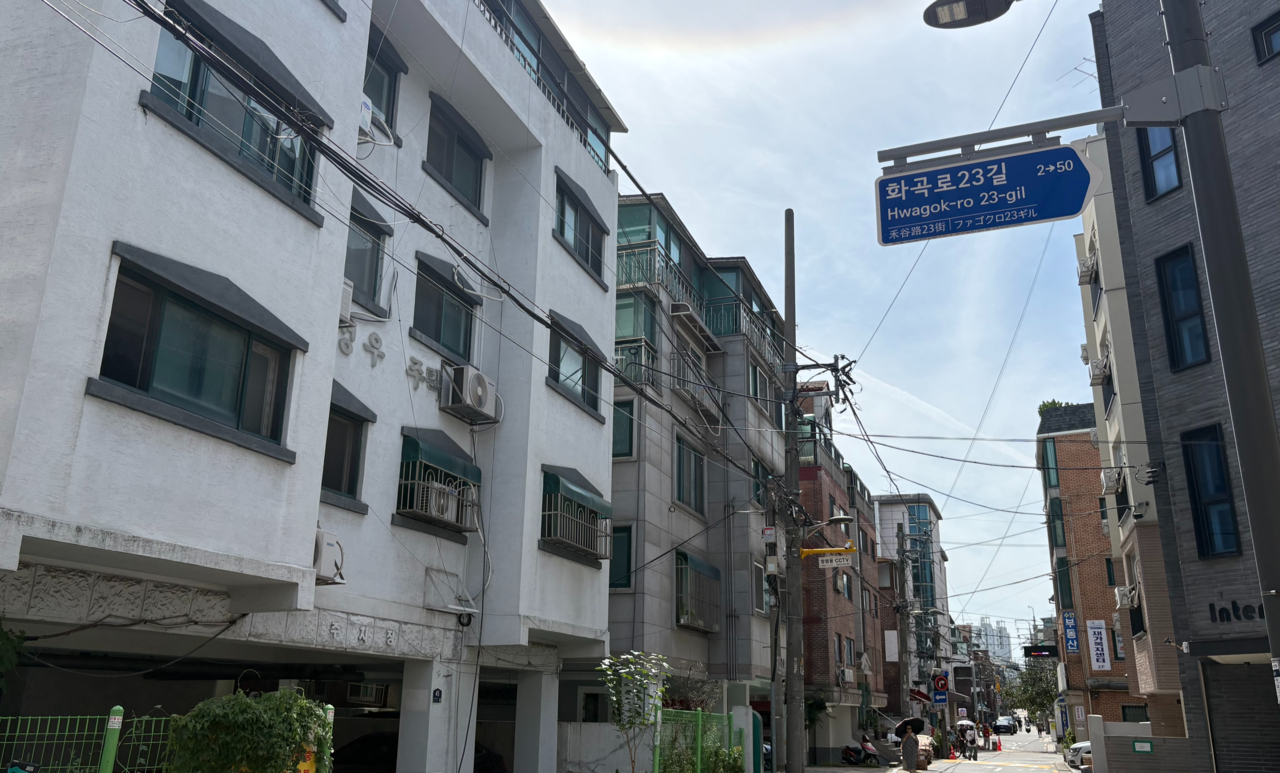
With jeonse prices rising across both the apartment and villa markets in Seoul, the housing cost burden on new tenants has grown. The Korea Real Estate Board's September national housing price survey showed that the cumulative increase in Seoul's row house jeonse price index for the January–September period this year reached 4.72 percent, far outpacing the national average of 1.83 percent.
The contrast within the broader metropolitan area is stark: Incheon's index fell 0.26 percent over the same period, while Gyeonggi Province rose just 1.14 percent. The pace of increase has also accelerated compared with the same period last year, when Seoul's cumulative gain was 0.99 percent.
Experts said a meaningful expansion of housing supply is essential. Seo Jeong-yeol, a real estate professor at Youngsan University, said tenants who previously avoided villas because of jeonse fraud are now being pushed into the non-apartment market by rising apartment prices. "Without new supply, the balloon effect will continue," Seo said.
Nam Hyeok-woo, a researcher at Woori Bank's real estate research institute, said that while permits and ground-breakings have been declining, the shorter construction cycle for non-apartment buildings means supply improvements can materialize relatively quickly. "Recent policy reforms aimed at expanding non-apartment supply are under way, and if those measures take effect as intended, conditions could improve from where they are now," Nam said.
shy@heraldcorp.com