Cultural Heritage Administration holds public demonstration of Mireuksa 639
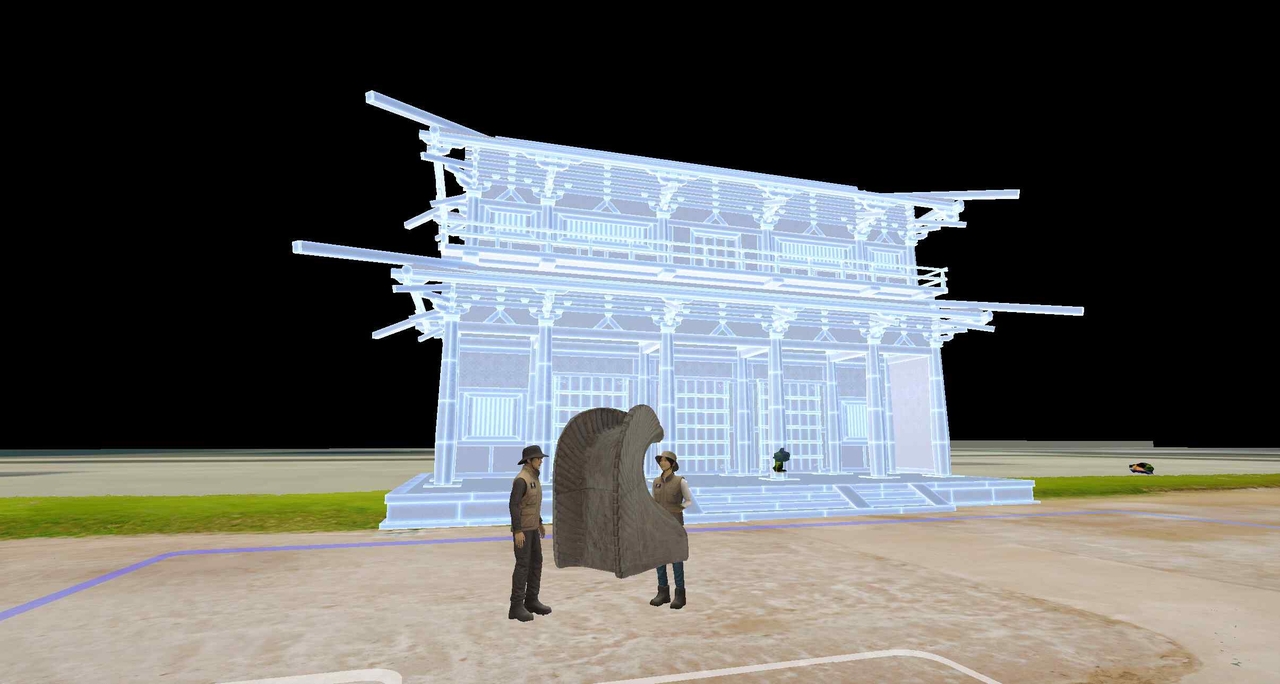
An extended reality experience that digitally reconstructs a Baekje-era Buddhist temple from 1,400 years ago at an outdoor heritage site is set to go public. The system overlays a restored wooden pagoda and central gate onto the ruins of Mireuksa, allowing visitors to walk through the site and explore the reconstruction firsthand. It is scheduled for an official rollout in the first half of next year.
The Cultural Heritage Administration and the National Research Institute of Cultural Heritage announced Friday that a public demonstration of the outdoor immersive extended reality content "Baekje's Aspiration — Mireuksa 639" will be held at the Mireuksa ruins in Iksan, North Jeolla Province, starting at 1 p.m. The year 639 refers to the date recorded in the relic-enshrinement inscription of the site's western stone pagoda.
"Baekje's Aspiration — Mireuksa 639" digitally reconstructs the wooden pagoda, central gate and corridors of the Mireuksa ruins, where only the foundations remain. The technology — applied for the first time in South Korea to an actual outdoor heritage site rather than an indoor setting — allows visitors to come face to face with Baekje architectural structures as they existed 1,400 years ago and explore them on foot.
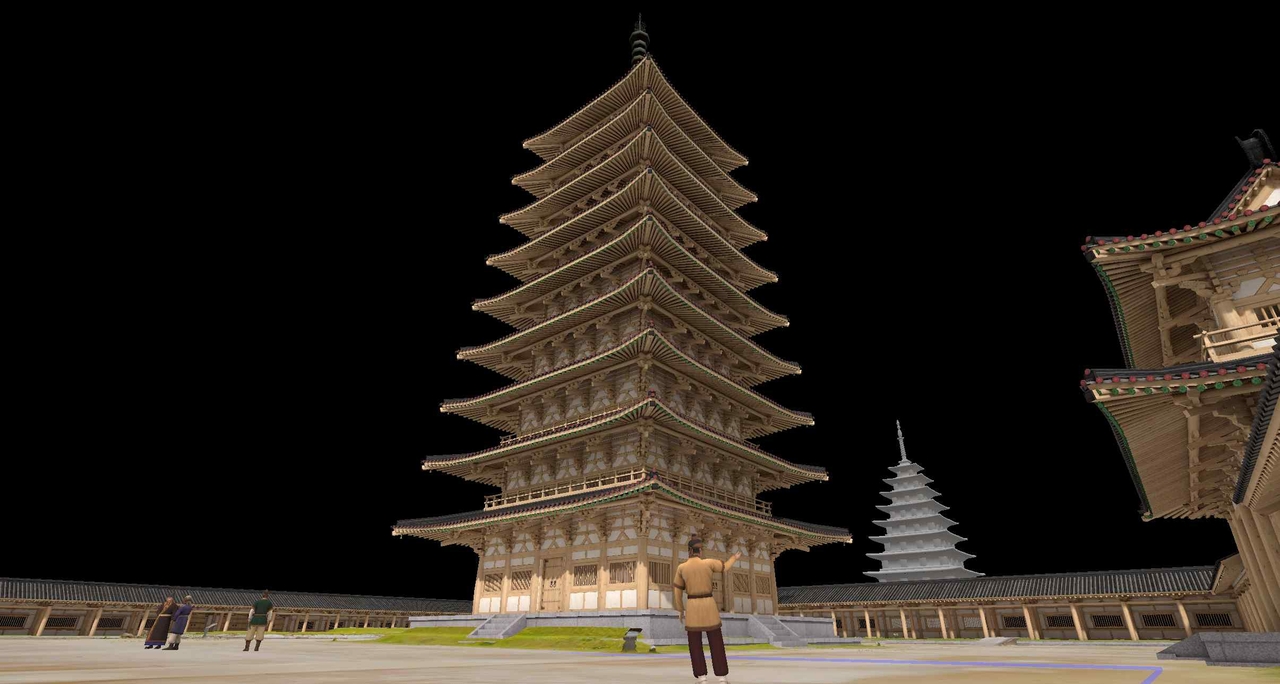
Wearing head-mounted displays, visitors can move through a space where the actual ruins and the reconstructed structures overlap, examining the nine-story wooden pagoda and the architectural features of Mireuksa from multiple angles.
The content incorporates restoration data based on excavated artifacts and historical research, reproducing those artifacts at life size and explaining the basis for each architectural reconstruction to help visitors understand what they are seeing. A satellite-based network synchronizes data across multiple devices, allowing groups of visitors to experience the content simultaneously.
To precisely align the ruins with their digital counterparts, the system uses virtual registration station technology that renders virtual structures at the exact location of the ruins and adjusts the display to each visitor's line of sight — without the need for external sensors. Passthrough-based technology lets visitors see the real ruins and the virtual structures at the same time, while real-time lighting and shadow changes are reflected so the digital buildings blend naturally into their surroundings.
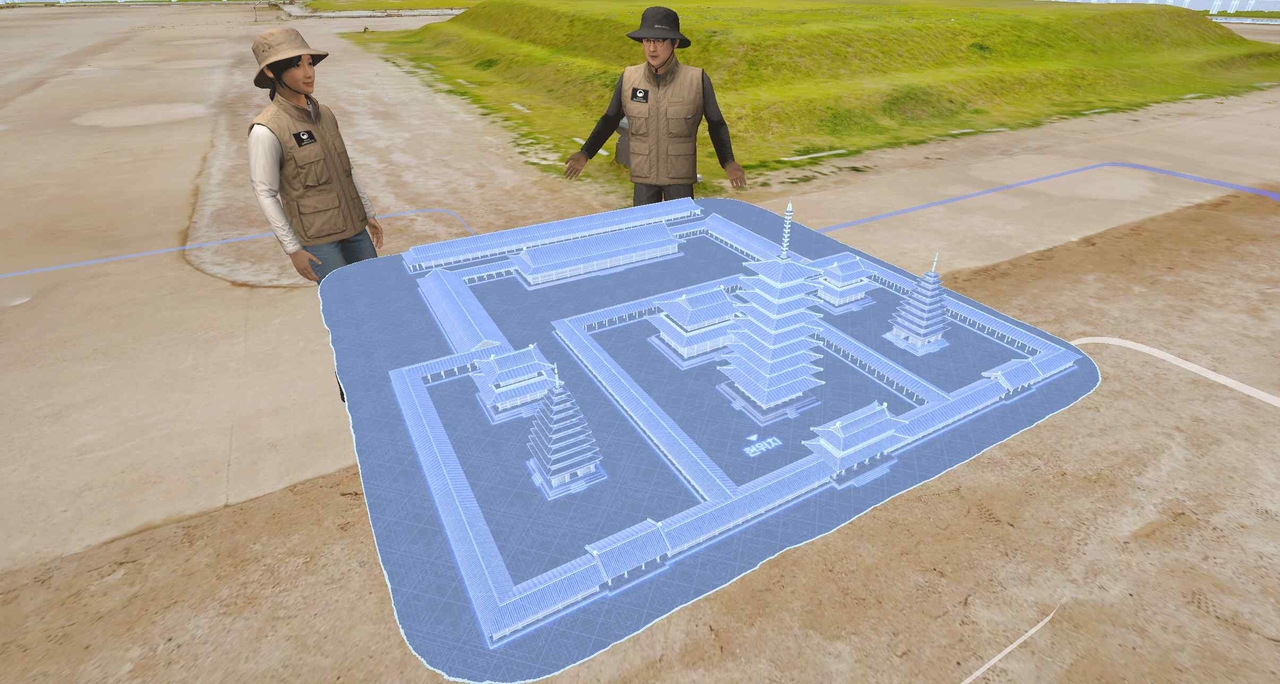
A guide character explains the structures and their historical significance while directing visitors through the site, making it possible to tour the ruins without a human docent. The system supports simultaneous access by multiple users, so groups can explore the reconstructed Mireuksa together in the same shared space.
The previous tablet-based experience introduced in 2024 required visitors to scan QR codes on a screen. The new system expands on that by letting device-wearing visitors walk directly through the site and view the ruins and virtual structures in an overlapping, immersive experience.
The Cultural Heritage Administration said it plans to refine the content based on feedback gathered from the public and media at the demonstration, then launch full operations together with Iksan city in the first half of 2027. The agency added that it will continue developing digital documentation, restoration and utilization content to help people experience the past appearance of cultural heritage on-site and understand its historical value and significance through digital technology.
terry@heraldcorp.com