
19.27 million visitors through October
Chinese-speaking markets, Western countries post broad gains
Young women in their 20s and 30s lead visitor profile
Non-capital airports and ports account for 28.2% of arrivals
Foreign card spending tops 18 trillion won
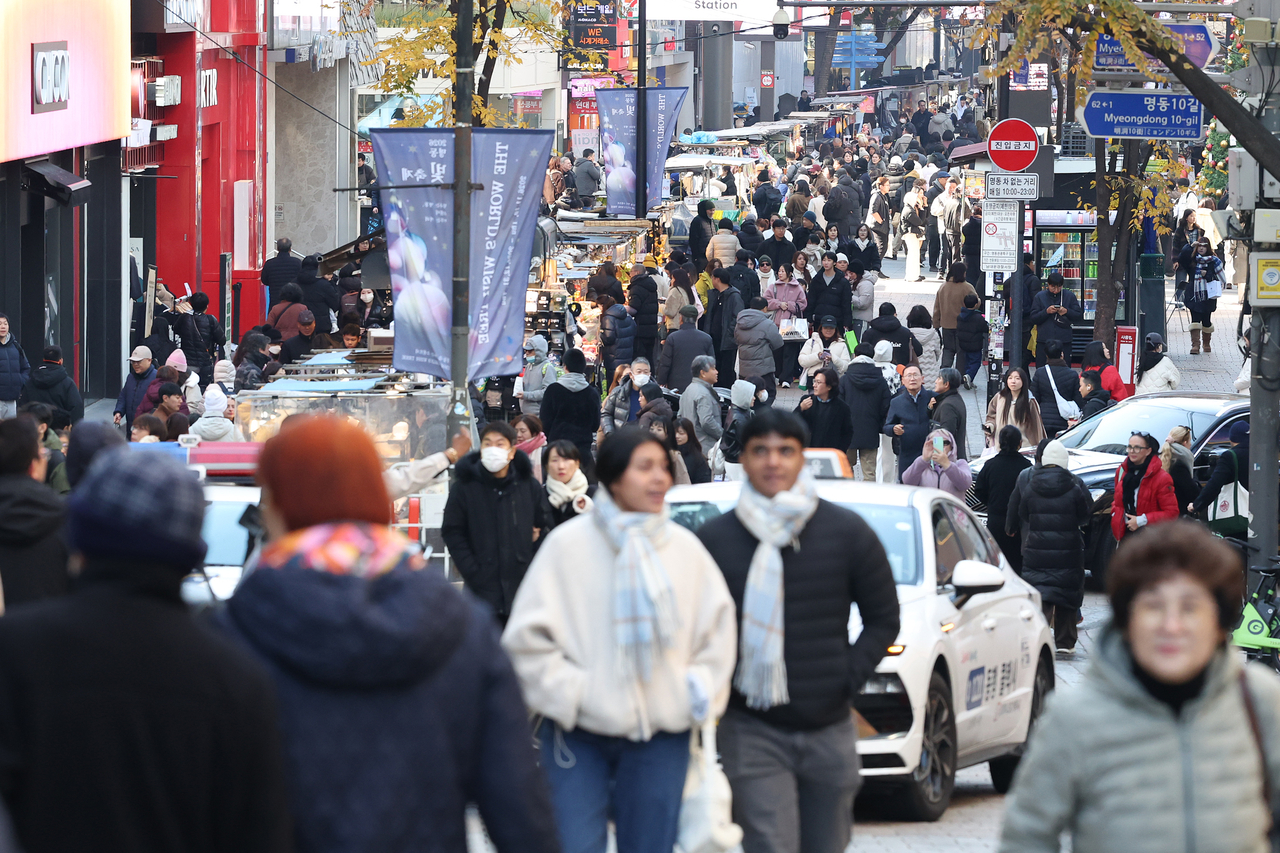
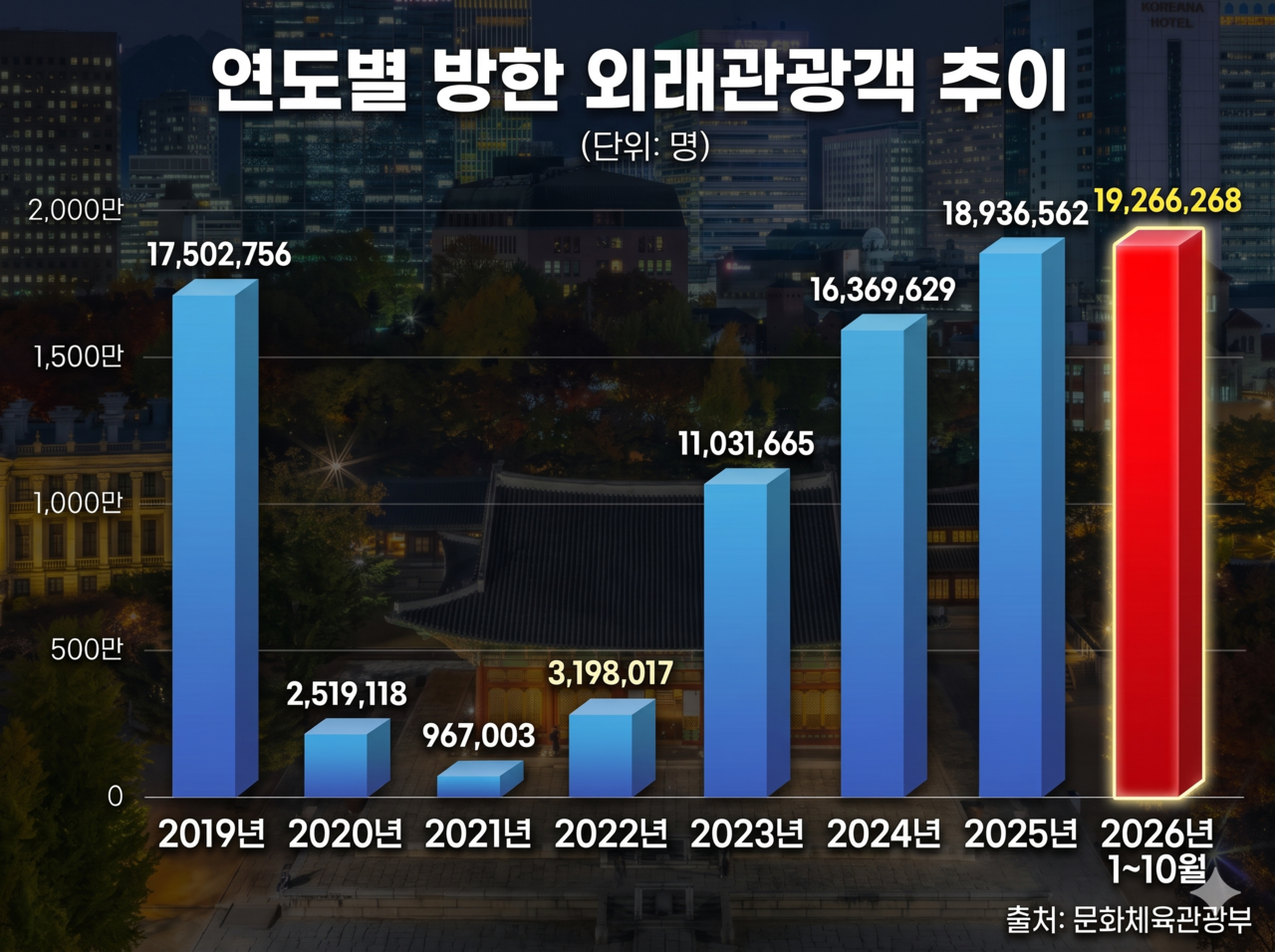
Foreign arrivals to South Korea reached about 19.27 million in the first 10 months of this year, up 21.8 percent from the same period last year, marking the strongest recovery on record. The surge in visitors is translating directly into broader domestic consumption growth, with measurable gains in shopping, accommodation and medical wellness spending. Tourists who once concentrated in the Greater Seoul area are also spreading rapidly to regional destinations.
According to the Ministry of Culture, Sports and Tourism's "October 2026 Inbound Tourism Trends" report released Thursday, about 2.16 million foreign tourists visited South Korea in October alone, up 24.0 percent from the same month last year. Monthly arrivals have now exceeded 2 million for four consecutive months — about 2.09 million in July, about 2.25 million in August and about 2.06 million in September. The cumulative total of about 19.27 million through October compares with about 15.82 million in the same period last year, a gain of 21.8 percent. The figures contrast with declines at major competing destinations over the same period, including Japan at about 34.64 million arrivals (down 2.5 percent) and Thailand at about 25.46 million (down 4.6 percent).
Growth was broadly distributed across major source markets rather than concentrated in any single region. By cumulative arrivals through October, Chinese-speaking markets led with about 8.78 million visitors (up 28.7 percent), followed by Western countries and Oceania at about 3.55 million (up 16.5 percent), Japan at about 3.50 million (up 17.4 percent) and Asia and the Middle East at about 3.35 million (up 16.0 percent).
By country, China was the top source market with about 6.07 million visitors (up 28.8 percent), followed by Taiwan at about 2.07 million (up 31.3 percent), the Americas including the United States at about 1.88 million (up 13.6 percent) and Europe at about 1.37 million (up 21.0 percent). Women accounted for 62.3 percent of all visitors, and travelers in their 20s and 30s made up 49.6 percent — nearly half the total.
Entry points are also diversifying beyond the capital region. About 5.43 million visitors arrived through airports and seaports outside Greater Seoul, up 29.3 percent from about 4.2 million in the same period last year. Their share of total arrivals rose 1.7 percentage points to 28.2 percent, from 26.5 percent a year earlier.
The visitor boom is feeding through to real revenue gains across key tourism sectors. Foreign card spending on tourism reached 18.03 trillion won ($13.4 billion) through October, up 47.2 percent from 12.25 trillion won in the same period last year. By sector, shopping led with 6.62 trillion won (36.7 percent of the total), followed by accommodation at 3.54 trillion won (19.7 percent), medical wellness at 3.01 trillion won (16.7 percent), food and beverage at 2.47 trillion won and other categories at 2.39 trillion won. Monthly spending held above the 2 trillion won mark in both May, at 2.12 trillion won, and October, at 2.08 trillion won.
Kang Jeong-won, director general for tourism policy at the Ministry of Culture, Sports and Tourism, said the rise in visitors arriving through regional airports and seaports was encouraging. "We plan to present a medium- to long-term vision and direction at the next National Tourism Strategy Council meeting to sustain the current growth momentum and spread the benefits of inbound tourism across the country," Kang said.
Driven by the sustained increase, annual foreign arrivals to South Korea surpassed 20 million for the first time in history on Nov. 12. The milestone means the number of inbound visitors has doubled in 14 years since the country first crossed the 10 million mark in 2012.
terry@heraldcorp.com




