Ministry of Employment and Labor allocates 379.3 billion won for new first-employment support program next year
Fiscal job support budget rises to 25.15 trillion won, up 629.4 billion won from this year
Related ministries preparing joint 'National Jobs Project'
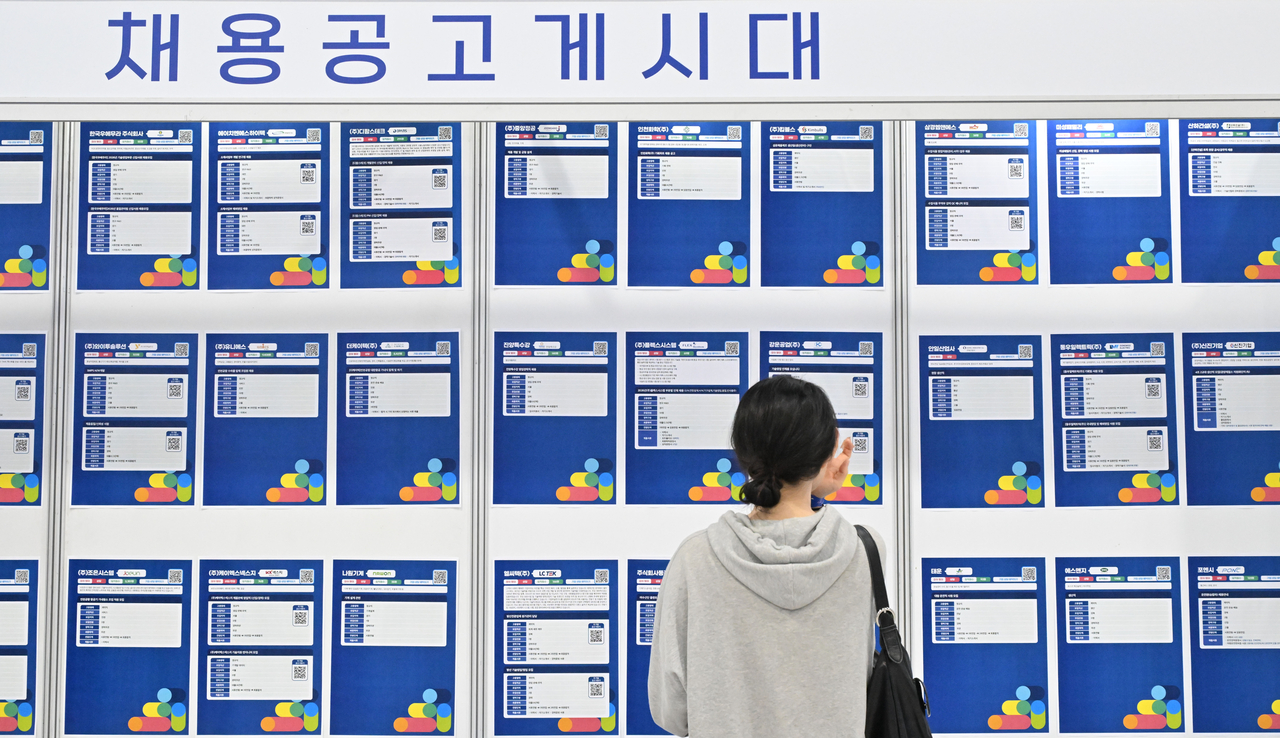
South Korea's total employment rose by 113,000 in September from a year earlier, buoyed by a semiconductor and export boom, yet the youth employment rate remained stuck at 44 percent.
The government plans to launch a new "first employment support program" next year, offering 160,000 young people an integrated package of career counseling, work experience and vocational training. Related ministries are also preparing a joint "National Jobs Project" aimed at channeling the gains from exports and investment into hiring at partner companies and in local communities.
Employment and Labor Minister Kim Young-hoon said at an employment trends review meeting held Friday at the Seoul Regional Employment and Labor Office that "semiconductors and exports are underpinning our economy, but the warmth of that growth has not reached young people looking for their first jobs." The meeting brought together experts from the Korea Labor Institute, the Korea Development Institute (KDI), the Korea Research Institute for Vocational Education and Training, and the Bank of Korea to assess this year's labor market and discuss the employment outlook for next year.
The Ministry of Employment and Labor said that while overall employment has grown, conditions in the construction sector and among temporary and daily workers remain difficult. The ministry said it will examine how much of the weak youth employment picture stems from a shrinking youth population versus actual changes in hiring conditions, and will assess how sector-specific recruitment trends, a preference for experienced hires, and AI-driven shifts in job roles are affecting young people entering the workforce for the first time. It will also look into the difficulties faced by young people who stopped looking for work and are now trying to re-enter the job market.
The ministry's 2027 budget proposal submitted to the National Assembly totals 38.95 trillion won ($29 billion). Of that, fiscal job support programs account for 25.15 trillion won, up 629.4 billion won, or 2.6 percent, from this year. The new first employment support program for youth carries an allocation of 379.3 billion won. The program will provide tailored support covering career counseling, work experience, vocational training and job placement, and will expand opportunities for hands-on experience at company worksites.
K-Digital Training, the advanced-industry vocational training program, received an allocation of 608.9 billion won, with plans to double the number of AI training slots from 10,000 to 20,000. The budget also expands joint training opportunities for employees at small and medium-sized enterprises and provides support for mid-career reemployment, employment of people with disabilities, and career continuity for workers on parental or maternity leave. Protections for platform workers and employees at small workplaces will also be strengthened.
The "National Jobs Project" is one of three major livelihood initiatives the government is preparing, alongside housing and household finance programs. Kim said the ministry would "develop concrete plans to expand job opportunities in both the private and public sectors and ensure that the fruits of growth translate into jobs at partner companies and in local communities."
The ministry is also reviewing ways to more closely integrate its youth employment policy office with labor market policy and employment services functions. The goal is to ensure that sector-specific hiring trends and job-role changes are reflected in youth employment policy, and that young people who receive counseling can seamlessly access the work experience, training and job placement support they need.
fact0514@heraldcorp.com