Editor's note
We tell stories through paintings — exploring the issues, histories and human desires hidden within them. We begin with a single canvas and step out into the world beyond the frame.
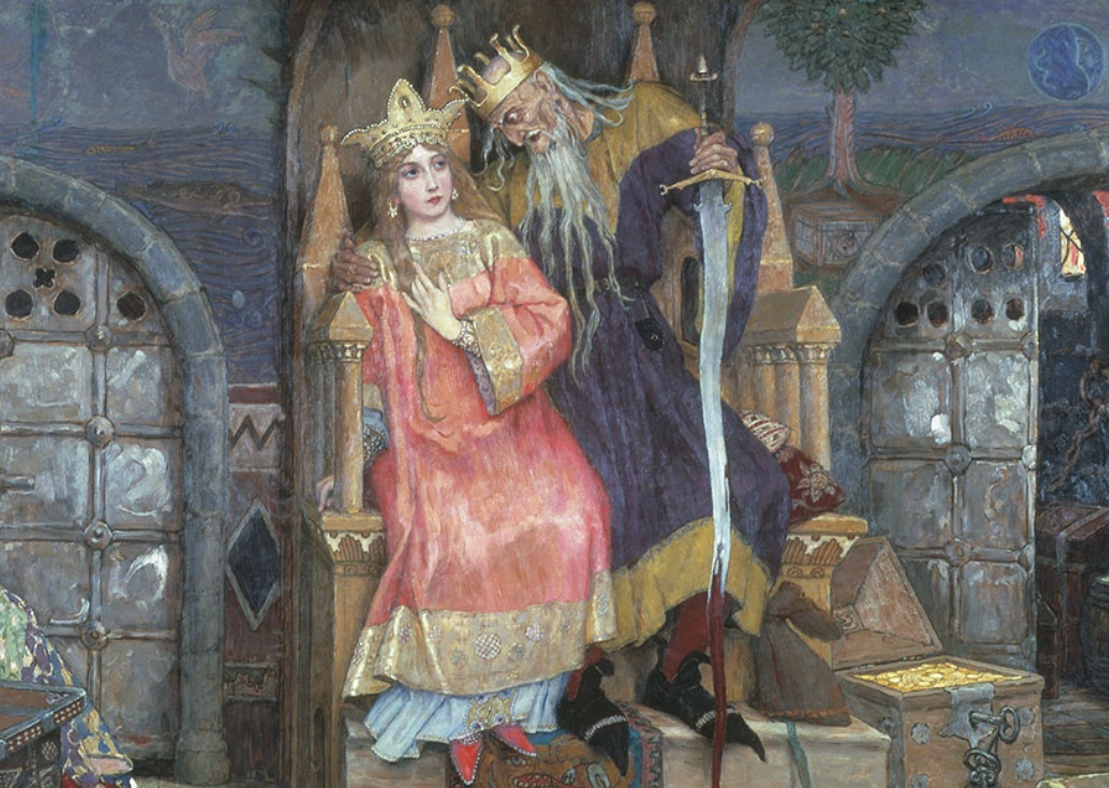
The woman is thinking right now — thinking of how to escape this old man.
The man wearing a crown that suits him not at all is named Koschei. He is the villain of Russian folklore, known as Koschei the Immortal.
The words "immortal" and "undying" follow him for a reason: he simply could not be killed.
He wielded magic. With it, he could fly even while imprisoned and break his chains even while bound. Most crucially, he could detach his own soul and hide it anywhere he chose. Until that soul was found and destroyed, his life could not be ended.
According to legend, the only way to destroy Koschei was to break the enchanted needle in which his soul resided.
The problem was that Koschei had hidden it in an impossibly convoluted place. The enchanted needle was inside an egg, the egg inside a duck's belly, the duck inside the mouth of a hare, and the hare locked inside a chest buried beneath an oak tree on an island far out at sea.
Dig up the ground and open the chest, and the hare leaps out and bolts. Catch the hare, and a duck bursts free and takes flight. Only by catching the duck, slitting it open and retrieving the egg could one finally hold the soul. Some folk versions add that even the egg can only be cracked by striking it against Koschei's own forehead. At that point, he is a creature who cannot die even if he wanted to.
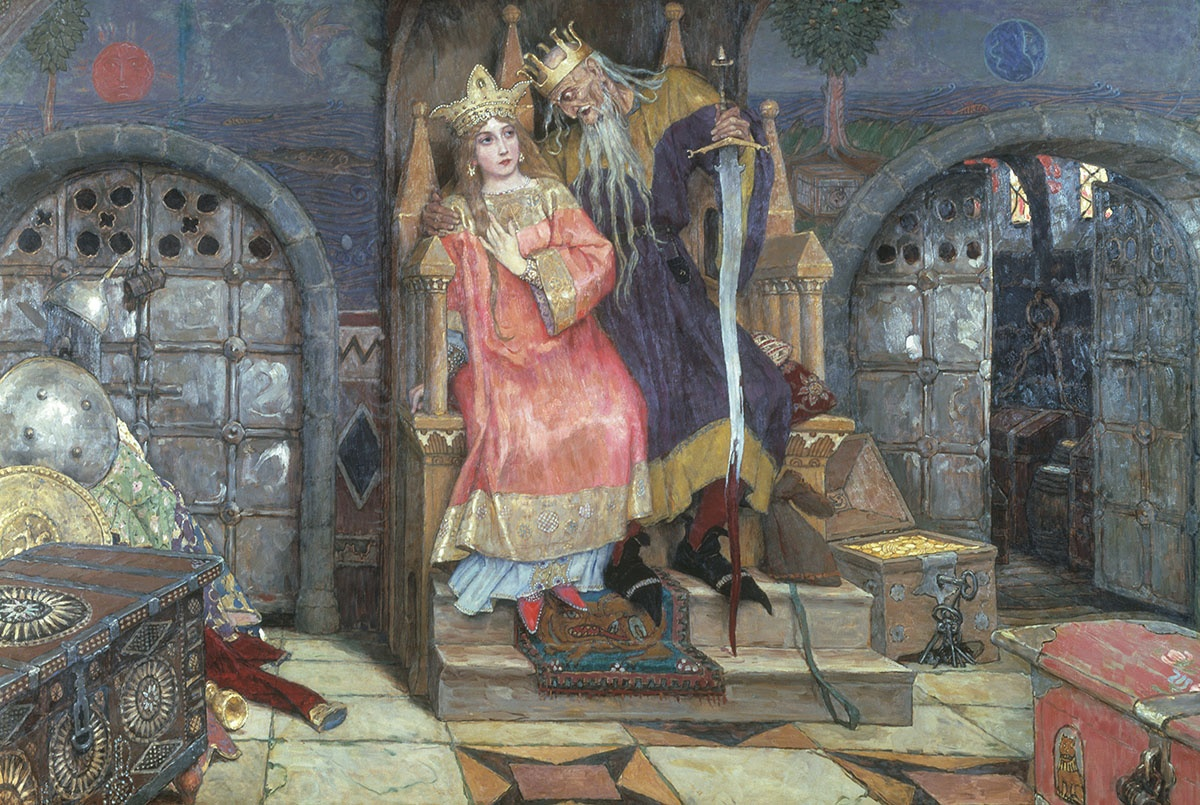
Eternal youth and immortality are not the same thing.
Koschei gained a body that cannot die, but not one that cannot age. He grows older with every passing era, transcending time itself. His beard reaches his waist, his wrinkles run deep enough to fit a finger inside, and his bones rattle with every movement — thin and wretched.
The very name Koschei may derive from "kost," the Russian word for bone.
With such power, he might have become an immortal sage. He did not.
What he devoted eternity to was wickedness and cruelty. His signature act was luring young and beautiful women into traps and abducting them. And so, once again, he has brought a woman back with him. He drapes an arm over her shoulder and speaks: "Marry me and live with me." He pushes forward the gold and treasure he has amassed over what must be hundreds, perhaps thousands, of years. Yet faced with her unmoved expression, he may well add: "Is it because I'm old and ugly — just like the others?" It is the moment he waves his bloodstained sword more menacingly. The storeroom door stands open; the only way out is locked shut. The woman keeps her composure. She fixes him with a steady, piercing gaze. One hand rests on her chest as she quietly works out how to outwit this villain.
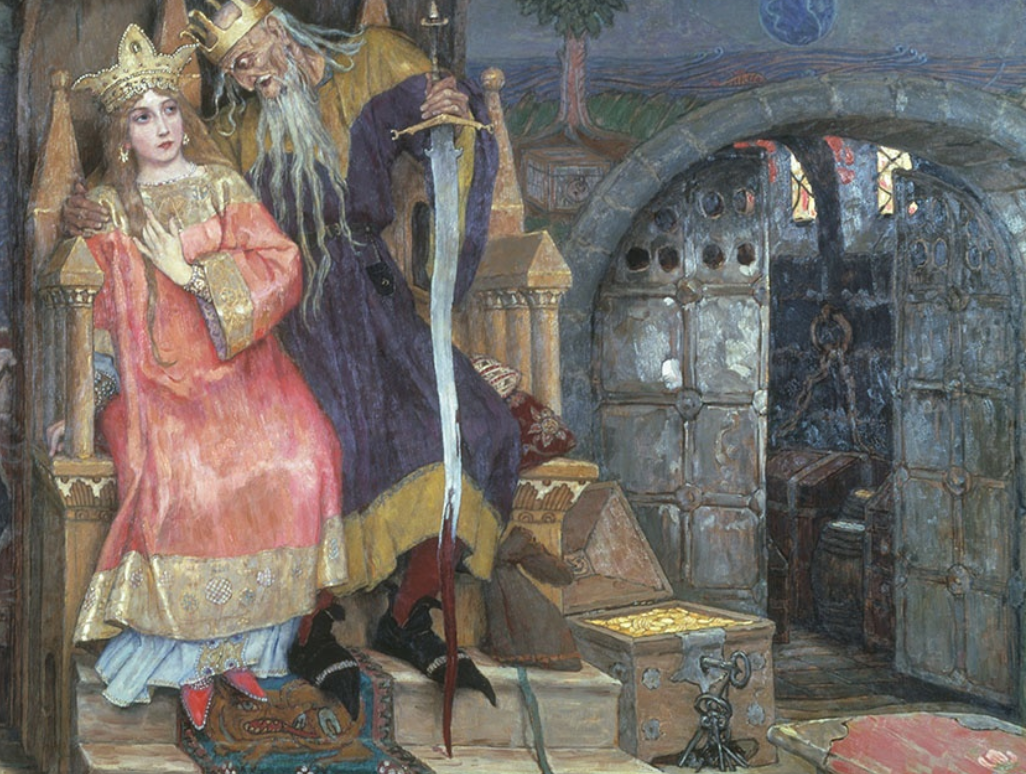
There is a way to overpower Koschei — and a small hint is hidden in the painting.
On the wall just beside where Koschei sits, a clue is faintly depicted that points to the whereabouts of the chest holding his soul. However, even if one could miraculously spot and identify it, there is little the woman can do at this moment.
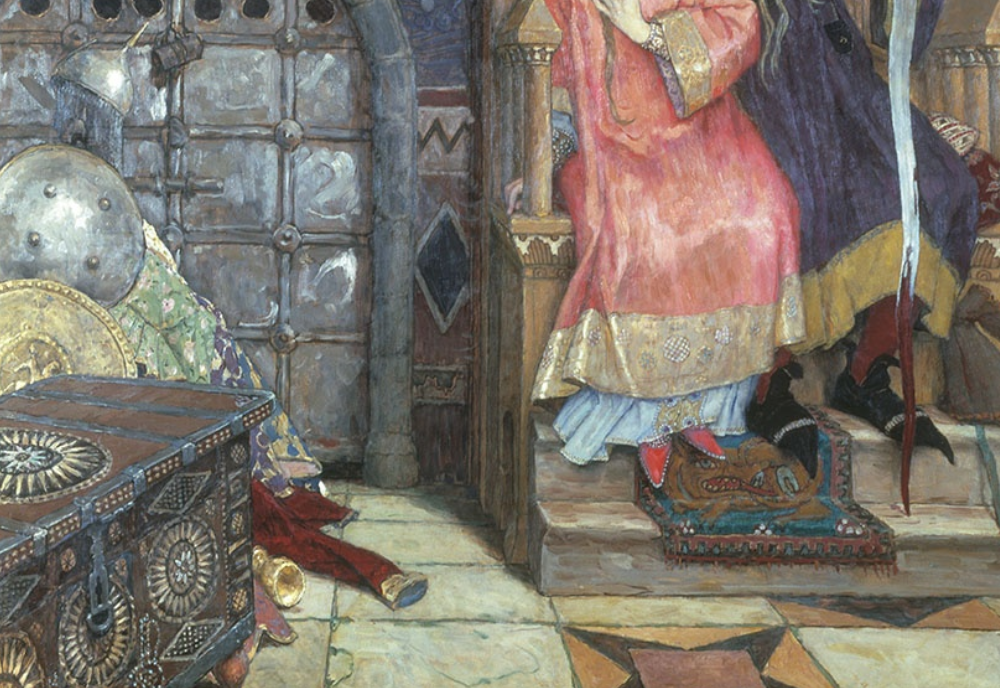
Russian painter Viktor Vasnetsov completed this work, Koschei the Immortal, between 1926 and 1927.
Russia at the time was in the grip of political upheaval.
Around the time Vasnetsov finished the painting, Leon Trotsky — once so influential he was considered a likely successor to Vladimir Lenin — had been defeated in his struggle against Joseph Stalin and was in effect removed from power. Further purges seemed all but certain to follow.
Some have suggested that Vasnetsov channeled the vague dread and anxiety of that atmosphere into the work. If so, Koschei — the creature who "just won't die" — might be read as the chaos of that era, and the captive woman as the people caught within it. That, however, is only one of several interpretations.
yul@heraldcorp.com