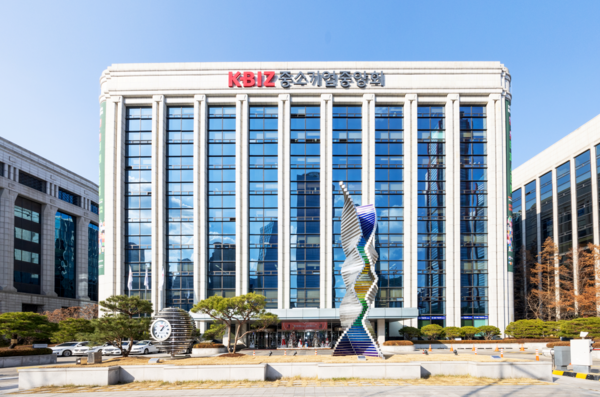
Korea Academy of Small Business holds 2026 autumn conference
Vice Minister Noh Yong-seok outlines 4 policy priorities for SMEs, small business owners
Plans include expanded startup support, tougher sanctions on technology theft
Food service businesses that rely heavily on delivery platforms tend to post higher sales growth but lower operating profit margins, according to new research based on actual transaction data from 18,273 restaurants in the greater Seoul area.
The Korea Academy of Small Business held its 2026 autumn academic conference Friday at the Korea Federation of SMEs headquarters in Yeouido, Seoul, under the theme "The Value of Small and Venture Businesses and the Future of Support Policy."
The conference's top doctoral dissertation award went to researcher Kwak Hye-min, whose study examined how dependence on delivery platforms affects restaurant sales growth and profitability. The research demonstrated empirically that while platform use helps drive revenue growth, it can weigh on profitability.
In a congratulatory address, Ministry of SMEs and Startups First Vice Minister Noh Yong-seok outlined four policy priorities: strengthening the competitiveness of small and medium-sized enterprises, supporting the recovery of small business owners, revitalizing startup and venture investment, and promoting fair and cooperative business practices.
Noh said the ministry would expand SME participation from the design stage of national strategic industries and large-scale projects, and provide long-term, intensive support for innovative companies in new growth sectors. Plans also include easing the burden of rent, labor costs, interest payments and platform fees on small business owners, as well as expanding employment insurance premium support for the self-employed.
In the startup sector, Noh said the ministry would double the scale of the second round of the "Everyone's Startup" support program and designate additional startup cities by early next year. The ministry also plans to strengthen administrative sanctions and penalty surcharges for technology theft and to pursue legislation on platform cooperation.
Seoul National University professor Yoo Byung-joon presented an analysis of 609 papers published over the past 20 years in the academic journal Small Business Research, tracing shifts in SME and venture support policy and identifying future challenges. Panel discussions covered topics including stage-based support frameworks, expansion of the venture investment exit market, policy effectiveness evaluation and the AI transition for small businesses.
Twelve papers were presented at the conference on topics including innovation and growth among small and venture businesses, venture finance and the operating environment for small business owners. Seoul National University doctoral candidate Kim Myung-jun and professor Kim Yeon-bae received the best paper award for research showing that bank accessibility plays a key role in translating regional technological capacity into sales growth for manufacturing SMEs.
Korea Academy of Small Business President Park Kyung-min said the organization would serve as "a living policy platform" to ensure that the presentations and discussions at the conference feed into policy decisions by the government and the National Assembly.
hong@heraldcorp.com