Labor commission delivers ruling on cafeteria, security workers
Employer status recognized across all industrial-safety working conditions
Administrative suit under review ahead of Wednesday deadline
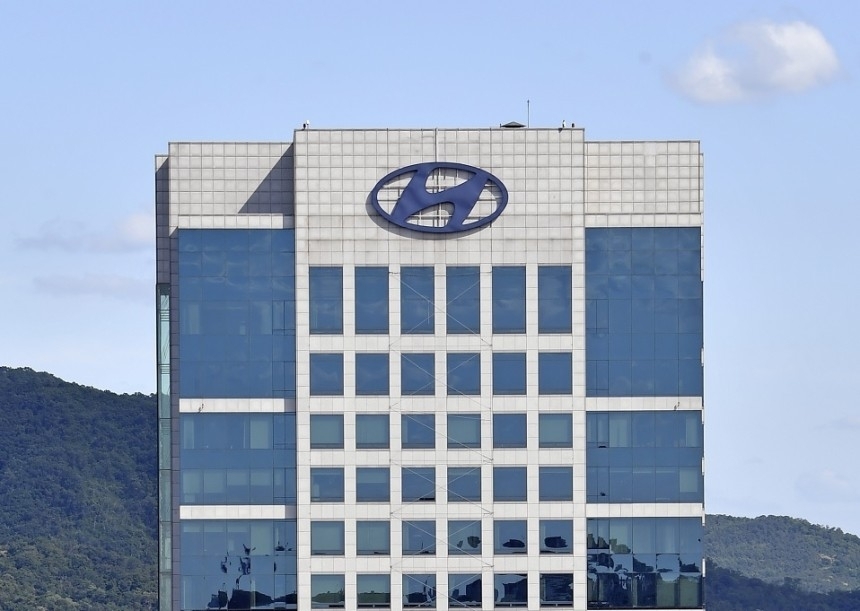
Hyundai Motor is expected to file an administrative lawsuit early next week challenging a National Labor Relations Commission ruling that it must bargain with a subcontractor union, industry sources said Friday. The company appears to have concluded that litigation is unavoidable after the commission issued a ruling recognizing Hyundai Motor's employer status over subcontracted workers more broadly than a lower-level labor panel had.
Hyundai Motor received the commission's ruling on the "correction re-examination request regarding the announcement of bargaining demands" on Oct. 27 and is reviewing whether to file an administrative suit ahead of the Nov. 11 deadline to contest it, according to sources in the automaking industry. Industry watchers expect the company to submit its complaint early next week, just before the deadline.
The National Labor Relations Commission had earlier split the Hyundai Motor case into three separate rulings on Aug. 31 — covering the production sector, the cafeteria and security sector, and the sales sector. The ruling now delivered concerns cafeteria operations and security, facility and cleaning work. The workers involved are cafeteria employees affiliated with Hyundai Green Food and security, facility and cleaning workers belonging to Doing C&S, Baeksang Corporation and Misung Empro — subcontractors that received work orders from Hyundai Engineering.
Under the ruling, the commission recognized Hyundai Motor's employer status more broadly than the Ulsan Regional Labor Relations Commission had. The regional panel had examined each bargaining agenda item proposed by the Korean Metal Workers' Union individually, recognizing Hyundai Motor's employer status only for certain items — including the provision of a medical room and rest space, the establishment of an emergency contact network for security operations, and improvements to work facilities and the environment. The National Labor Relations Commission, by contrast, grouped these under the broader category of "working conditions related to industrial safety" and recognized employer status across the entire category.
On the question of whether Hyundai Motor had an obligation to post a bargaining notice, the commission said the determination "should in principle be based on 'working conditions,' not on specific detailed bargaining agenda items." After recognizing Hyundai Motor's employer status with respect to industrial-safety-related working conditions, the commission declined to rule separately on the remaining agenda items the union had proposed.
The commission also left open the scope of agenda items that could be addressed in actual negotiations, signaling that bargaining would not be confined to the items the union initially demanded or raised during the correction process.
"Where an entity is recognized as an employer with respect to specific working conditions, it would be difficult to conclude that collective bargaining is limited solely to the detailed bargaining agenda items related to those specific working conditions that the union presented in its initial bargaining demand or during the correction process in this case," the commission said.
Industry officials have voiced concern that subcontractor unions could use industrial safety as an entry point into negotiations and then push for wage-related demands such as performance bonuses. The Korean Metal Workers' Union's common demands submitted to Hyundai Motor do in fact include performance bonuses and wage increases.
At Hanwha Ocean, which entered negotiations with its subcontractor union ahead of Hyundai Motor, clashes over the bargaining agenda have already emerged. The subcontractor union has put forward 36 agenda items — including wages and welfare benefits at 80 percent of the level received by regular employees and equal performance bonuses — while Hanwha Ocean has said it wants to focus first on six items related to facility improvements and safety.
Legal disputes are also mounting. According to the National Labor Relations Commission, 15 administrative lawsuits had been filed as of Sept. 21 challenging re-examination rulings issued since the revised Trade Union Act took effect.
A recent Korea Enterprises Federation survey on corporate perceptions of labor commission rulings and contractor-subcontractor bargaining since the revised act took effect found that 40.3 percent of companies said labor commission rulings on the employer status of prime contractors were not consistent with the law or the Ministry of Employment and Labor's interpretive guidelines. In addition, 67.7 percent of respondents identified "clarifying the criteria for determining the employer status of prime contractors" as the top legislative priority for supplementing the revised act.
eyre@heraldcorp.com
fact0514@heraldcorp.com