New applications suspended in March-April and July last year; 14,220 people received support
Next year's budget set at 9.65 billion won, up 13.3%; monthly cap stays at 70,000 won
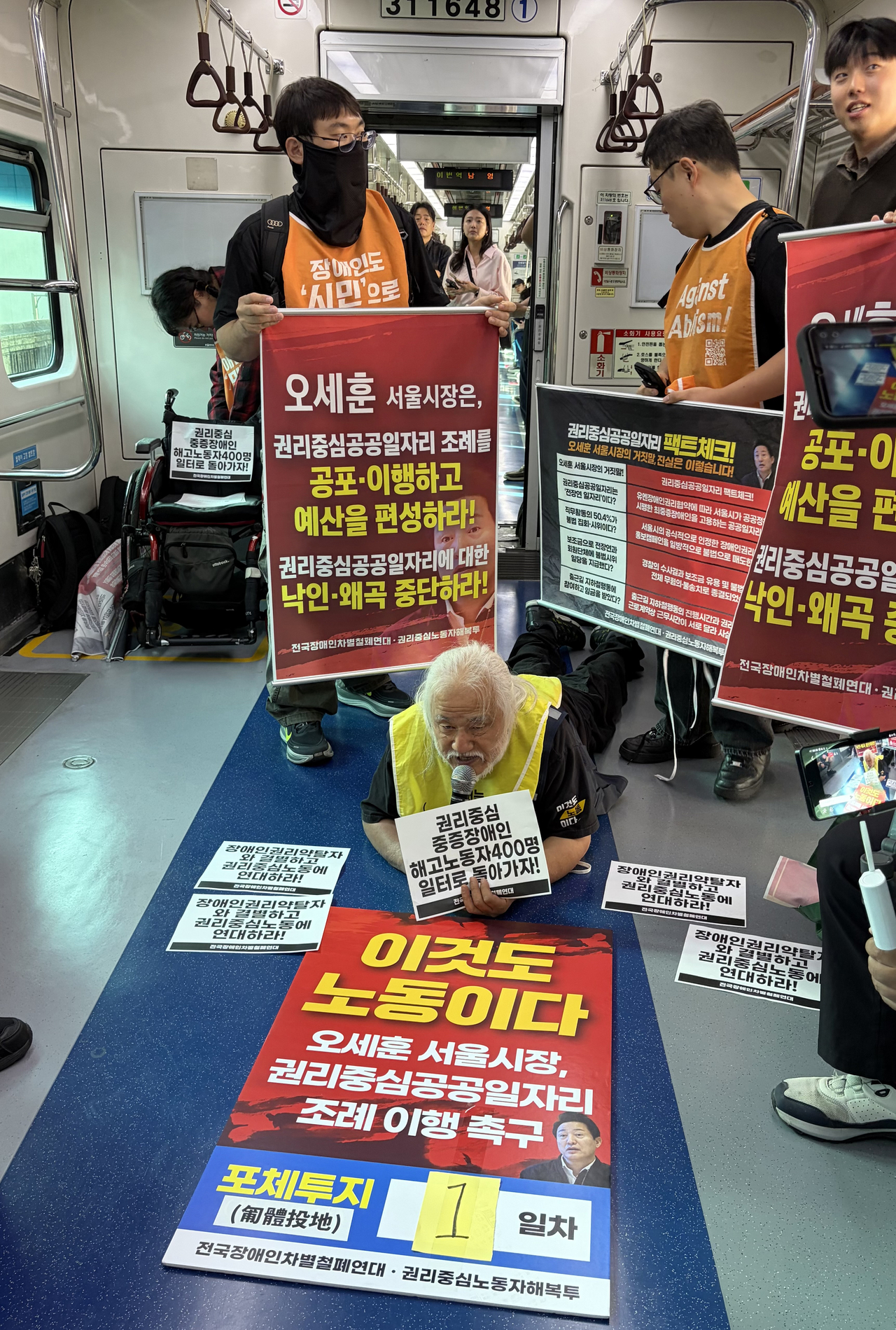
The government suspended applications for a commute subsidy program for low-income workers with severe disabilities for three months last year due to a budget shortfall, cutting the number of recipients by 450 from the previous year despite surging demand. The government has since budgeted a 13.3 percent increase for the program next year.
According to budget documents the Ministry of Employment and Labor submitted to the National Assembly's Budget and Accounts Special Committee on Friday, 14,220 severely disabled workers received commute subsidies last year. The figure had risen from 14,093 in 2023 to 14,670 in 2024 before falling by 450, or 3.1 percent, last year.
Applications were accepted for only nine months last year — January through February, May through June, and August through December. No applications were taken in March, April or July. While the program is designed to accept applications year-round, it can close early once funds run out. The ministry said budget constraints forced it to limit the application window even as demand surged, causing a temporary drop in recipients.
The ministry launched the program in April 2021 to ease transportation costs for low-income, low-wage workers with severe disabilities and help them stay in long-term employment. It initially covered severely disabled workers who had received a minimum wage exemption, then expanded eligibility in 2023 to include those receiving basic livelihood benefits or belonging to the near-poor tier.
The Korea Employment Agency for Persons with Disabilities handles applications and payments. The subsidy covers actual commuting costs, including bus, train, taxi and disability-accessible taxi fares as well as fuel costs for personal vehicles. The monthly cap rose from 50,000 won ($37) in 2024 to 70,000 won.
The ministry allocated 9.65 billion won ($7.2 million) for the program next year, up 1.13 billion won, or 13.3 percent, from this year's 8.52 billion won. Of that total, 9.33 billion won is earmarked for direct commute subsidies and 323 million won for program administration and system maintenance.
The monthly cap of 70,000 won and the baseline recipient count of 14,670 remain unchanged from this year. The ministry raised the payout rate used in its budget calculations from 66.5 percent this year to 75.7 percent next year — a 9.2 percentage point increase — to boost the direct subsidy allocation.
The program received a "needs improvement" rating in this year's integrated fiscal program performance review conducted by the Ministry of Planning and Budget, which noted that the ministry needed to draw up more precise execution plans given the repeated revisions to its fund management schedule. The ministry said it would use data accumulated through program operations starting this year to improve the accuracy of its budget demand forecasts.
fact0514@heraldcorp.com