The district earned an encouragement prize at the 2026 Regional Statistics Excellence Competition for its big data analysis of the Seongsu-dong commercial district, with findings applied to anti-gentrification policy and sustainable development planning.
Seongdong-gu in Seoul has won an encouragement prize at the 2026 Regional Statistics Excellence Competition, organized by the Gyeongin Regional Data Agency, for its big data analysis of the Seongsu-dong commercial district, the district office said.
The award marks the district's third consecutive year of recognition in the big data and statistics field, following a grand prize at the Seoul Metropolitan Government Data Competition in 2024 and a top prize at the Regional Statistics Excellence Competition in 2025. Last year, the district also received commendations from both the head of the Ministry of Statistics and the chair of the Local Era Committee for its "Seongdong-style 15-minute city data analysis," which informed resident-centered policies including a "5-minute everyday garden city" initiative and the "Seongong Bus" service.
This year's winning entry analyzed shifts in the Seongsu-dong commercial district using big data and applied the findings to policy development aimed at countering gentrification and supporting the area's sustainable growth.
Seongsu-dong has grown into one of South Korea's most prominent commercial destinations for both domestic and international visitors, drawing an influx of large-scale capital and short-term pop-up stores. In response, the district undertook a big data analysis to objectively assess the changes accompanying the area's rapid commercial growth and to develop tailored countermeasures.
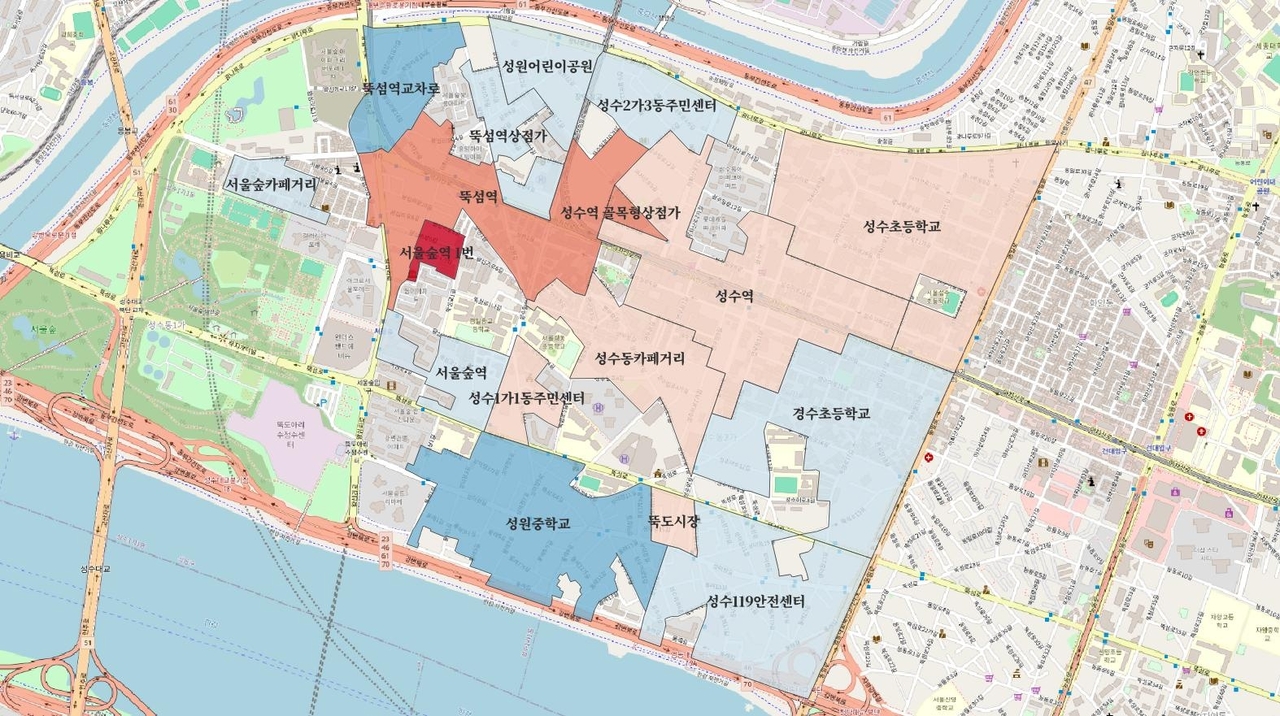
The district cross-referenced macroeconomic public data — including standard land prices and alley commercial district statistics spanning the past decade — with granular private consumption data such as card sales figures. The analysis mapped commercial changes across four zones within the Seongsu-dong Sustainable Development District and tracked shifts over time in a three-dimensional time-series format.
The analysis sought to pinpoint zone-specific characteristics and structural drivers of change amid the district's rapid commercial expansion. It examined business operating periods and opening and closure trends along the Seoulsup Café Street and around Seongsu Station to assess how the commercial landscape has shifted toward short-term leases. The study also compared sales fluctuations by business type in pop-up management zones, analyzing the growth of cosmetics and retail businesses alongside the impact on resident-oriented services such as medical clinics.
The district used the findings as a key reference in diagnosing commercial change in Seongsu-dong. The results informed a revision of the "Seongsu-dong Community Sustainable Development Plan" and served as objective foundational data in drafting the "Seongdong-gu Integrated Area Management (Town Management) Ordinance," which promotes coexistence among local businesses.
The award also recognizes the data analysis infrastructure and in-house analytical capabilities that Seongdong-gu has consistently built over the years. The district established its Big Data Center in March 2019 and developed the "Seongdong Data Platform," which consolidates and integrates administrative data previously scattered across departments to support evidence-based policymaking.
The center has to date carried out 22 data construction and analysis projects, nine analyses through competitive grants from the Ministry of Interior and Safety and the Seoul Metropolitan Government, and 40 independent analyses conducted directly by center staff without relying on outside contractors. Key examples include analyses of complaints related to electric vehicle charging obstruction, optimization of community bus routes, and site selection for smart crosswalks. These projects used data to analyze issues closely affecting residents' daily lives, supporting policy development and problem-solving across relevant departments.
"This award is a valuable achievement born from the in-house platform technology and analytical expertise that the Big Data Center has steadily built up," Seongdong-gu District Mayor Yoo Bo-hwa said. "We will continue to expand data analysis and its application across all areas of district administration to raise the quality of our policies and bring meaningful change to residents' lives."
seouldream01@heraldcorp.com