Company opts out of largest-ever domestic ESS tender
'Business efficiency and long-term competitiveness over short-term volume'
Falling bid prices squeeze profitability; company to focus on existing projects
Future participation to depend on market conditions; domestic investment to continue
Sodium-ion battery development at Ochang; LFP product set for mass production next year
Focus shifts to existing orders and Honam ESS operating business
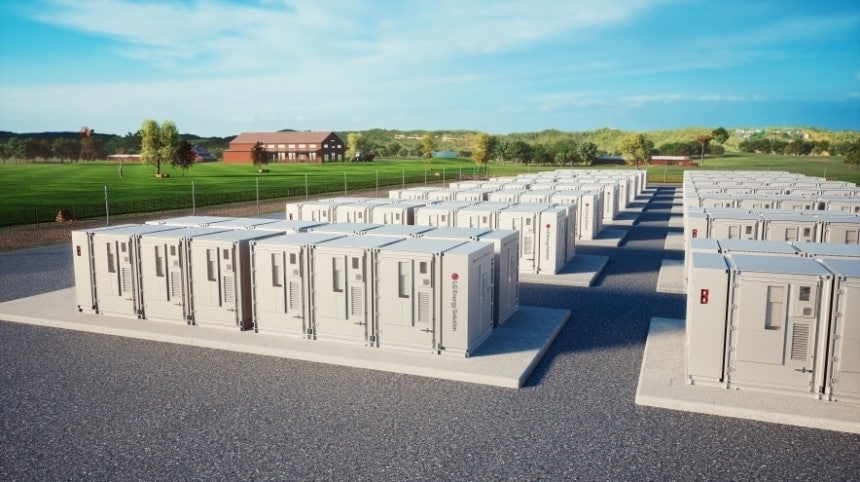
LG Energy Solution has opted out of the largest domestic energy storage system (ESS) centralized contract market tender ever held, choosing to focus on stable operations of existing projects and next-generation battery development rather than competing on price for short-term volume. The company said it would leave open the possibility of participating in future tenders and would continue investing in South Korea.
LG Energy Solution officially announced Thursday that it had not entered the third-round ESS centralized contract market competitive tender.
The company described the decision as "a strategic choice to enhance business efficiency and long-term competitiveness within limited resources and personnel, based on a principle of focus and selectivity, rather than pursuing short-term volume through price competition."
Industry observers say the fierce price competition seen in earlier rounds was a key factor behind the decision. According to industry sources, bid prices in the ESS centralized contract market fell from the 30-won-per-kilowatt-hour range in the first round to the 20-won range in the second. The declining prices have made it harder to secure profitability, and concerns have been raised that the trend could also burden operators who run ESS facilities over the long term.
Within the battery industry, there have been warnings that continued price competition for short-term orders could erode companies' investment capacity and profitability. After the second-round tender, the three major battery makers and related industry associations were reported to have discussed ways to prevent excessive cutthroat competition.
The third-round ESS centralized contract market, announced by the government in September, covers a total of 1,180 megawatts — 1,100 MW on the mainland and 80 MW on Jeju — equivalent to roughly 7.08 gigawatt-hours of battery storage capacity. It is the largest tender to date, surpassing the combined volume of the first and second rounds.
The government plans to use ESS to reduce the imbalance between renewable energy generation — from solar and wind — and electricity demand. Operators selected through the tender will install ESS facilities and enter into long-term contracts with the Korea Power Exchange to run them.
The Korea Power Exchange closed its request-for-proposal submissions Wednesday and will accept final supporting documents, including business plans, through Wednesday next week before selecting operators later this month.
The industry had initially expected all three major domestic battery makers — LG Energy Solution, Samsung SDI and SK On — to compete fiercely given the scale of the tender. With LG Energy Solution out, however, the supply competition is now expected to center on Samsung SDI and SK On.
LG Energy Solution had secured roughly 215 MW in total through the first two rounds — about 136 MW in the first and 79 MW in the second. This time, the company decided to prioritize the smooth execution of already-contracted projects over pursuing additional orders.
The company stressed, however, that the decision does not signal a withdrawal from the domestic ESS market or a reduction in investment.
LG Energy Solution said it would "decide on participation in competitive tenders after the third round by comprehensively considering market conditions and business circumstances." The statement leaves open the possibility of re-entering the bidding from the fourth round onward, depending on future bid prices and project conditions.
On the domestic front, the company plans to expand ESS operating businesses it has already secured.
In July, LG Energy Solution was selected as an operator for the government's AI-based distribution network ESS construction support project. Together with Shinhan Asset Management, it formed a consortium called Haetbit Baejeonmang Energy and secured the rights to build and operate 140 megawatt-hours of ESS across seven distribution lines in the Honam region — the maximum volume available to a single operator.
The ESS facilities are set to begin commercial operations next year and will run for 20 years. LG Energy Solution will handle battery supply, facility construction and AI-based operations, while Shinhan Asset Management will manage the financial structuring required for the project.
Distribution network ESS stores surplus electricity generated during peak solar hours and releases it when power demand rises. LG Energy Solution plans to use AI to forecast renewable energy output and electricity demand, improving the efficiency of ESS operations.
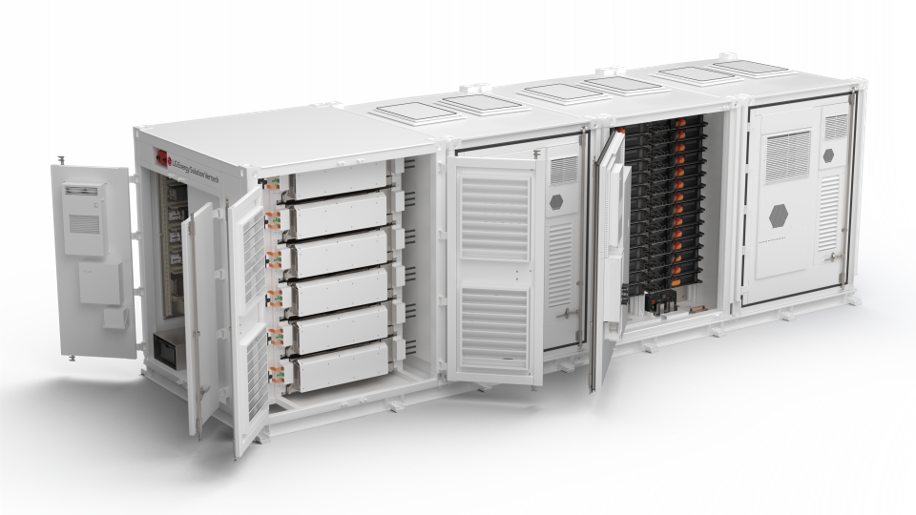
LG Energy Solution has also been operating distribution network-linked ESS and a virtual power plant (VPP) in Jeju since 2024, building up related expertise. A VPP integrates dispersed generation facilities and ESS units and manages them as a single power plant.
Building on that experience, the company is expanding its ESS business from battery cell supply into system integration and AI-based operating services. In North America, it provides end-to-end services — from design and installation to operations and maintenance — through Vertech, a subsidiary specializing in ESS system integration.
Domestic research, development and production investment will also continue. At its energy plant in Ochang, North Chungcheong Province, the company is accelerating development of next-generation products, including sodium-ion batteries.
Sodium-ion batteries use sodium — a relatively abundant material — instead of lithium, which can lower raw material costs. They are drawing attention as a next-generation battery candidate for ESS applications.
LG Energy Solution plans to begin sample production of sodium-ion batteries for ESS use before the end of this year and to supply trial products to North American customers next year.
The company is also preparing to begin mass production of tabless 2170 cylindrical batteries using lithium iron phosphate (LFP) chemistry in the first half of next year. Tabless technology improves the current path inside the battery, reducing resistance and heat generation. Regardless of its participation in domestic ESS tenders, the company said it would continue developing next-generation batteries and building out its production base.
The strategy aligns with the operational efficiency drive LG Energy Solution has been emphasizing recently. At its third-quarter earnings call held Tuesday, the company reiterated its "focus and selectivity" approach to making the most of limited resources.
Third-quarter sales announced at the time reached 9.64 trillion won ($7.19 billion), up 59 percent from a year earlier, driven by a sharp increase in ESS shipments and higher electric vehicle battery sales. Operating profit rose 25.7 percent to 756 billion won.
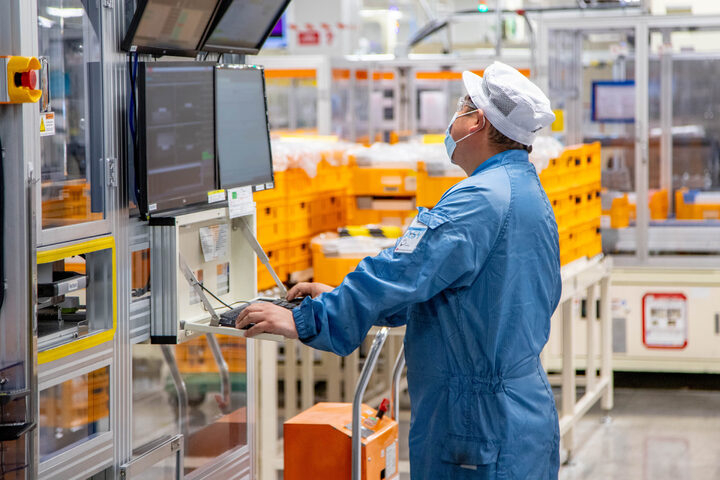
In North America, LG Energy Solution plans to convert some electric vehicle battery production lines to ESS use and add new prismatic battery lines, targeting ESS production capacity of more than 70 GWh by the end of next year. The company has also recently signed direct ESS battery supply contracts with global big-tech firms that operate AI data centers, adding new customers to its portfolio.
LG Energy Solution Chief Financial Officer and Executive Vice President Lee Chang-sil said at the Tuesday earnings call that the company "plans to respond proactively to market changes while reinforcing the strategy of focus and selectivity to maximize business efficiency with limited resources."
Meanwhile, some in the industry interpret the decision to sit out the tender as also being linked to a breakdown in negotiations with a former business partner.
LG Energy Solution had previously partnered with global private equity firm Kohlberg Kravis Roberts (KKR) to participate in the second-round centralized contract market tender, securing a contract to supply batteries for a 79 MW project in Haenam, South Jeolla Province.
Ahead of the third round, however, the two sides were reported to have been unable to narrow their differences over project terms. Korea Giga Platform (KGP), in which KKR has a stake, subsequently teamed up with SK On to participate in the current tender.
Industry observers suggest the divergence reflects a clash of interests: LG Energy Solution was concerned about deteriorating profitability in the domestic ESS market, while its former partner pressed ahead to secure new volume.
kwater@heraldcorp.com