
Union criticizes Hyundai Motor's overall management strategy
Kia overtakes Hyundai in domestic sales; union flags product competitiveness
US export volume seen falling 60% by 2030
Calls for scrutiny of Boston Dynamics, Saemangeum investments
This year's strikes estimated to have caused 2.3 trillion won in lost sales
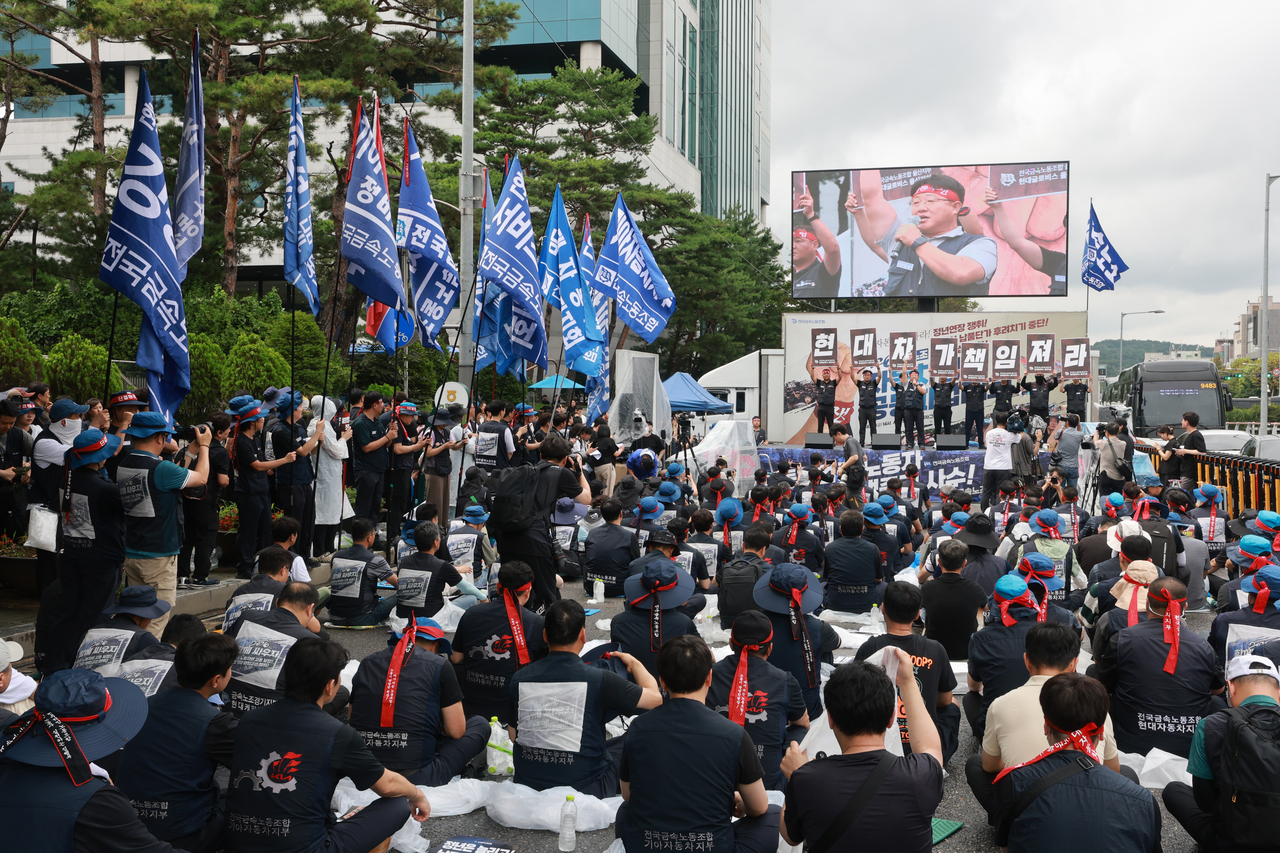
Voices within Hyundai Motor's union are pushing beyond traditional demands for higher wages and job security, calling for direct involvement in management's strategic decisions — including new-car development, overseas production expansion and long-term investments in AI and robotics that Hyundai Motor Group Chairman Euisun Chung has made a priority.
According to industry sources Thursday, Nodongja Hamseong, a faction within the Hyundai Motor union, said in a recent newsletter that "the union can no longer stand by and watch Hyundai Motor's investment decisions, which will determine the future of employment and the national industry," and that it must "actively intervene through public debate involving local communities and research organizations." The statement marks a significant escalation, extending the union's demands from job security into the realm of corporate strategy.
Kia overtakes Hyundai in domestic sales: 'Not enough competitive cars to sell'
Nodongja Hamseong said Kia has a "well-prepared lineup" while Hyundai Motor has "fallen behind the trend," adding that Hyundai lacks "enough competitive cars to sell" compared with its sister brand.
Hyundai Motor's domestic sales last month, including Genesis, totaled 49,042 units, trailing Kia's 51,007 units by 1,965 vehicles. The gap in cumulative domestic sales from January through October this year has narrowed to just 9,915 units — 497,223 for Hyundai Motor versus 487,308 for Kia.
The faction noted that eight of the top 15 best-selling models in the domestic market last month were Kia vehicles, while Hyundai Motor accounted for only four.
"Since the first half of this year, sales staff have been saying there are no cars to sell and that Hyundai Motor doesn't seem interested in making cars people want to buy," the group said, adding that a sense of crisis over new-car development has also been spreading among workers at the Namyang research center.
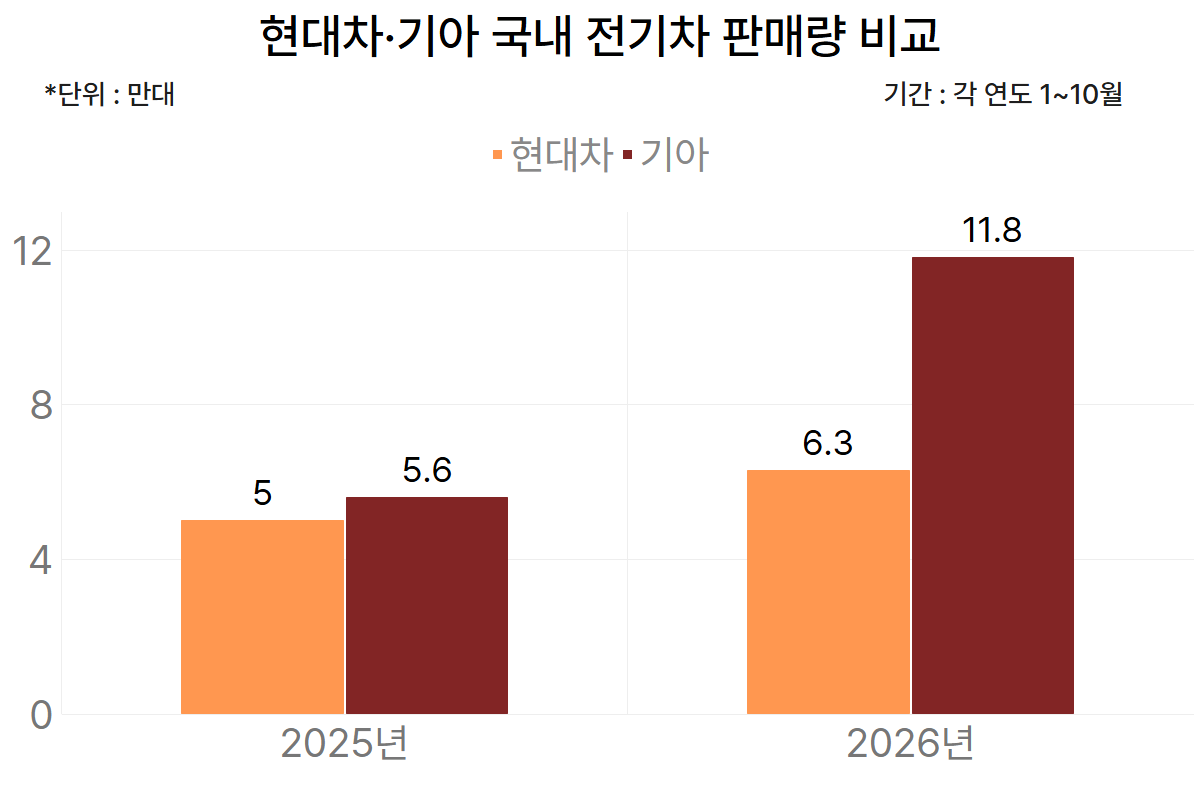
Kia's growth in the domestic electric vehicle market has also been striking. From January through October this year, Hyundai Motor sold 62,687 EVs domestically, up 24.7 percent from the same period last year. Kia sold 117,539 EVs over the same period, a 109.0 percent increase.
The gap in domestic production output is also closing rapidly. Hyundai Motor produced about 1.41 million vehicles domestically through October this year, down 7.5 percent from a year earlier, while Kia produced about 1.40 million units, up 6.0 percent. The production gap between the two automakers narrowed from roughly 207,000 units in the same period last year to just 14,000 units this year.
Discontent over US, India and Europe localization strategy; US export volume seen falling 60%
The union faction has also trained its sights on Hyundai Motor's overseas production expansion strategy, arguing that the localization drive aimed at securing global competitiveness could lead to reduced output at domestic factories and growing job insecurity.
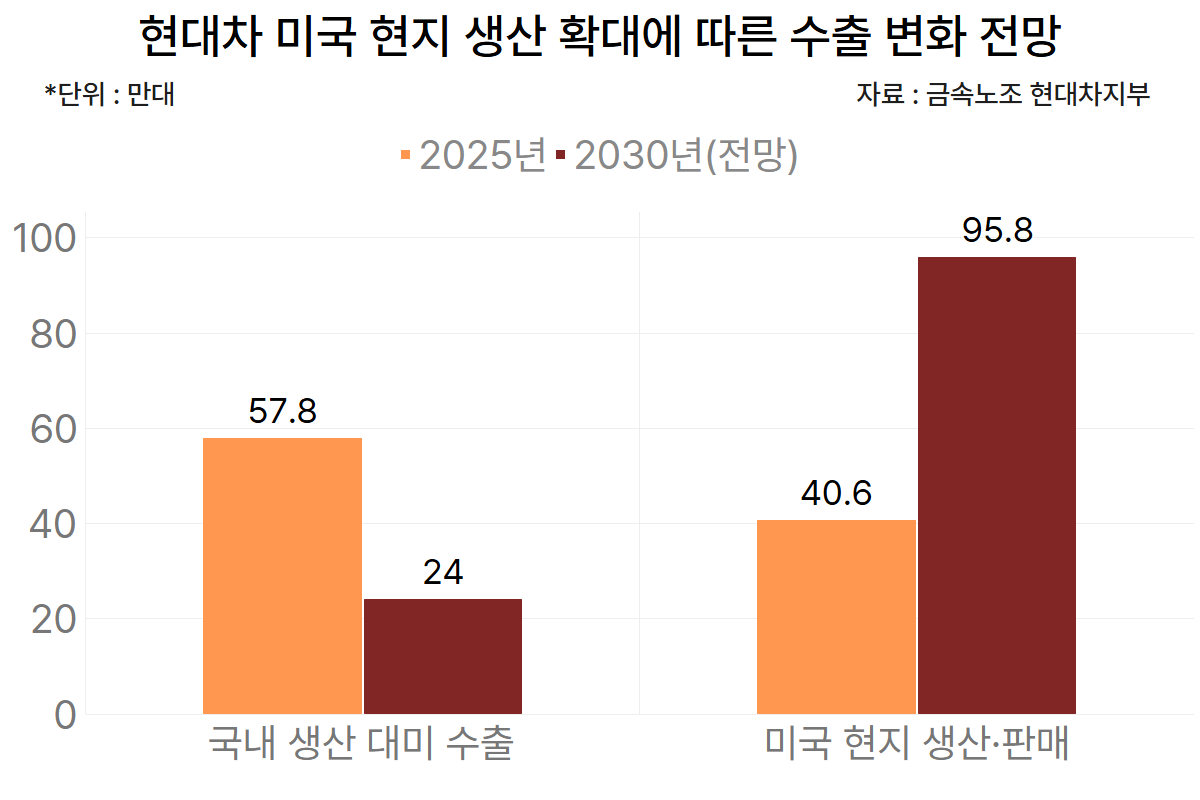
An analysis by the policy office of the Korean Metal Workers' Union's Hyundai Motor chapter estimates that the volume of vehicles exported to the United States from domestic factories will fall from 577,887 units last year to 239,538 units by 2030.
Over the same period, US local production and sales are projected to more than double, rising from 406,130 units to 958,152 units.
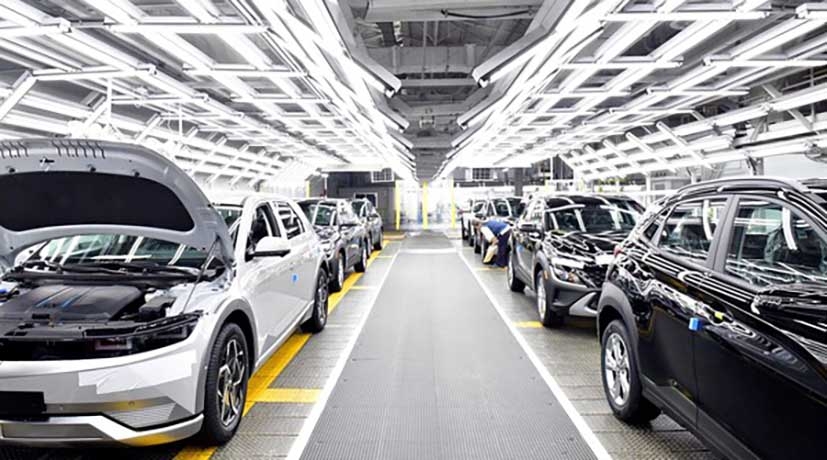
Hyundai Motor is reviewing plans to expand HMGMA's annual production capacity to as many as 800,000 units and has committed $450 million in additional investment at its Alabama plant. The company has begun mass production of the Ioniq 3 in Turkey and, at the group level, plans to invest 20.8 trillion won ($15.5 billion) in India through 2032, further building out its overseas production base.
Hyundai Motor is also reviewing plans to expand HMGMA's annual production capacity to as many as 800,000 units. Last month, the company announced an additional $450 million investment at its Alabama plant to establish local production of the Tucson hybrid and the Santa Fe extended-range electric vehicle.
"Going forward, investment plans for vehicle production will be concentrated overseas — in India, the United States and elsewhere — rather than at domestic factories," Nodongja Hamseong said.
The group also expressed dissatisfaction with the reallocation of production volumes among domestic plants. Hyundai Motor's labor and management reached an agreement on Oct. 23 on production volume distribution and job security measures tied to the reconstruction of Ulsan Plant 1 and Line 2 of Plant 4 (Line 42). The volume of production to be shifted to the United States was reduced from the 200,000 units management had initially proposed to 74,000 units.
Under the plan, 240,000 units of the Kona currently produced at Ulsan Plant 1 will move to Plants 2 and 3, while 50,000 units of the Ioniq 5 will shift to a newly built EV factory. Some 50,000 units of the Avante from Ulsan Plant 3 will be transferred to the Asan plant, and a successor model to the Porter is set to be produced at the Jeonju plant.
Nodongja Hamseong argued, however, that the production reshuffle amounts to little more than redistributing existing volume among factories rather than securing new work. With about 3,000 union members belonging to Ulsan Plant 1 and Line 42, the group said routine job rotations alone would be insufficient and called for special redeployment negotiations between labor and management.
Union calls for scrutiny of robot and AI investments — a signature priority of Chairman Chung
Nodongja Hamseong also said investments in future businesses — including robotics and AI that Chairman Chung has championed — must be subject to scrutiny.
The group cited Boston Dynamics, Hyundai Motor Group's robotics subsidiary, as a prime example. Boston Dynamics has posted a cumulative net loss of 2.38 trillion won from 2021 through the third quarter of this year. Its net loss through the third quarter alone reached 626.6 billion won, already exceeding the full-year net loss of 528 billion won recorded last year.
The group also raised concerns about the 9 trillion won Saemangeum investment plan, which encompasses AI data centers, renewable energy, hydrogen and robotics projects.
"The Saemangeum project involves 9 trillion won in investment through 2029, yet contains no vehicle production," the group said. "Investment on which the company's very future depends is proceeding without any scrutiny whatsoever."
Strikes disrupt output of 55,000 vehicles; Hyundai Motor also pursues domestic capacity expansion
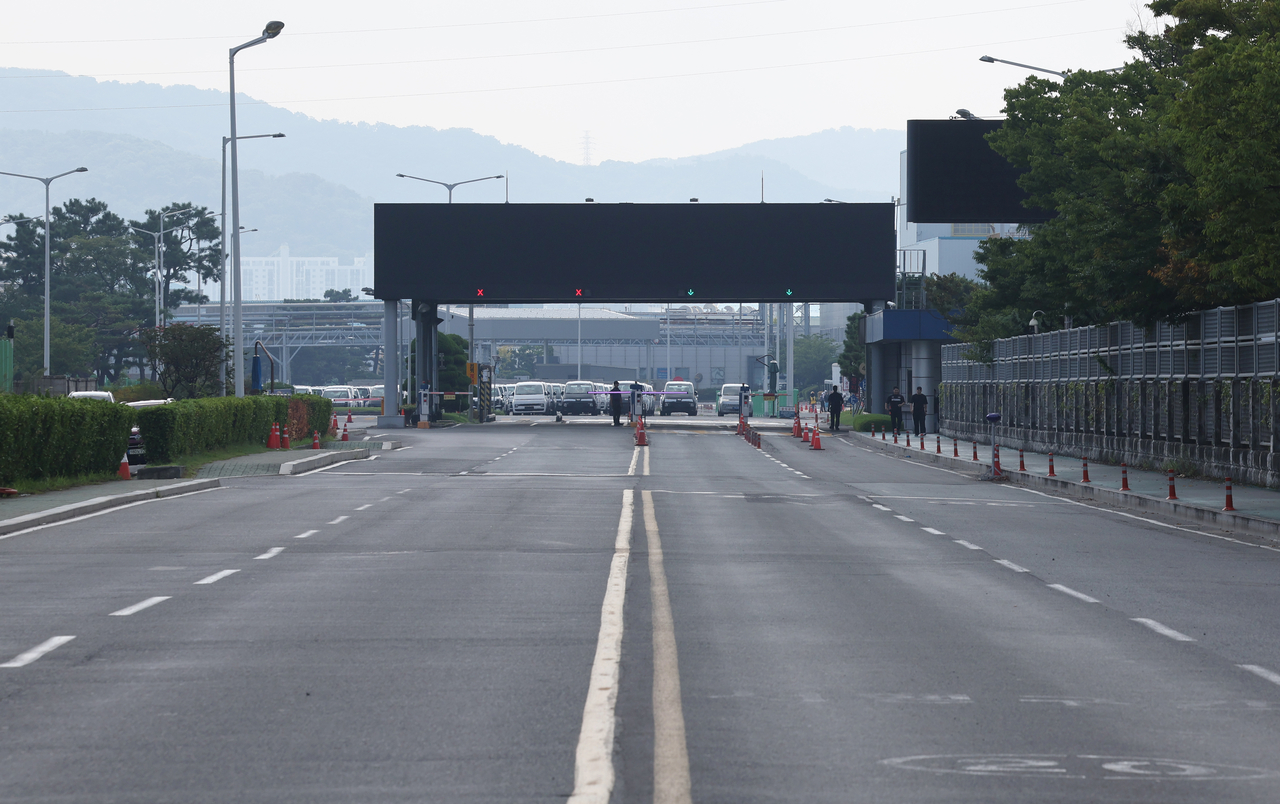
While Nodongja Hamseong pointed to management's strategic decisions as the cause of Hyundai Motor's sales and production difficulties, the union's own strikes this year also contributed significantly to the disruption.
Strikes in July and August brought production lines to a halt for a total of 120 hours. Industry estimates put the resulting production shortfall at 55,200 vehicles, with lost sales of at least 2.3 trillion won. The cumulative domestic factory utilization rate through the third quarter fell to 93.6 percent, down 8.1 percentage points from the same period a year earlier.
Reflecting the global demand slowdown and production disruptions, Hyundai Motor last month lowered its annual wholesale sales target for this year from about 4.16 million units to 4 million units. The investment plan for its automotive division was also revised down, from 17.8 trillion won to 16 trillion won.
Separately from its overseas expansion, Hyundai Motor is also pursuing a stronger domestic production base. At its "2026 CEO Investor Day" in August, the company announced plans to expand global production capacity by 1.27 million units by 2030, with 200,000 of those units to come from domestic facilities. The company also set a target of launching 100 new models — including facelifts and derivative variants — in global markets by 2030.
"Hyundai Motor's fundamentals are stronger than ever," President and CEO Jose Munoz said at the event. "Building on strategic partnerships, we will advance future technologies, create new opportunities and transform into a physical AI company that produces and deploys robots and robotaxis."
kwater@heraldcorp.com




