Blood-alcohol limit lowered from 0.05% to 0.03% in 2019 after 57 years
In 2025, repeat offenders made up 43.7% of 106,637 drunk-driving cases; those caught seven or more times actually increased
Recidivism rate has held steady at 42.2–45.4% since the stricter standard took effect
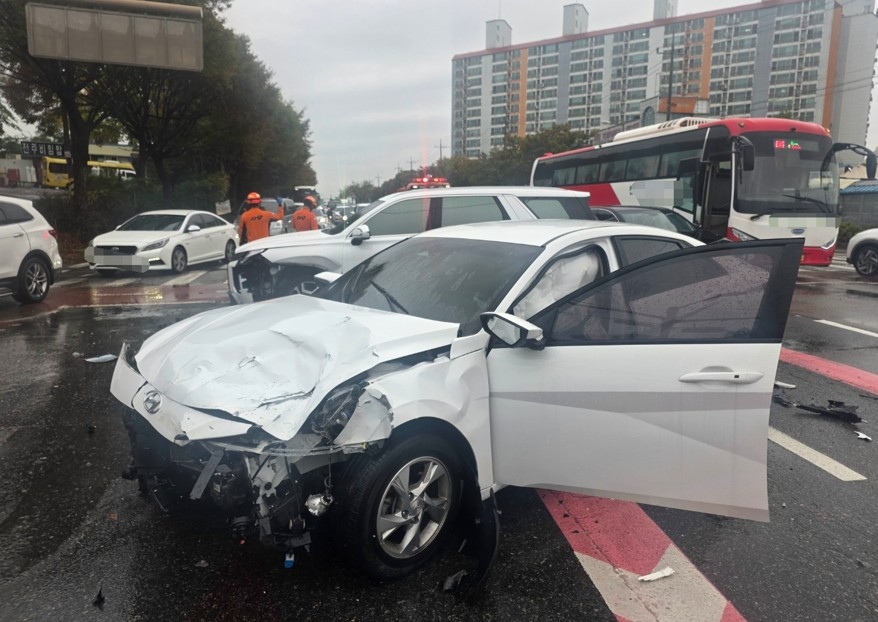
Six years after South Korea lowered its drunk-driving threshold from a blood-alcohol concentration of 0.05% to 0.03%, more than four in 10 drunk-driving cases detected last year involved repeat offenders.
According to the Korean National Police Agency's annual statistics on repeat drunk-driving offenders, released Thursday, repeat offenders accounted for 46,556 of the 106,637 drunk-driving cases recorded in 2025 — a share of 43.7%. In 2018, the year before the stricter standard took effect, the repeat-offender rate stood at 44.7%, representing 72,892 of 163,060 cases.
South Korea had maintained a 0.05% blood-alcohol limit since 1962 before lowering it to 0.03% in June 2019 — a standard Japan had adopted 17 years earlier, in 2002.
Under Article 44, Paragraph 4 of the Road Traffic Act, as listed in the National Law Information Center, "the standard for a state of intoxication that prohibits driving shall be when the driver's blood-alcohol concentration is 0.03 percent or higher." The provision took effect June 25, 2019.
Two months before the law took effect, in April 2019, the Korean National Police Agency explained the rationale for lowering the limit through the government's policy portal, Policy Briefing, saying the change was intended "to eliminate the perception that driving after just a small amount of alcohol is acceptable."
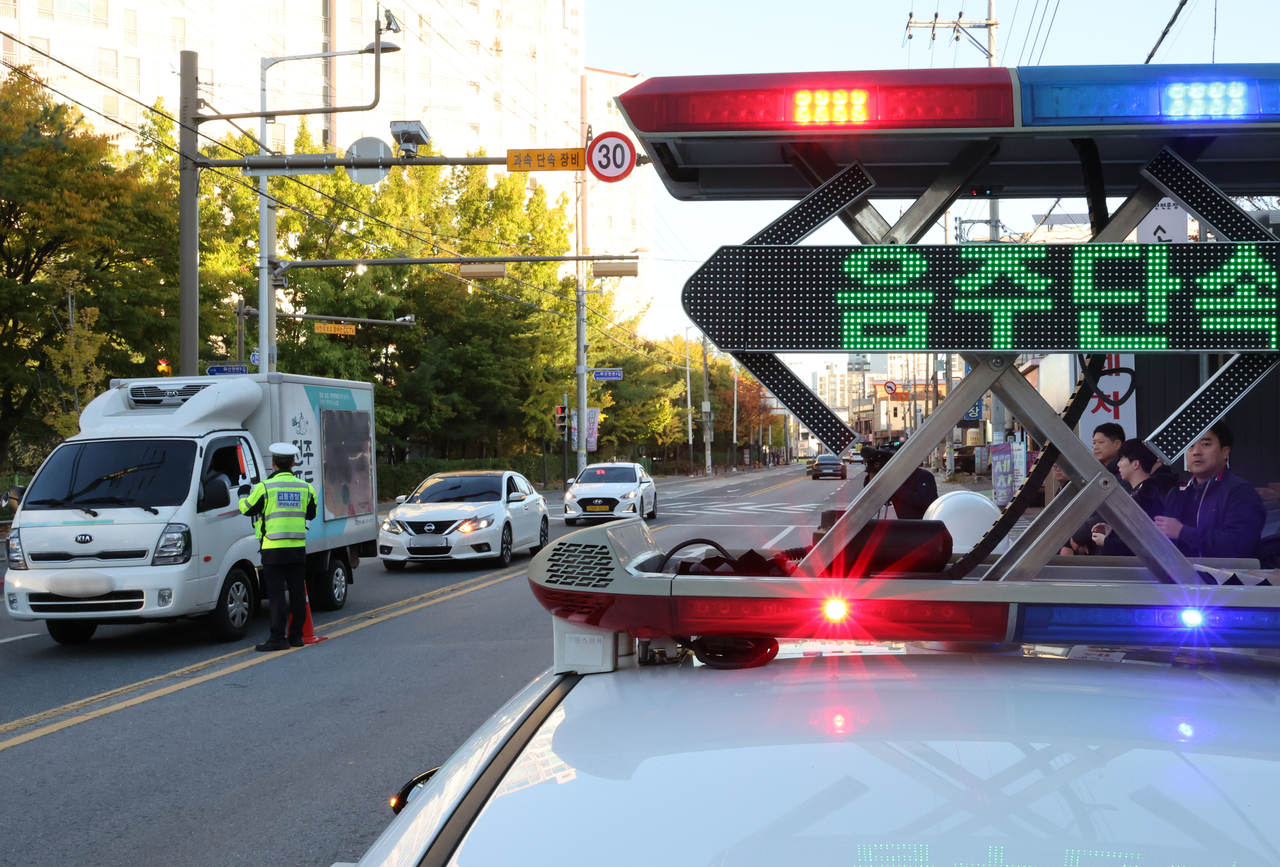
The 0.05% standard that held for 57 years — and the long road to changing it
The 0.05% blood-alcohol limit was first established in a presidential decree under the Road Traffic Act in 1962. The drunk-driving threshold remained at the level of a presidential ordinance for more than four decades. A 2005 revision to the Road Traffic Act enshrined the 0.05% figure directly in statute.
A government proposal to lower the blood-alcohol limit to 0.03% had emerged eight years before the 2019 revision.
The Ministry of Land and Maritime Affairs — now the Ministry of Land, Infrastructure and Transport — put forward a plan to tighten the drunk-driving threshold from 0.05% to 0.03% at a public hearing in June 2011 for the Seventh National Traffic Safety Master Plan (2012–2016). The proposal did not lead to a revision of the Road Traffic Act at the time.
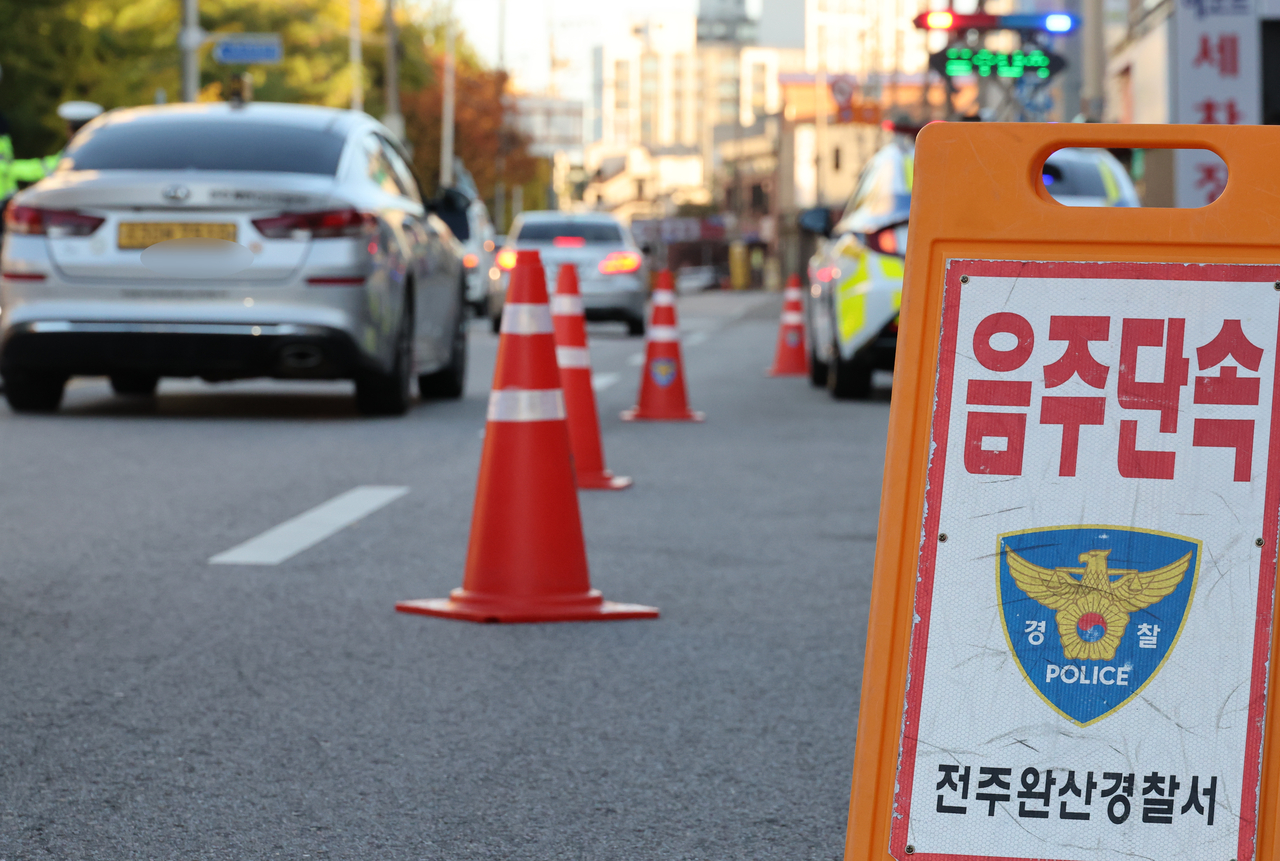
Bills to lower the limit to 0.03% were consistently introduced in the National Assembly as well. A Road Traffic Act amendment tabled in the 19th Assembly sat pending until February 2015 before lapsing when the legislative term expired. The Korean National Police Agency announced in March 2016 that it would conduct a nationwide poll on tightening the standard to 0.03%, but the law was not amended until late 2018.
Even within the Assembly, voices of caution emerged during the bill review process. Jeong Yeon-ho, a senior legislative researcher at the National Assembly at the time, wrote in a review report on the Road Traffic Act amendment that "cases where blood-alcohol concentration falls between 0.03% and below 0.08% warrant careful consideration before lowering the threshold."
Jeong noted that proving intoxication in court was already difficult when a driver only marginally exceeded 0.05%, given problems such as breathalyzer errors and the limitations of Widmark formula calculations, and warned that lowering the standard further could widen the scope for legal disputes.
Jeong also suggested that even if the 0.03%–0.05% range warranted punishment, it would be more reasonable to begin with administrative sanctions such as fines or license suspension before expanding to criminal penalties.
The same review report noted that drivers who perceived punishment as certain were less likely to drink and drive, and that for habitual drunk drivers, treatment was more effective than punishment as a means of changing behavior.
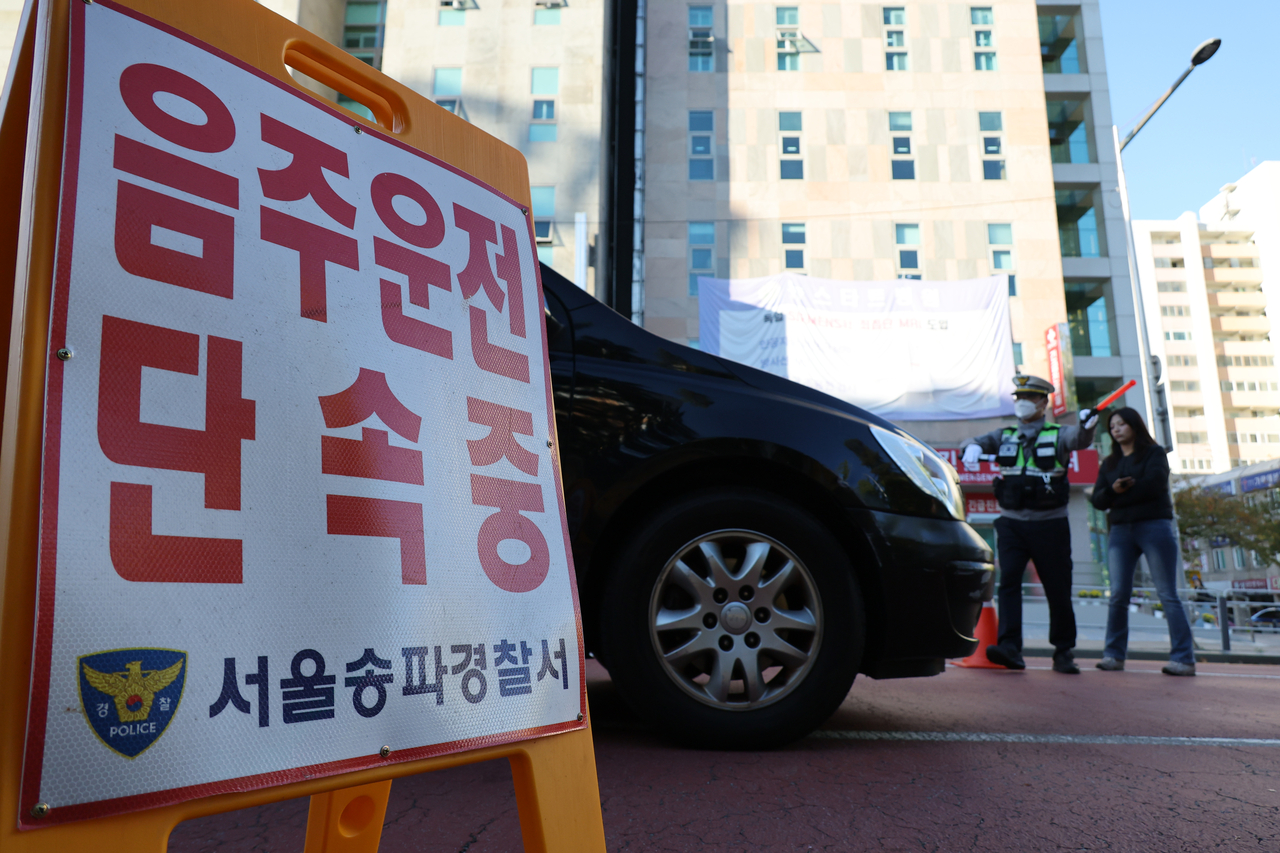
Japan cut its limit and raised fines sixfold — South Korea's recidivism rate barely moved
The National Assembly passed the Road Traffic Act amendment after Yun Chang-ho, who was struck by a drunk driver in Haeundae-gu, Busan, in September 2018, died 45 days later. The revised Road Traffic Act, widely known as the "second Yun Chang-ho Act," took effect June 25, 2019 — 57 years after the 0.05% standard was set in 1962.
Japan, by contrast, amended its Road Traffic Act in 2002 to lower the drunk-driving threshold from 0.25 milligrams of alcohol per liter of breath (equivalent to a blood-alcohol concentration of 0.05%) to 0.15 milligrams (equivalent to 0.03%).
According to materials from Japan's Ministry of Justice, the revision was driven by two findings: fatal and serious-injury accident rates were high among drivers below the 0.25-milligram threshold, and follow-up experiments showed that driving ability was impaired at 0.15 milligrams or above.
A research note published in June 2023 by the Korea Insurance Research Institute, titled "KIRI Report Focus: Drunk-Driving Deterrence in Japan and the United States and Implications for Korea," found that Japan also raised its drunk-driving fines sixfold when it amended the Road Traffic Act in 2002.
Fatal drunk-driving accidents in Japan fell sharply, from 1,276 in 2000 to 120 in 2022. Japan is also applying a new numerical standard of 0.5 milligrams of alcohol per liter of breath to its dangerous-driving homicide and injury statute starting in July 2026.
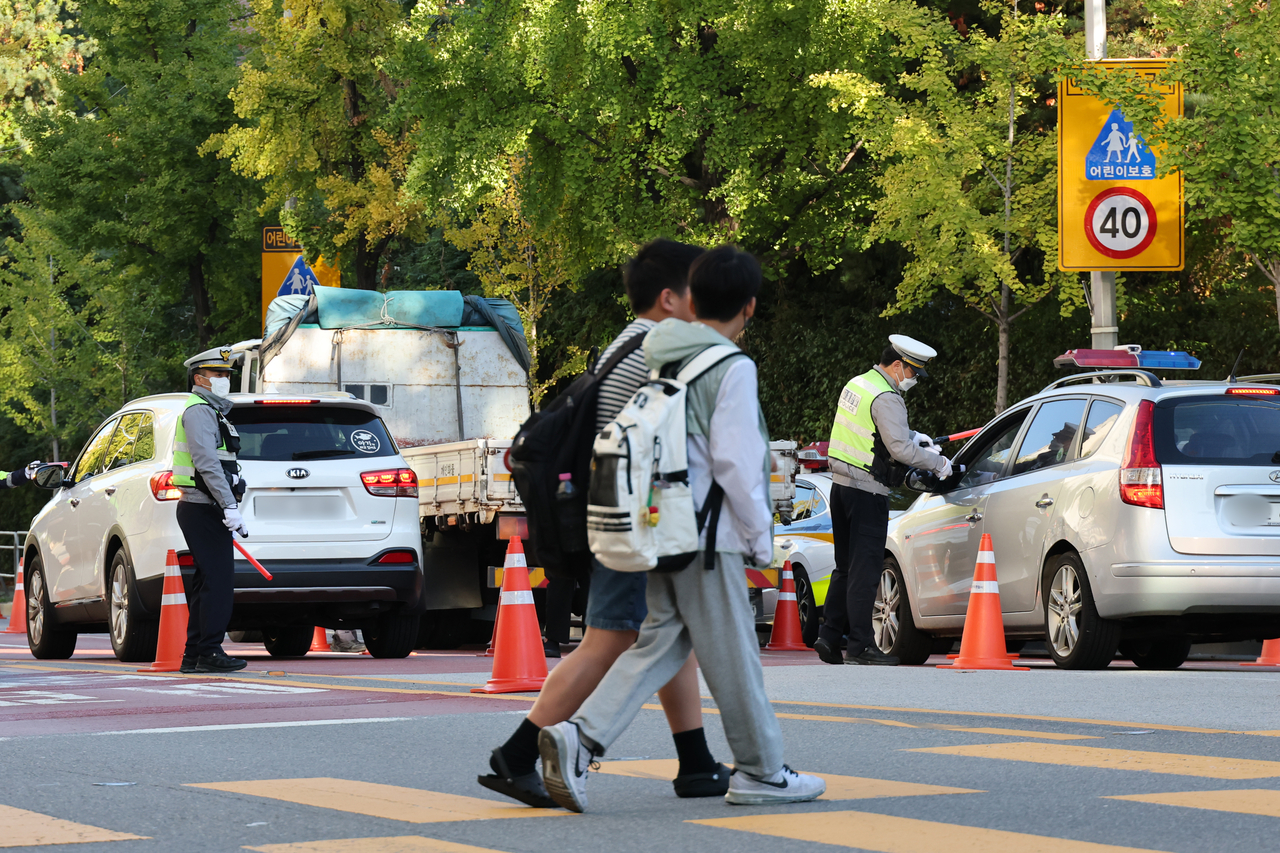
Most European countries use a blood-alcohol concentration of 0.05% as their drunk-driving threshold. According to data compiled by the European Transport Safety Council, Sweden, Norway, Poland and Estonia apply a stricter 0.02% standard, while the Czech Republic, Hungary, Romania and Slovakia enforce a zero-tolerance policy. England and Wales set their own threshold at 0.08% — the most permissive in Europe.
In the United States, every state except Utah applies a 0.08% blood-alcohol limit. Utah lowered its standard to 0.05% in 2018.
The National Transportation Safety Board cited research by the National Highway Traffic Safety Administration in February 2022, reporting that Utah's fatal crash rate fell 19.8% in 2019. The rest of the country saw a decline of only 5.6% that same year.
NTSB board member Tom Chapman said, "The real-world results of this study once again demonstrate that lowering the blood-alcohol concentration limit can save lives in the United States."
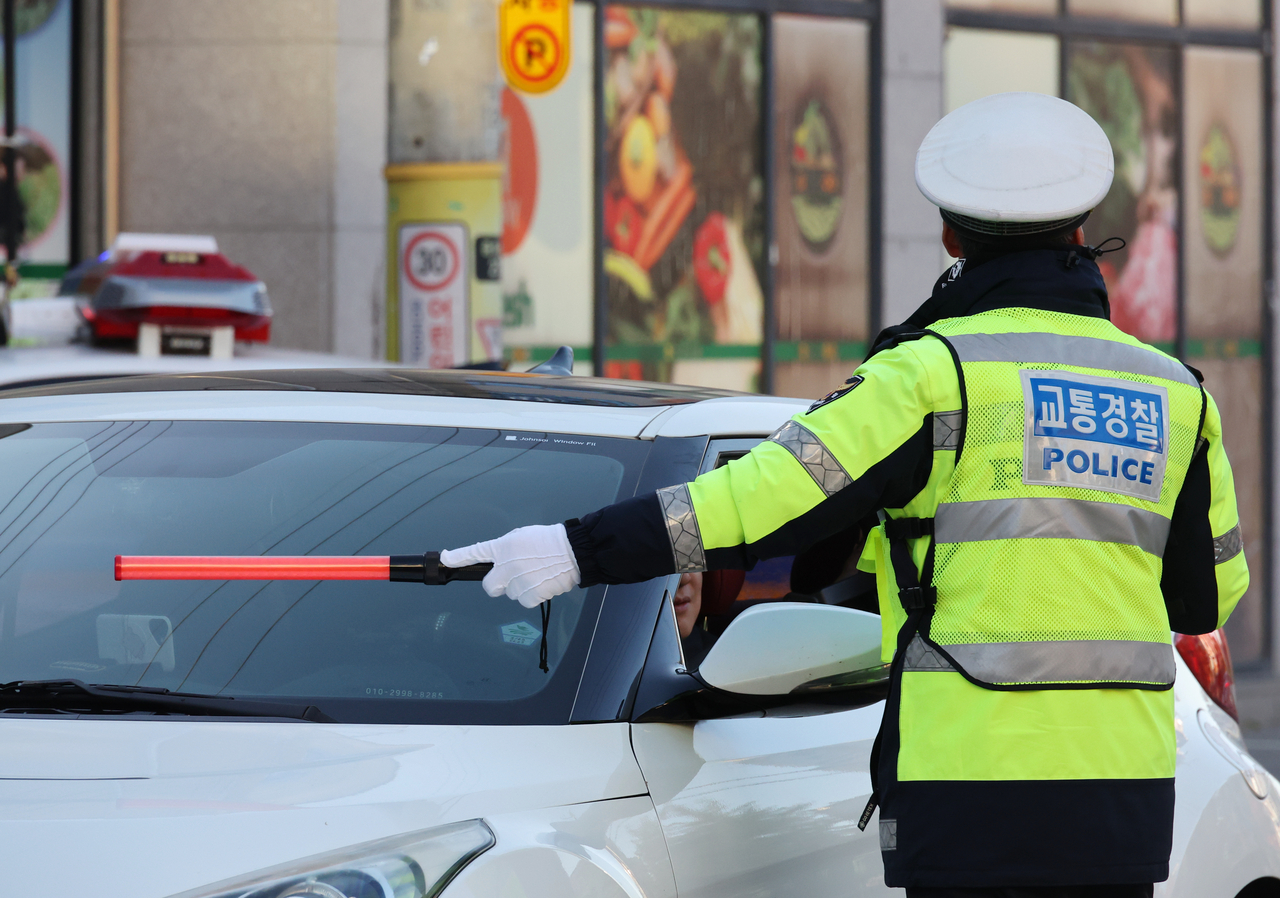
Drunk-driving accidents in South Korea are declining. According to the Korean National Police Agency and the Korea Road Traffic Authority, drunk-driving accidents fell 6.2% year-on-year to 10,351 cases in 2025, while fatalities dropped 12.3% to 121.
The repeat-offender rate, however, has barely changed since the stricter standard took effect. According to the Korean National Police Agency's annual statistics on repeat drunk-driving offenders, repeat offenders accounted for 46,556 of the 106,637 drunk-driving cases in 2025, or 43.7%. In 2018, the year before the lower threshold was introduced, the repeat-offender rate was 44.7% — 72,892 of 163,060 cases.
From 2019, when the 0.03% standard took effect, through 2025, the repeat-offender rate fluctuated between 42.2% and 45.4%. Over the same period, total drunk-driving cases fell from 163,060 in 2018 to 106,637 in 2025. Cases involving drivers caught seven or more times, however, rose from 866 in 2018 to 935 in 2025.
The Korea Insurance Research Institute's report cited Japan's experience to argue that lowering the legal threshold and raising the severity of penalties must go hand in hand to effectively deter drunk driving.
Six years after the 0.03% blood-alcohol standard took effect, more than four in 10 drunk-driving cases detected in 2025 still involved repeat offenders.
dbsdn1110@heraldcorp.com