Agency holds series of bilateral meetings with customs authorities from the US, EU, Brazil and others to ease trade barriers for South Korean exporters
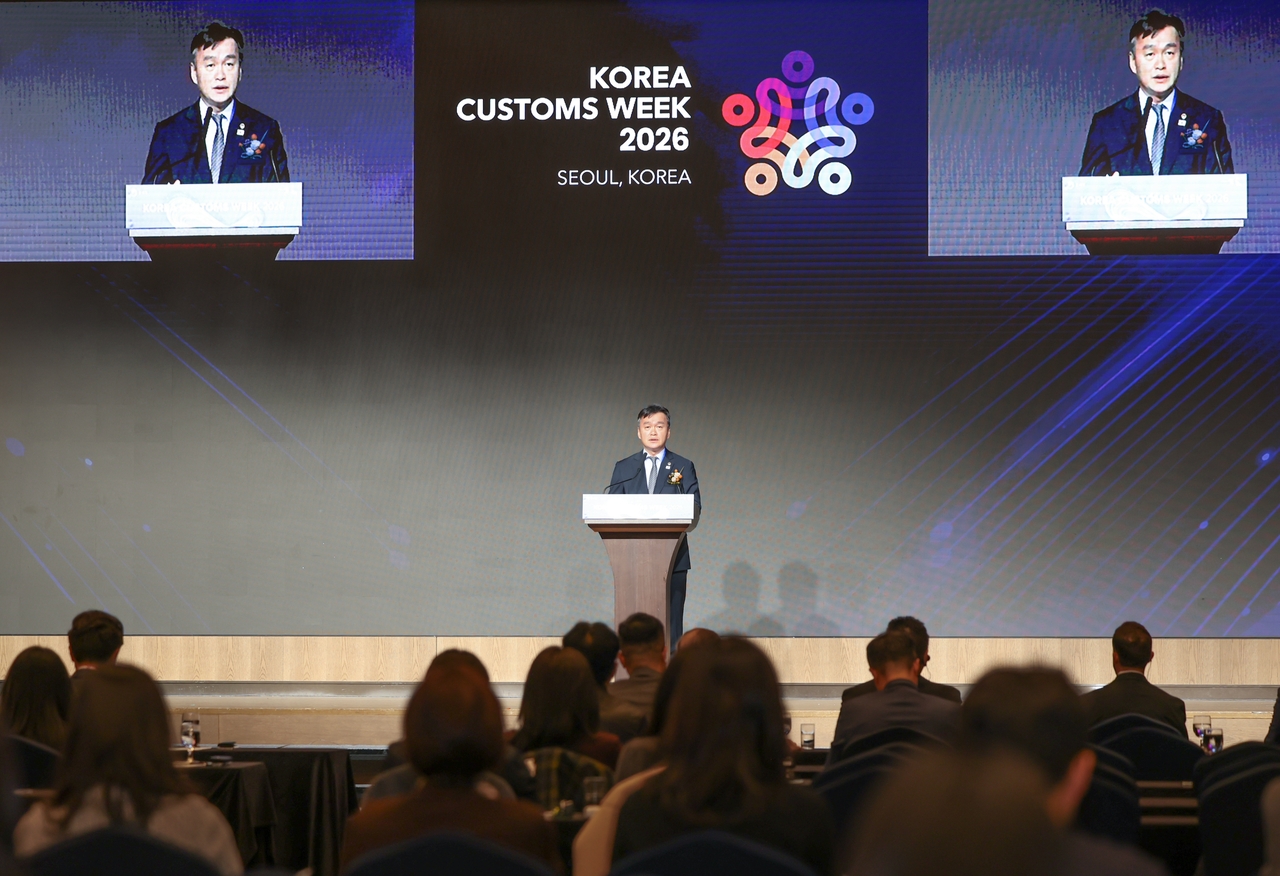
The Korea Customs Service has significantly reduced customs clearance barriers for South Korean exporters through a series of consultations with customs authorities from the United States, the EU and other major trading partners.
The agency said Wednesday it had successfully concluded the 2026 Korea Customs Week, held over three days from Monday through Wednesday at Lotte Hotel World in Seoul.
The event drew 721 participants in total, including representatives from 158 South Korean companies that export to the US and EU, trade specialists, senior officials from the US Customs and Border Protection, the EU Delegation to South Korea, and customs authorities from Brazil, Vietnam and the Philippines, as well as representatives from the UN Economic and Social Commission for Asia and the Pacific.
US Customs and Border Protection officials participated directly, walking attendees through American tariff and customs procedures, key enforcement cases and practical compliance points. Participating companies said they gained firsthand operational information and a concrete export compliance checklist that would otherwise be difficult to obtain. The sessions drew strong interest for going beyond a simple overview of regulations to share actual enforcement experience and real-world cases.
During the event, the Korea Customs Service held seven rounds of bilateral meetings with senior customs officials from major countries. The talks produced concrete cooperation plans on issues including narcotics and intellectual property enforcement, mutual recognition of Authorized Economic Operator programs and customs mutual assistance agreements, broadening the foundation for improving overseas customs conditions for South Korean businesses.
The agency also joined the EU Delegation and domestic experts to share strategies for responding to the EU Carbon Border Adjustment Mechanism and key points to watch during verification. A subsequent international rules-of-origin seminar covered topics ranging from how to use free trade agreements to responding to trade remedy measures such as anti-dumping and countervailing duties, providing wide-ranging support to strengthen South Korean companies' origin management capabilities.
Han Min, director general of the Korea Customs Service's International Customs Cooperation Bureau, said the event would give South Korean exporters a clearer understanding of the rapidly shifting trade environment and help reduce the uncertainty and customs risks they face. "We will follow through without delay on the cooperation tasks discussed at the high-level bilateral meetings to create a more trade-friendly environment for our companies," Han said.
The Korea Customs Service plans to post on its website a summary of the key customs and trade policy information and compliance points covered at the event, so that exporters who could not attend in person can still make use of the material.
kwonhl@heraldcorp.com