Ministry of Trade, Industry and Energy export data
October exports hit $5.64 billion, up 584% year-on-year
KV cache growth driven by AI inference and agentic AI expansion
Samsung Electronics to commercialize QLC-based 256TB SSD in early 2027
SK hynix to raise 321-layer production share above 50%
SALT-KV and CMM hybrid technology also in development
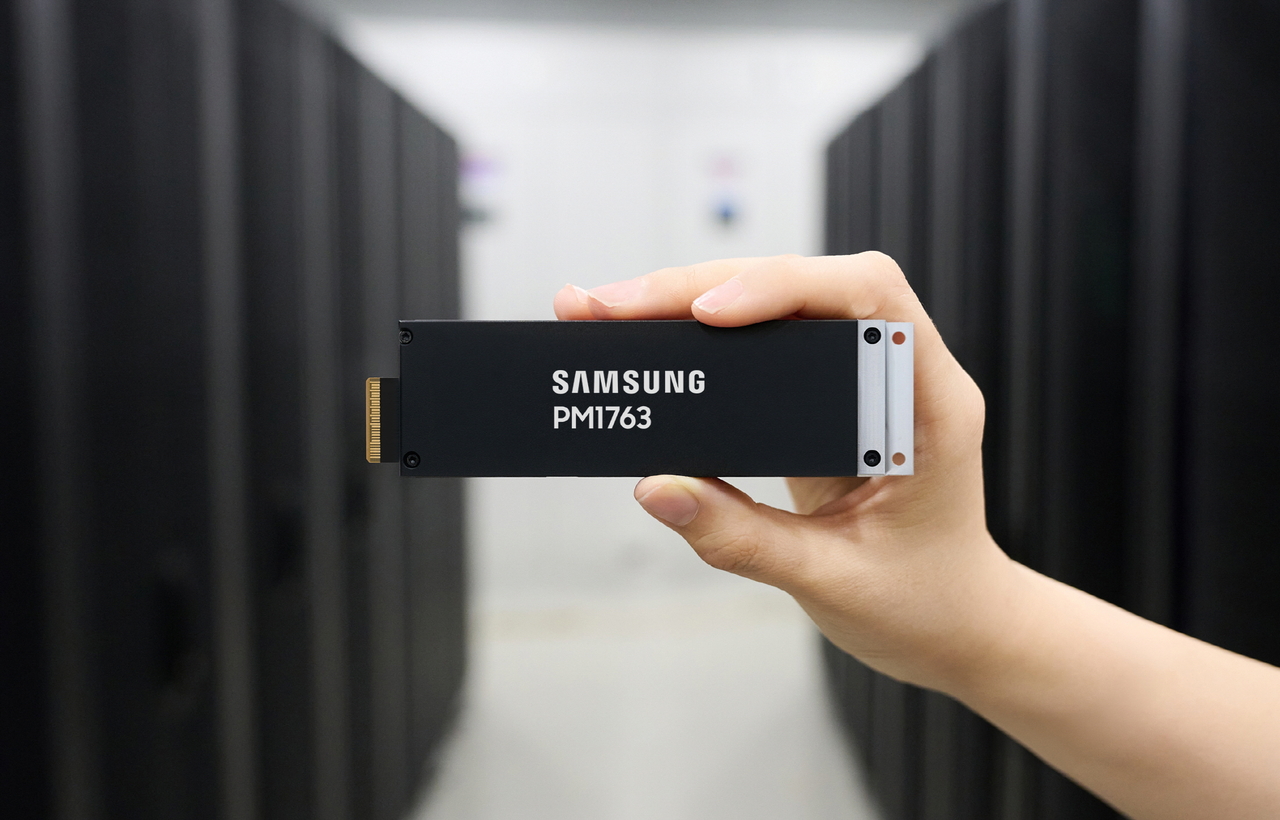
South Korea's solid-state drive exports have surged as demand for AI inference expands. SSD shipments reached $5.64 billion last month, up nearly 600% from a year earlier.
Samsung Electronics and SK hynix expect demand for AI data center SSDs to keep growing as KV cache — the intermediate data generated during AI inference — continues to accumulate. Both companies used their recent earnings calls to outline plans for expanding high-value NAND product supply and to lay out their technology roadmaps.
SSD exports last month totaled $5.64 billion, a 584% increase from $824 million in the same period a year ago, according to the Ministry of Trade, Industry and Energy.
While HBM and other DRAM chips have led the broader semiconductor export surge, NAND-based SSD exports have now posted triple-digit year-on-year growth for nine consecutive months. The spread of agentic AI and rising global AI infrastructure investment are driving stronger shipments of AI server SSDs, particularly to the United States.
Monthly SSD export figures were running at $1 billion to $2 billion earlier this year but have exceeded $5 billion every month since August. Exports stood at $1.37 billion in January, climbed to $5.98 billion in August and reached $6.77 billion in September.
The surge is attributed to a simultaneous rise in demand and prices. Both Samsung Electronics and SK hynix said during their third-quarter earnings conference calls late last month that server SSD demand increased during the quarter.
Prices were also lifted by a deliberate shift toward higher-value products. SK hynix said that while NAND shipment volume edged down quarter-on-quarter in the third quarter as it expanded sales of 321-layer TLC (triple-level cell) enterprise SSDs, the average selling price rose by the mid-20 percent range.
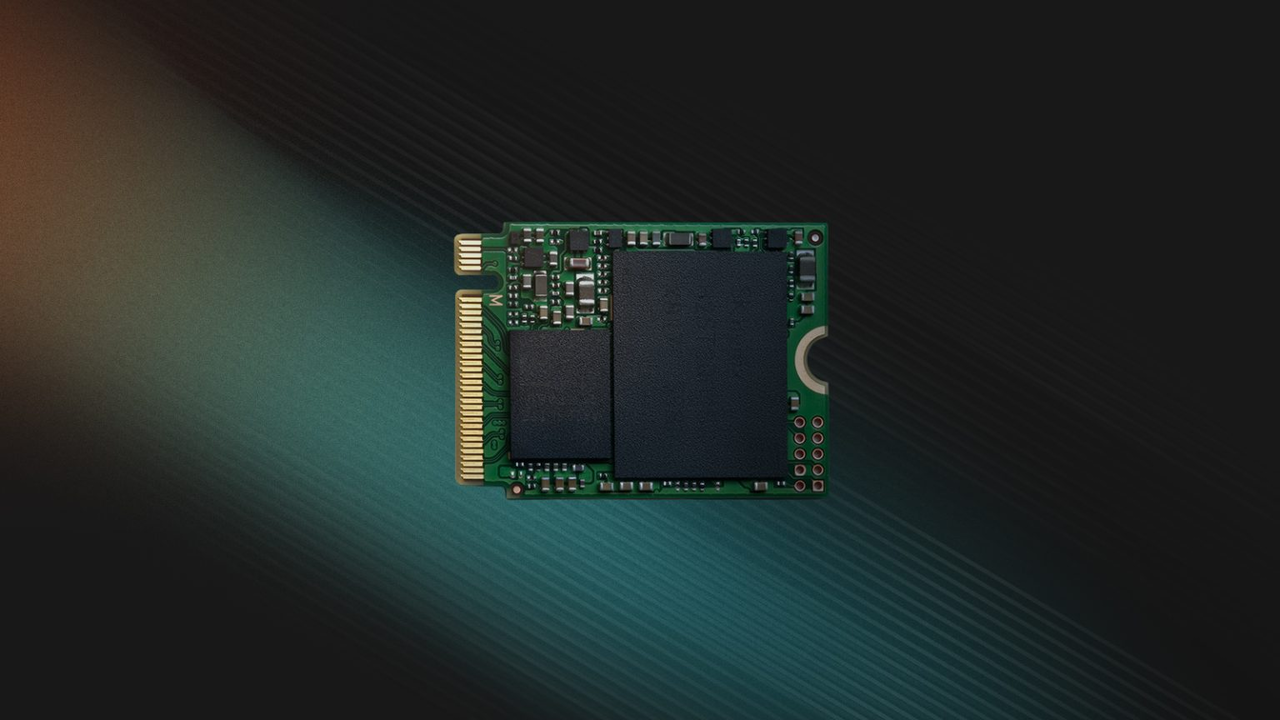
Samsung Electronics and SK hynix both expect growth in KV cache, driven by the spread of agentic AI, to fuel demand for high-performance, high-capacity SSDs. As context window sizes expand, KV cache volumes are rising in tandem.
Samsung's strategy is to lead development of QLC (quad-level cell) technology — which stores more data per cell than TLC — alongside TLC, targeting the ultra-high-capacity SSD market for AI agents.
Kim Jae-jun, executive vice president of Samsung Electronics' memory business division, said the company is rapidly expanding sales of high-performance, high-capacity PCIe (Peripheral Component Interconnect Express) Gen6 SSDs based on TLC to maximize KV cache utilization, as well as high-capacity QLC SSDs for personal AI agent services. "Based on V9 2Tb QLC, we plan to commercialize a 256TB product using 32-layer stacking technology early next year," Kim said.
SK hynix plans to raise the share of its flagship 321-layer process to more than 50 percent of domestic production capacity in the fourth quarter to meet rising SSD demand, with the aim of expanding its ability to supply enterprise SSDs based on high-layer-count NAND.
Over the medium to long term, the company is also developing technology to use SSDs as a core component of a tiered memory architecture for storing and managing data needed for AI inference.
Song Chang-seok, head of NAND marketing at SK hynix, said SSDs are already being used for KV cache offloading in some AI systems. "Going forward, we expect their role to expand into a context memory tier where multiple servers and GPUs share large-scale KV cache," Song said. Song added that the company is developing technologies such as SALT-KV and CMM hybrid to capitalize on that opportunity.
SALT-KV analyzes KV cache at the context level and places data in the most appropriate storage tier — HBM, DRAM or SSD. CMM hybrid is a CXL (Compute Express Link)-based technology that stores the entire KV cache on an SSD while preloading frequently reused data into DRAM.
jeongwan@heraldcorp.com