Budget season kicks off with public hearing at budget committee
Record-high spending plan faces Dec. 2 deadline
DP vows to back livelihood spending; PPP warns of populism
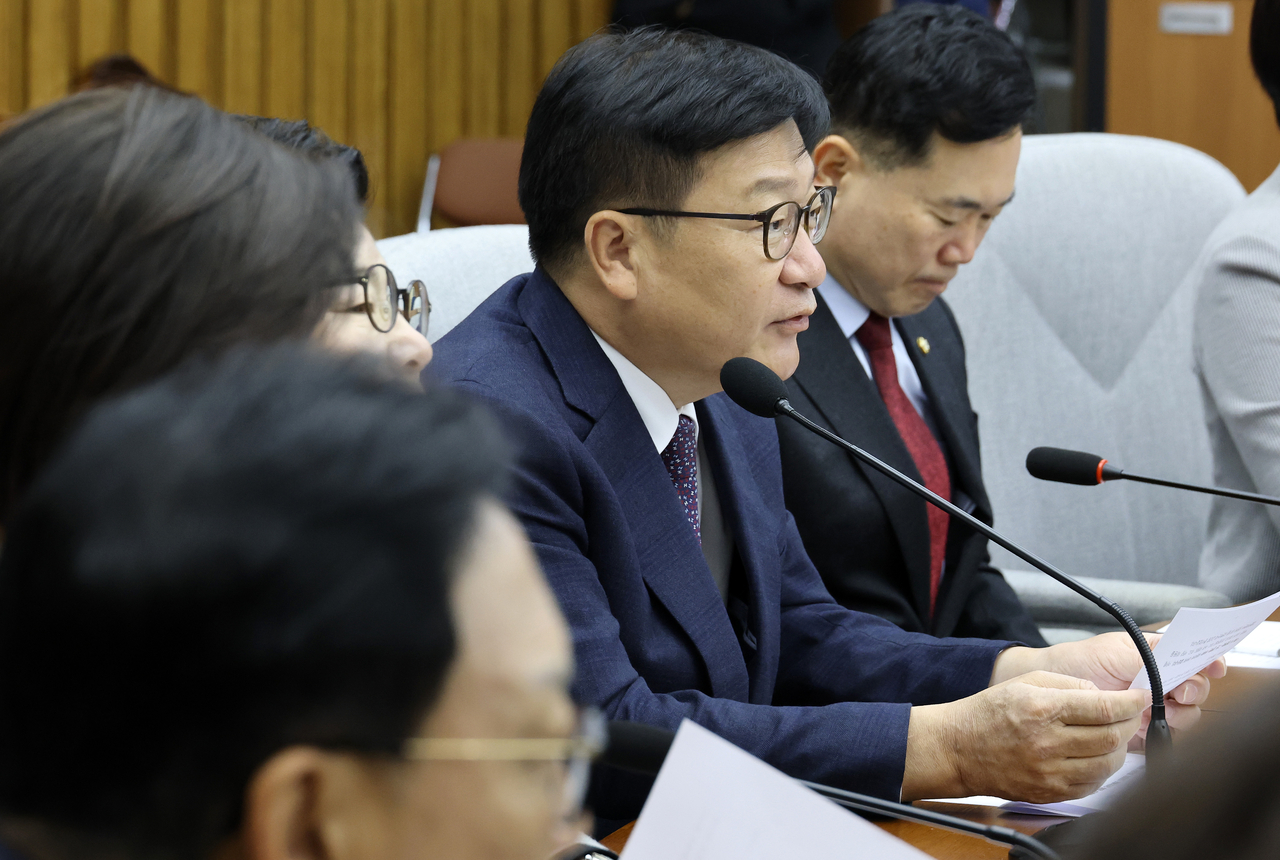
The National Assembly has begun reviewing next year's record-breaking budget proposal of 820.9 trillion won ($615 billion), the largest in history. The Democratic Party of Korea says it will back the plan to secure livelihood support and future growth engines, while the People Power Party is pushing back, calling for cuts in the name of fiscal soundness. The sharpest clash is expected over the 162 trillion won Future Response Fund — specifically how it will be financed and who will control it.
The National Assembly's Budget and Accounts Special Committee launched formal budget deliberations Friday with a public hearing on the 2027 budget proposal and fund management plan.
Comprehensive policy questioning is scheduled for Wednesday through Thursday, followed by reviews of economic ministries Nov. 9-10 and non-economic ministries Nov. 11-12. From Nov. 16, the budget adjustment subcommittee will take up line-by-line reviews of individual spending items. The full budget bill will go to a plenary session after clearing the subcommittee and the full committee. The legal deadline for passage is Dec. 2.
The government's budget proposal for next year stands at 820.9 trillion won, up 12.8 percent from this year and the largest ever submitted. The government said it plans to concentrate fiscal resources on securing future growth engines, stabilizing livelihoods and promoting balanced regional development. Given the sharp increase in spending, however, fierce debate between the ruling and opposition parties over the appropriateness of the financing plan and overall fiscal soundness appears unavoidable.
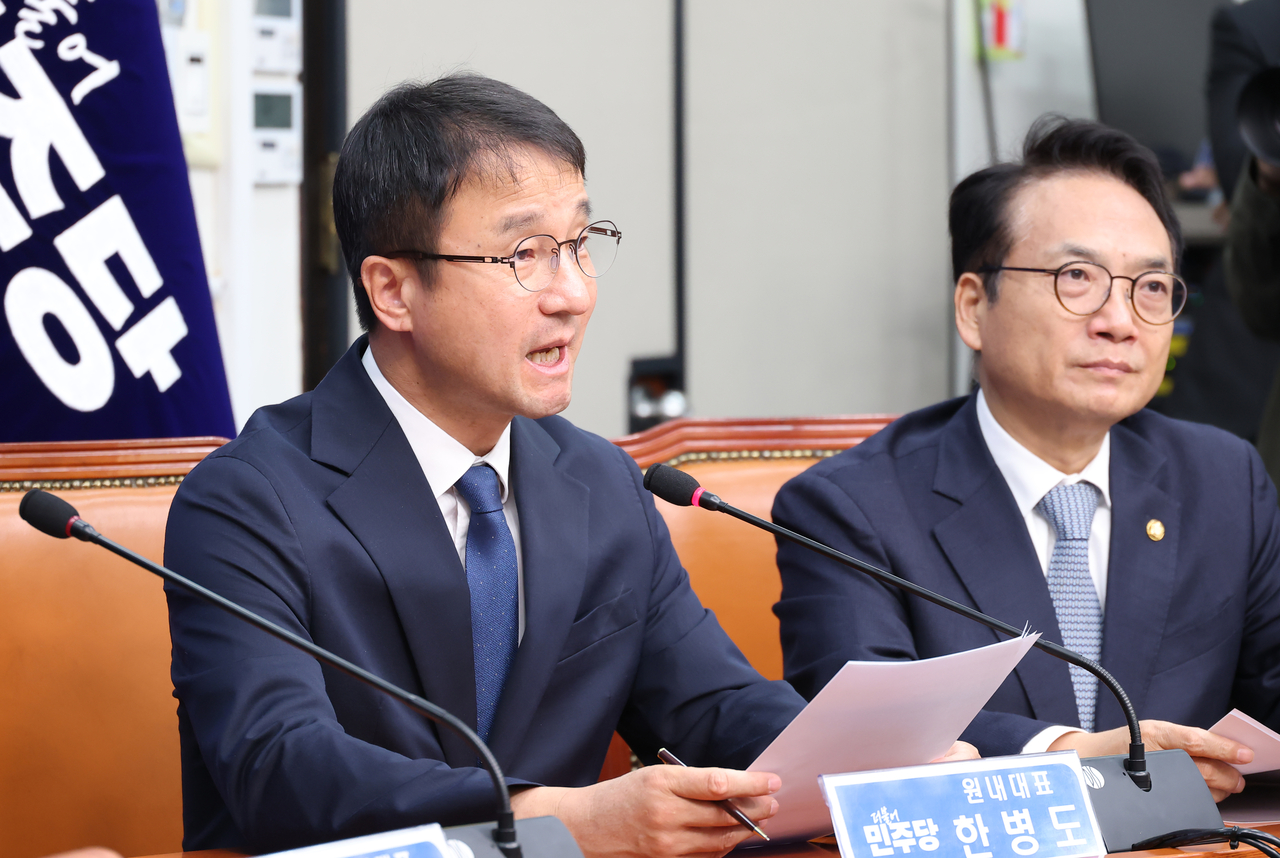
The Democratic Party plans to support the government's expansionary fiscal stance while focusing on securing livelihood-related spending. Floor Leader Han Byung-do said at a supreme council meeting Friday that the party would carry the spirit of its "livelihood, policy and accountability" national audit approach into the legislative and budget review process. "We will make sure not a single gap is left in the budget that protects the people, and we will accelerate legislation on livelihood issues identified during the national audit," Han said.
The People Power Party, by contrast, has labeled the government's expansionary budget "populism" and signaled it will seek cuts. Floor Leader Jeong Jeom-sik said at a national audit strategy meeting Friday that national debt would rise from 1,412.8 trillion won under this year's supplementary budget to 1,734.1 trillion won by 2030 — an increase of more than 321 trillion won. "Reckless fiscal management always comes with consequences," Jeong said.
The Future Response Fund is shaping up as the most contentious battleground of the budget season. The government has allocated 162 trillion won to the fund for next year, and there is talk that the total could exceed 200 trillion won if surplus tax revenue from this year is transferred in. The debate spans not only whether the fund is necessary but also how it will be financed and how much discretion the government should have in managing it.
The Democratic Party supports the fund, arguing it is needed to address medium- and long-term challenges including youth policy, education and talent development, and balanced regional growth. Even within the party, however, some voices call for further consultations with the government and local authorities over specific uses and the allocation of resources. One Democratic Party lawmaker said the government's position has its principles, but added that fiscal shortfalls among local governments make it likely the details will be adjusted during the review.
The People Power Party opposes expanding national debt to build up the fund. Yoo Sang-bum, a PPP lawmaker who leads the party's side on the budget committee, said by phone that creating more than 100 trillion won in additional national debt without earmarking specific revenue sources would be "the worst possible decision for managing state finances." Park Soo-young said the government should not issue additional government bonds and should instead draw on the national wealth fund, adding that the Ministry of Economy and Finance and the Ministry of Planning and Budget have themselves expressed differing views on the matter. "Careful review is needed again," Park said.
The degree of discretion the government would hold over the fund's management is also at issue. The government is pushing to set the threshold for revising the fund's operating plan without a National Assembly re-vote at 30 percent — 10 percentage points higher than the 20 percent applied to ordinary project-based funds. The stated aim is to give the government flexibility to respond to shifting policy conditions, but critics warn the arrangement could weaken the Assembly's oversight of the budget.
Fire department financing, housing supply spending, and budgets for the planned Public Prosecution Service and Serious Crime Investigation Agency are also on the review agenda. Disagreements between the parties are likely to surface over the size and distribution of spending on livelihoods and housing stability, as well as the fiscal costs of the government's organizational restructuring. The People Power Party has also signaled it intends to cut budgets for various whistleblower reward programs.
Yoo said at a meeting Friday that the government was trying to turn South Korea into what he called "a professional paparazzi republic" by putting 250 billion won of taxpayer money behind such programs. "Whistleblower rewards across 21 programs jumped nearly eightfold in a single year — from 32.4 billion won this year to 254.6 billion won next year," Yoo said.
mp1256@heraldcorp.com
thanks@heraldcorp.com
raining@heraldcorp.com