Decade of scientific surveys opens door to toothfish fishing
Two of three adopted international norms proposed by Seoul
Rules to restrict illegal toothfish trade, ban explosives on vessels
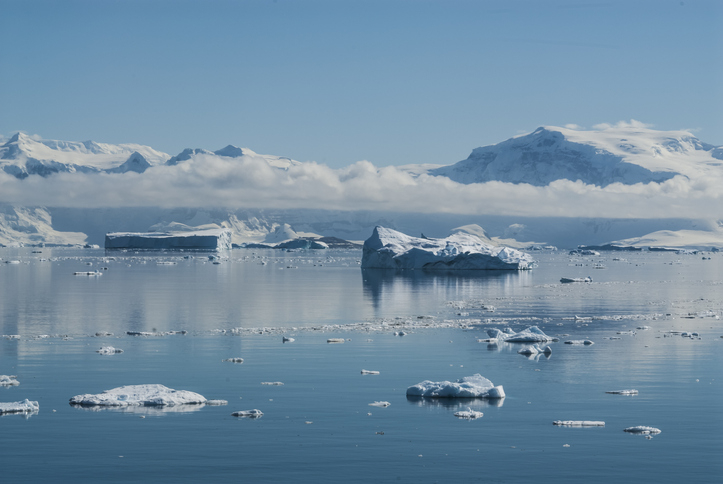
South Korean fishing vessels will be allowed to resume catching toothfish — also known as Patagonian toothfish, or mero — in a section of the Antarctic Ocean that has been closed to fishing since 1998. The breakthrough came after a decade of scientific surveys conducted jointly by the government and the domestic deep-sea fishing industry won international recognition. Two conservation measures proposed by South Korea were also adopted at an international Antarctic fisheries meeting.
The Ministry of Oceans and Fisheries announced Wednesday that at the 45th annual meeting of the Commission for the Conservation of Antarctic Marine Living Resources (CCAMLR), held in Hobart, Australia, from Oct. 19 to Oct. 30, two South Korean proposals for international conservation measures were adopted and fishing for toothfish in Antarctic subarea 88.3 was approved for resumption.
Subarea 88.3 covers waters in the Bellingshausen Sea and Amundsen Sea to the west of the Antarctic Peninsula. Fishing there has been banned since 1998 due to insufficient scientific data on toothfish stocks in the area.
The National Institute of Fisheries Science under the ministry and the domestic deep-sea fishing industry have conducted joint surveys of toothfish resources in the subarea since 2016. The decade of accumulated survey data served as the scientific basis for approving the resumption of fishing at this year's meeting, opening the waters to South Korean vessels.
South Korea also made headway in shaping international conservation norms for Antarctic marine resources. Of the 17 conservation measure proposals submitted to the meeting, only three were adopted — and two of them were put forward by South Korea. CCAMLR adopts agenda items by unanimous consent of its member states.
The first measure restricts the international trade of toothfish caught using gillnets, which are banned in Antarctic waters. Gillnets are set vertically in the water like a curtain to entangle fish, and their use in the Antarctic is prohibited because of the risk of catching other marine animals as bycatch.
Under the new measure, toothfish caught with gillnets will be barred from international markets starting in 2030, regardless of where they were caught — including waters outside the Antarctic.
The second measure bans the use of fireworks and explosives on fishing vessels operating in Antarctic waters. The rule is designed to protect Antarctic wildlife and the marine environment, with exceptions allowed only for safety purposes such as distress signals.
CCAMLR is an international body established in 1982 to protect Antarctic marine living resources and promote their sustainable use. It has 27 member states, including South Korea, the United States, Australia, New Zealand, the EU, Japan and China.
South Korea also holds leadership roles within the organization. Since last year, Kim Jeong-rye, an official at the ministry, has served as vice chair of the CCAMLR Commission and chair of a subgroup on krill management discussions, while Jeong Sang-deok, a researcher at the National Institute of Fisheries Science, has served as vice chair of the Scientific Committee.
"This achievement is the fruit of 10 years of scientific surveys carried out together by the government and the deep-sea fishing industry," Oceans and Fisheries Minister Hwang Jong-woo said. "We will continue to lead efforts to protect and sustainably use Antarctic waters based on scientific evidence."
adastra@heraldcorp.com