No criteria, timing or cap set for transfers to general account; Assembly notified only after the fact
162.3 trillion won fund oversight council to be chaired by planning minister, with privately appointed members
Budget office urges legal limits on transfers and supplementary budgets when revenue swings sharply
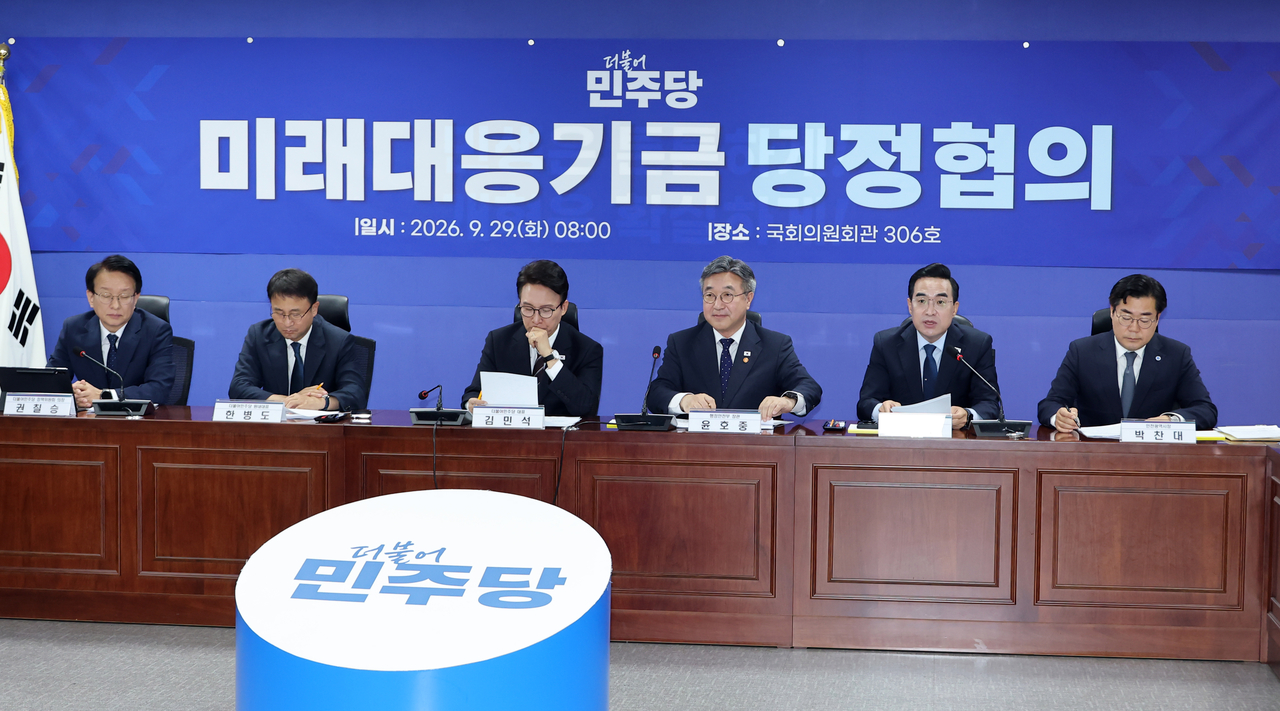
If the government's proposed revision to the National Fiscal Act passes, up to around 96 trillion won could be transferred from the Future Response Fund to the general account to cover revenue shortfalls without prior National Assembly approval, the National Assembly Budget Office has found. The watchdog warned that the bill sets no specific criteria or cap for such transfers and requires only that the Assembly be notified after the fund's operating plan has already been changed, giving the government excessive discretionary authority.
Oversight mechanisms for the fund are also seen as inadequate. While the Minister of Planning and Budget would chair the fund management deliberation council and hold the power to appoint private-sector members, the bill does not specify any qualification requirements for those members in statute. Both the criteria for using the fund and the mechanisms for monitoring its operation are expected to become flashpoints during the Assembly's review.
According to the budget office's "2027 Budget Analysis Linked to Final Accounts" released Wednesday, the government is pursuing an amendment to the National Fiscal Act that would allow surplus tax revenue to be accumulated in the Future Response Fund and then drawn on to cover general-account shortfalls when they arise. The stated rationale is to stockpile revenue boosted by a favorable semiconductor industry cycle and deploy it against future revenue declines. The fund size presented alongside next year's budget proposal stands at 162.3 trillion won ($121 billion).
The amendment would allow money transferred from the fund to the general account to cover revenue shortfalls to be processed outside the revenue and expenditure budget. Such amounts would also be excluded when calculating the ceiling for changes to the fund's operating plan. The government would be required only to submit a record of any changes to the fund's operating plan to the Assembly after the fact.
The only transfer condition the amendment specifies is "covering a shortfall in general-account revenue." It provides no concrete rules on how large a shortfall must be before the fund can be tapped, at what point a deficit is assessed, or how much can be transferred. The budget office concluded that under the amendment as written, up to approximately 96 trillion won in surplus funds held in the general account of next year's fund operating plan could be mobilized without prior Assembly approval.
The bill on the establishment and operation of the Future Response Fund, which the government submitted to the Assembly on Sept. 3, also carries unresolved questions about who would check the fund's management. Under Article 15 of the bill, the fund management deliberation council would consist of 10 to 30 members chaired by the planning minister. More than half must be private-sector members, and the power to appoint them rests with the Minister of Planning and Budget.
The bill requires only that gender be taken into account when appointing private-sector members; it does not set out specific qualifications — such as experience in finance, fiscal affairs or investment — or external nomination procedures in statute, delegating those details to presidential decree instead. How the expertise and independence of private-sector members will be ensured, given that they constitute a majority of the council, is expected to be a key question during the Assembly's review.
The government has previously covered large revenue shortfalls without supplementary budgets, relying instead on fund reserves and unspent appropriations. National tax revenue fell short of the revenue budget by 59.1 trillion won in 2023 and by 29.6 trillion won in 2024. The combined two-year shortfall reached 88.7 trillion won, yet the government submitted no supplementary budget in either year. It instead drew on reserve funds such as the foreign exchange stabilization fund, cut local allocation tax grants, and left portions of appropriated spending unexecuted.
The Assembly called for corrective action in its audits of both fiscal years. In its review of the fiscal year 2024 final accounts, it issued a caution to the government, finding that responding to a large revenue shortfall through unspent appropriations and internal transactions — without adjusting the revenue budget — infringed on the Assembly's right to deliberate and finalize the budget. The Ministry of Planning and Budget reported that it had completed the required measures, citing improved procedural transparency through closer communication with the Assembly when large revenue shortfalls occur.
The budget office warned that allowing the fund to cover deficits would reduce the government's incentive to submit supplementary budgets and could limit the Assembly's opportunities to scrutinize the causes of revenue forecast errors and the appropriateness of spending adjustments. It recommended that the conditions and monetary limits for transferring funds from the Future Response Fund to the general account be written into law. It also said the government should make submitting a supplementary budget the default response to large revenue swings, and that the legal requirements for drafting such budgets should be revised accordingly.
fact0514@heraldcorp.com