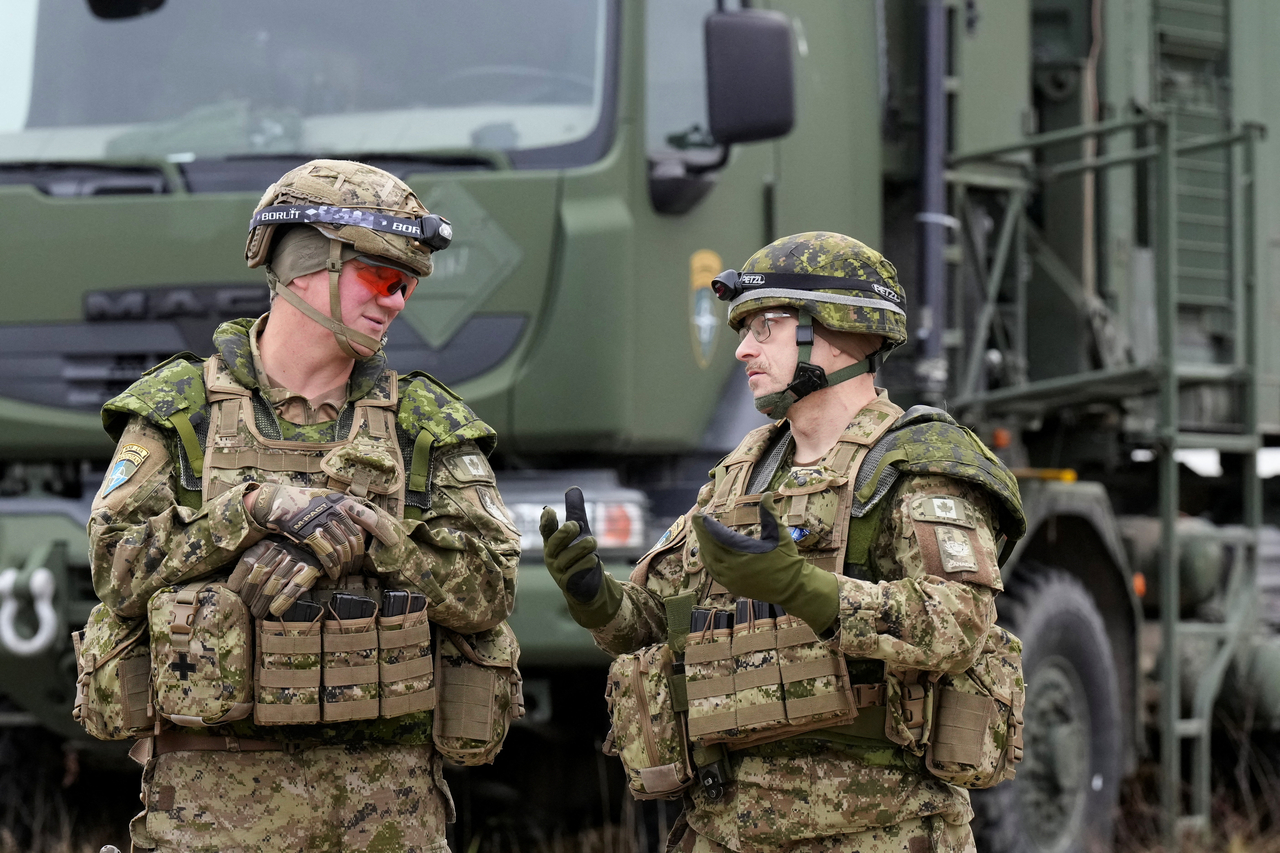
The Europe-led multinational force set to deploy in Ukraine after a truce will be authorized to return fire if attacked by Russia.
The Guardian reported Tuesday (local time), citing Western officials, that the rules of engagement for the Multinational Force Ukraine, led by Britain and France, will allow troops to defend themselves against Russian drone strikes.
A Western official familiar with the mission told the Guardian that Western forces deployed to Ukraine would be "defensive in nature," but added: "Clearly we will protect our forces from any attack."
The multinational force is the military arm of the "Coalition of the Willing," an international grouping formed by Britain and France to provide postwar security support to Ukraine. The coalition established an operational headquarters near Paris last year, and Britain has commanded the multinational force's headquarters in Kyiv since July.
The force will hold its first military exercise, "Koalicja" — Polish for "coalition" — in Poland from Monday through Nov. 22, with about 2,800 ground, naval and air personnel taking part. Britain, France, Belgium, Estonia, Germany, Lithuania, the Netherlands, Poland, Sweden and Spain will all participate.
According to Euronews, the exercise will involve only light equipment such as drones, with no heavy weapons like tanks, and will focus on counter-drone operations and self-defense training.
French General Armel Dirou, who is co-leading the exercise, said it would "concretely demonstrate the ability to deploy the multinational force as soon as hostilities end."
Britain's Defense Ministry has repeatedly said the force will deploy only at the request of the Ukrainian government and will not carry out peacekeeping or truce-monitoring duties.
Lt. Gen. Tom Bateman, the multinational force commander, said the core mission is to help rebuild and strengthen Ukraine's armed forces after the war, and that Western troops are planned to be stationed away from the front lines.
Even so, the risk of a direct clash with Russia remains. The Guardian noted that questions linger over how Russia would respond if the multinational force were to return fire under the right of self-defense. While all militaries operate under that right, it is frequently interpreted broadly.
The Guardian pointed to Russia's history of low-intensity attacks during the ceasefire period between its 2014 annexation of Crimea and its full-scale invasion in 2022, saying the possibility of an armed conflict involving British troops cannot be ruled out.
Russia has made clear it will not accept the deployment of European forces to Ukraine under any circumstances.
The multinational force intends to operate without relying on American systems or technology. Lt. Gen. Bateman said the force is a "non-NATO" mission operating outside the NATO framework.
When asked whether the force would use Elon Musk's Starlink, another Western official said, "We do not rely on American systems." Starlink is a critical communications network for Ukrainian drone operations and became the subject of controversy over speed throttling following a dispute last month between Ukrainian President Volodymyr Zelensky and US President Donald Trump.
Whether the multinational force will actually deploy remains uncertain. The Associated Press reported that while Europe is preparing to send troops to postwar Ukraine, the obstacles are significant — and some experts believe the deployment may never happen at all.
dbsdn1110@heraldcorp.com