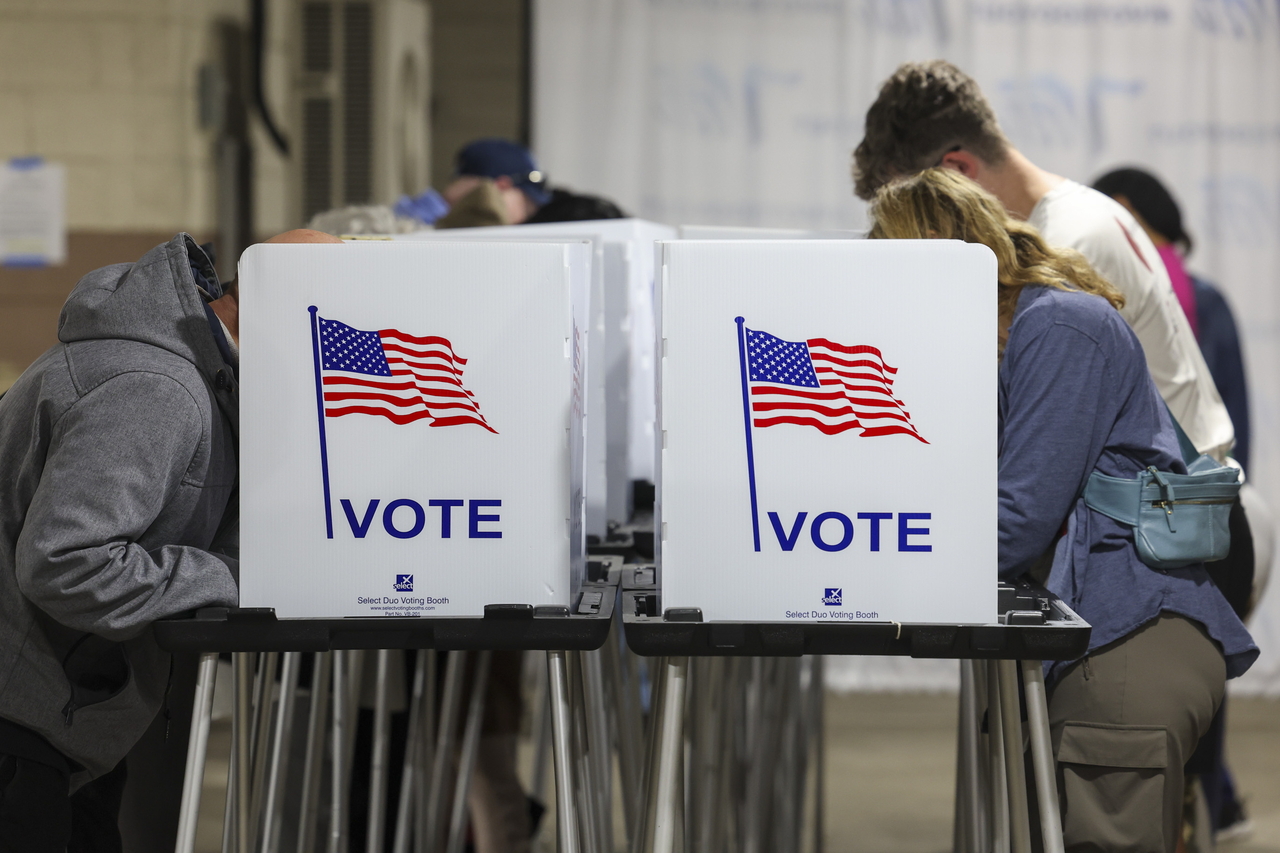
Voting began Tuesday (local time) in the US midterm elections, widely viewed as a referendum on Donald Trump's second administration. With polling favoring Democrats, attention is focused on whether the party can retake the Senate after already flipping the House — particularly as several states Trump carried by wide margins in the last presidential election are now rated as competitive.
Polls opened at 5 a.m. Eastern time Tuesday — 7 p.m. Tuesday Korean Standard Time — in parts of Vermont, marking the start of voting nationwide. The elections will fill all 435 House seats, 35 of the 100 Senate seats and 36 governorships.
Republicans currently hold 53 Senate seats to Democrats' 47. In the event of a 50-50 tie, Vice President JD Vance, a Republican, would cast the deciding vote. Democrats must therefore defend every seat they hold and flip at least four Republican-held seats to win a majority.

The Cook Political Report has classified seven states as toss-ups: Alaska, Iowa, Kansas, Maine, Michigan, Ohio and Texas. Six of the seven — all except Michigan — are currently held by Republicans.
NPR identified North Carolina, where Republican Sen. Thom Tillis is retiring, as the seat Democrats are most likely to flip. The race pits former Democratic Gov. Roy Cooper against Michael Whatley, a former chair of the Republican National Committee.
The other competitive races are equally tight. In Maine, five-term Republican Sen. Susan Collins faces Democratic challenger Troy Jackson, a former state Senate president. Maine is the only toss-up state where former Vice President Kamala Harris won in the 2024 presidential election.

In Ohio, Republican Rep. Jon Husted, who took over Vance's Senate seat, faces a rematch with former Democratic Sen. Sherrod Brown, who lost his seat in 2024.
In Alaska, Republican Sen. Dan Sullivan faces former Democratic Rep. Mary Peltola. In Texas — traditionally deep-red territory — Republican Attorney General Ken Paxton, who defeated Sen. John Cornyn in the primary, takes on Democratic candidate James Talarico.
Polls in the competitive states will close in sequence beginning Wednesday morning Korean Standard Time. North Carolina and Ohio close at 7:30 p.m. Eastern (9:30 a.m. Wednesday KST), Maine at 8 p.m. (10 a.m. KST), and Iowa, Michigan, Texas and the remaining parts of Kansas at 9 p.m. (11 a.m. KST).

When Senate control will be determined remains unclear. Alaska and Maine use ranked-choice voting, which requires redistributing ballots if no candidate wins an outright majority, potentially delaying final results, according to Al Jazeera.
The House majority picture could emerge as early as late Tuesday night Eastern time, or around Wednesday afternoon KST. However, results in competitive districts in California, Nevada and other states with high rates of mail-in voting may take longer to count. The 2024 elections took eight days to produce a final House majority.
Polling across multiple surveys shows the House leaning toward Democrats, with forecasts also giving Democrats an edge in the Senate.
If Democrats win both chambers, Trump will face strong legislative opposition for the remaining two years of his term. If Republicans hold the Senate, Trump will retain the political momentum needed to push through Cabinet confirmations and other key appointments.
In an earlier interview with NBC, Trump was asked whether he would accept the election results if Republicans lost their congressional majority. "If the election is honest, I will," he said.
dbsdn1110@heraldcorp.com