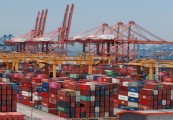
Sessions to cover urban transformation, logistics and retail networks since the port's opening
Korean-Japanese Buddhist exchanges and key figures of the modern transition era also examined
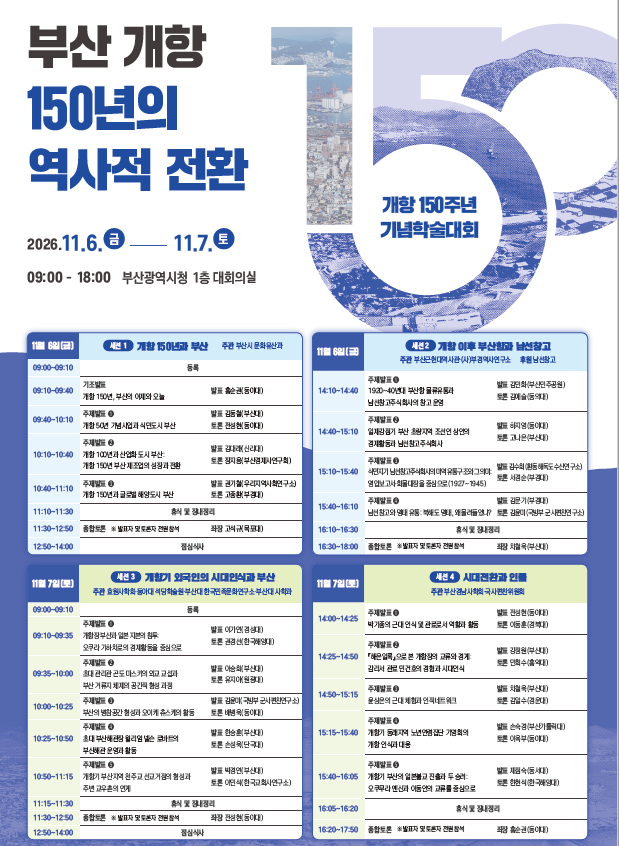
Busan city will hold a two-day academic conference marking the 150th anniversary of the port's opening at the city hall grand conference room Thursday and Friday. Co-organized by the city government, the Bukyeong Historical Research Institute, the Hyowon Historical Society, Dong-A University, Pusan National University, the Busan-Gyeongnam Historical Society and the National Institute of Korean History, the conference aims to offer a comprehensive look at how Busan's urban landscape transformed after the port opened, how its logistics and retail networks took shape, and how key figures of the era shaped the city's development.
The conference will run across four sessions over the two days, with each session featuring presentations and panel discussions on the political, diplomatic, economic, social and cultural changes that accompanied the port's opening, as well as the activities of prominent figures of the time.
On the first day, Session 1 — "150 Years Since the Opening: Busan's Urban History" — will trace the city's development in 50-year intervals and examine its growth into a global maritime hub. Session 2 — "Busan Port and the Namseon Warehouse After the Opening" — will analyze the port's cargo distribution networks, the role of Korean merchants and the place the Namseon Warehouse occupied in the retail economy of the era.
On the second day, Session 3 — "Foreign Perspectives and Busan During the Open-Port Era" — will explore the city's internationalization through the activities of foreign residents, the formation of modern institutions and the prevailing worldviews of the period. Session 4 — "Figures of a Transitional Age" — will examine the social networks of key figures from the modern transition era, including Park Gi-jong and Min Geon-ho, along with Korean-Japanese Buddhist exchanges and broader patterns of community response to the era's changes.
The conference is open to any resident with an interest in Busan's history and culture. Further details are available on the Busan Metropolitan City History Compilation Committee website at www.bssisa.com or by calling the city's Cultural Heritage Division at 051-888-5058.
Jo Yu-jang, director of Busan's Culture Bureau, said the conference would serve as an opportunity to reexamine the city's historical identity and development, and to share the significance of its modern and contemporary history more widely with residents.
kaf2002@heraldcorp.com