Ministry of Interior and Safety holds public hearing on revised relocation plan
'President should lead; regular consultative body needed'
'Civil servants must settle stably for administration to function'
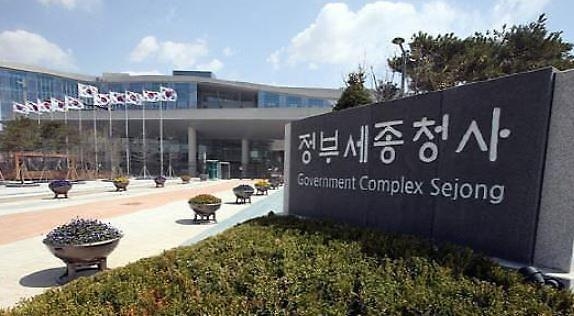
As the government announced plans for a second phase of central government agency relocations, experts at a public hearing called for the move to go beyond simply shifting offices. They urged that it be pursued as a comprehensive effort aligned with balanced national development — one that accounts for improvements in administrative efficiency and the industrial strategies and urban planning of Sejong, Daejeon and surrounding regions.
The Ministry of Interior and Safety said it held a public hearing Tuesday at Government Complex Seoul to gather opinions on the second phase of central government agency relocations.
The hearing was organized to present the key details of the revised relocation plan and hear views from various sectors on the timing and methods of the move, which is being pursued to strengthen Sejong-centered governance and promote balanced national development.
Heo Jun-young, a senior research fellow at the Korea Institute of Public Administration, said in a designated discussion that "a pan-government integrated relocation and national governance efficiency management system must be established." Heo warned that managing the relocations as separate building-move projects for individual agencies "could limit the government's ability to coordinate policy functions and enhance the effects of collaboration from an overall perspective."
Heo added that "it is necessary to comprehensively coordinate the linkages between each agency's relocation plan and its policy functions through a pan-government consultative body centered on the Office for Government Policy Coordination, and to manage improvements in national governance efficiency after the relocation in an integrated manner."
Lim Jun-hyung, a professor at Korea University, also said "the relocation of administrative agencies is not merely a matter of changing locations — it must be pursued from a comprehensive perspective, linked to the industrial strategies, urban planning and supra-regional specialization plans for the central region through inter-regional alliances involving Sejong, Daejeon and surrounding areas, in line with the goal of balanced national development."
Seo Young-bok, co-chair of the Citizens' Coalition for Administrative Reform, proposed that "the president directly and proactively lead relevant governance through a high-level, substantive consultative body on a regular basis." Seo urged the government to move beyond simply concentrating agencies in Sejong in a physical and structural sense, pressing it to "actively work toward maximizing population dispersal and balanced regional growth, and to build the policy, social and cultural foundations needed for social integration."
Calls also emerged for concrete settlement support measures for employees at agencies slated for relocation.
Lee Cheol-su, chairman of the National Government Employees' Union, said "completing the administrative capital is not a matter of moving buildings — it is a process of relocating people, their livelihoods and the foundations of administration together, and administration can only function stably when civil servants are able to settle stably." Lee added that "the relocation to Sejong can achieve results befitting the goal of balanced national development only if practical settlement measures are established through responsible labor-government consultations with the union, without demanding one-sided sacrifice from civil servants and their families."
The government announced on Oct. 13 a plan to relocate 44 agencies and 9,929 civil servants to Sejong in phases starting in 2027.
The revised relocation plan gives priority to 31 agencies with 5,460 employees that can be moved under current law. For the remaining 13 agencies with 4,469 employees — those requiring legislative amendments and affiliated bodies linked to them — the government plans to pursue the necessary legal changes and issue additional revision notices taking into account the timing of those amendments and the availability of office space.
Of the 31 agencies reflected in the revised plan, 23 — including the Korea Communications Commission and the Personal Information Protection Commission, totaling 1,831 employees — will lease private buildings within the administrative capital complex and relocate by 2027. The remaining eight agencies, including the Board of Audit and Inspection, the Corruption Investigation Office for High-ranking Officials and the Korean National Police Agency, totaling 3,629 employees, plan to relocate by 2031 after securing newly constructed office buildings.
The Ministry of Interior and Safety plans to incorporate opinions gathered at Tuesday's hearing as well as those submitted through Wednesday via the government's public opinion platform and the ministry's website, then issue the revised relocation notice after consultations with relevant agencies and presidential approval.
thlee@heraldcorp.com