October consumer price growth slows for second straight month
But core inflation, dining-out costs keep upward pressure alive
Strong growth and prices tilt balance toward tightening at Nov. 26 meeting
South Korea's consumer price growth slowed to 2.8 percent in October for a second consecutive month of deceleration, but monetary authorities say inflation remains too high. Core inflation — which strips out volatile items and reflects underlying price trends — held steady at 2.8 percent, unchanged from September.
With both strong economic growth and persistent price pressures now confirmed, the odds of an additional interest rate hike at the Bank of Korea's final monetary policy meeting of the year on Nov. 26 appear to be rising.
Bank of Korea Deputy Governor Lee Ji-ho convened a price-monitoring meeting Tuesday morning and assessed that while October's headline inflation eased slightly thanks to improved supply conditions for agricultural, livestock and fishery products, "prices continued to rise sharply, centered on personal services and durable goods."
According to the Ministry of Statistics' October consumer price report released Tuesday, the consumer price index stood at 120.73 (base year 2020=100), up 2.8 percent from a year earlier. The inflation rate has now slowed for two consecutive months after hitting 3.1 percent in August and 2.9 percent in September. Prices for agricultural, livestock and fishery products fell 1.7 percent, led by vegetables, while petroleum product prices surged 14.9 percent — a pace similar to September's 14.8 percent gain. Analysts estimate the increase would have been even steeper had the government's petroleum price cap not been in place.
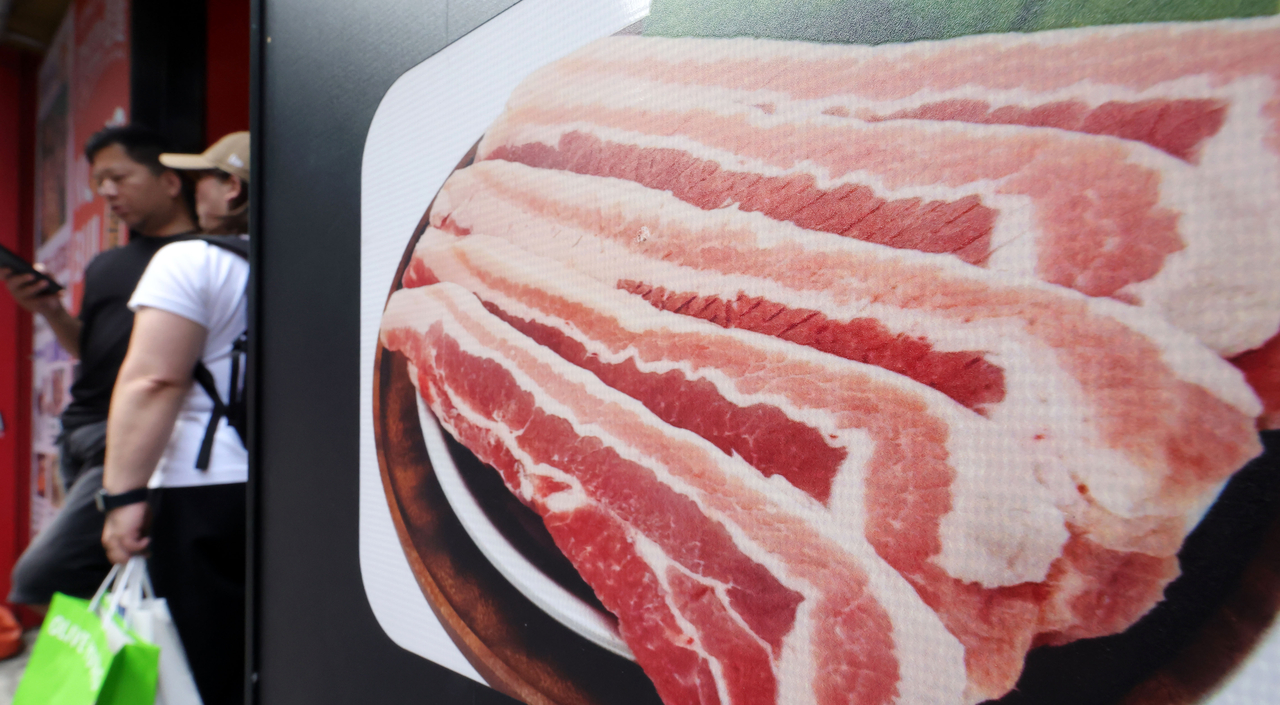
Upward pressure on core inflation also remains. The index excluding food and energy rose 2.8 percent year-on-year, matching September's rate. So-called "chipflation" — where rising semiconductor prices ripple through related industries — appears to be propping up core prices. Lee said core inflation "was influenced by the pass-through of accumulated cost pressures, posting high rates of increase in travel, dining-out services and electronics." Data from the Korea Consumer Agency show that the average price of a 200-gram serving of samgyeopsal at restaurants in Seoul reached 21,321 won ($16) as of August, up about 4.3 percent from a year earlier.
The Bank of Korea expects inflation to remain elevated in November. Lee said the rate is "expected to continue in the upper-2-percent range, given the high pace of core inflation, though it will be influenced by movements in international oil prices." Lee added that the bank "will monitor the price situation with vigilance, as consumer prices are expected to maintain a high rate of increase amid ongoing uncertainty over the Middle East situation, the pass-through of cost shocks, and growing demand-side pressures."

Market attention is now fixed on the Monetary Policy Board meeting on Nov. 26. At its Oct. 22 meeting, the Bank of Korea held its benchmark interest rate at 3 percent by unanimous vote while signaling it would maintain its tightening stance. At a press conference that day, Bank of Korea Governor Shin Hyun-song indicated the board would assess third-quarter GDP figures and October consumer prices before deciding whether to raise rates further.
Third-quarter growth came in at 1 percent quarter-on-quarter, more than three times the bank's August forecast of 0.3 percent. According to the Ministry of Trade, Industry and Energy, exports in October nearly doubled from a year earlier to $115.28 billion, and cumulative exports from January through October surpassed $900 billion for the first time in history. Both growth and inflation have thus strengthened the case for a rate increase.
Several factors could push prices higher still. International oil prices remain unsettled amid tensions between the United States and Iran. A fuel tax cut set to expire at the end of this month is another variable. The won-dollar exchange rate has also been edging up recently — a weaker won raises import prices and, with a lag, adds upward pressure on consumer prices. After falling to 1,323.1 won per dollar on Oct. 26 (based on the weekly closing rate), the rate climbed to 1,345.8 won on Monday. As of 9 a.m. Tuesday, it was trading at 1,345.3 won. If the Federal Reserve raises rates in December and the gap between US and Korean rates widens, upward pressure on the exchange rate could intensify.
On the other side of the ledger, a pullback in private consumption in the third quarter and a deterioration in consumer sentiment tied to falling stock prices are adding to concerns about the burden a rate hike would impose.
The Bank of Korea expects demand-side inflationary pressure — driven primarily by the semiconductor boom — to intensify in earnest. How much the bank raises its growth and inflation forecasts in its revised economic outlook on Nov. 26 is expected to be a key factor in the rate decision.
kimstar@heraldcorp.com