On-site inspection by the Court Administration scheduled for Thursday intensifies competition among districts
Jeomulpo, Yeongjong, Michuhol, Yeonsu, Geomdan and Seohaegu all submit bids
Districts tout airport, port and legal infrastructure as key advantages
Competition to host the permanent headquarters of the Incheon Maritime and International Commercial Court — commonly known as the Incheon Maritime Court — has escalated into an all-out contest among Incheon's local districts.
Following Jeomulpo-gu, which secured the temporary headquarters, Yeongjong-gu, Michuhol-gu, Yeonsu-gu, Geomdan-gu and Seohaegu have all entered the race, bringing the competition over the final site to a head.
With the Court Administration's on-site inspection scheduled for Thursday, each district is pressing its case by highlighting transportation access, site conditions and surrounding infrastructure.
The choice of location for the specialized international judicial body — one closely tied to Incheon's maritime, aviation and logistics industries — is expected to have a significant bearing on the city's long-term urban development strategy.
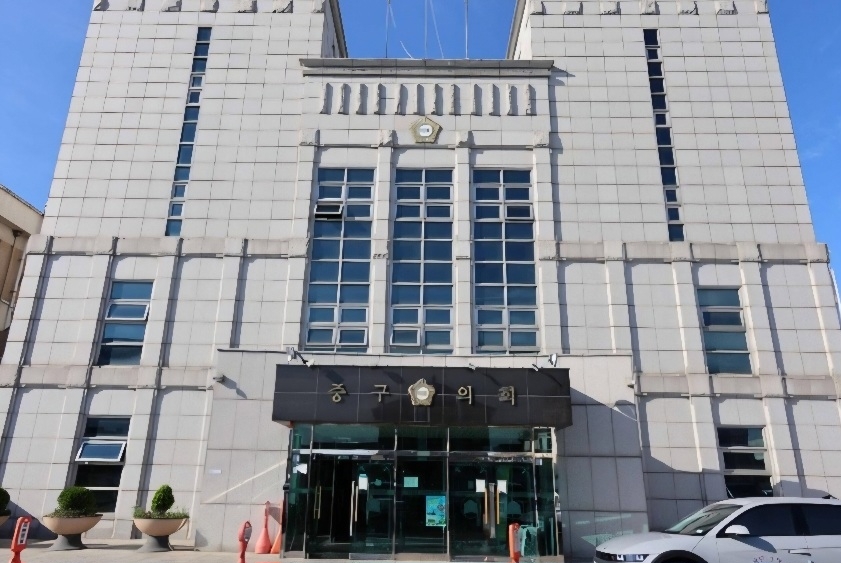
According to Incheon city officials and the relevant district offices, the Incheon Maritime Court is set to open provisionally in March 2028 at the former Jung-gu Council building in Jeomulpo-gu before moving to a permanent headquarters for full operations.
All six of Incheon's competing districts collectively proposed 17 candidate sites during the earlier process to select the temporary headquarters.
The Court Administration chose the former Jung-gu Council building as the temporary site in June. Attention has since shifted to the permanent headquarters, with a formal opening planned for the 2030s.
With the Court Administration aiming to select the permanent site before the end of the year and dispatching inspectors to candidate locations, the districts have stepped up their efforts.
Jeomulpo-gu, which already hosts the temporary headquarters, is seeking to carry that advantage through to the permanent site selection. The district has proposed the redevelopment site at Piers 1 and 8 of Incheon Port's inner harbor, emphasizing the development benefits tied to urban regeneration of the old city center. Its pitch frames the court as a catalyst for revitalizing the historic downtown area.
Yeongjong-gu is banking on international accessibility via Incheon International Airport as its primary selling point, arguing that the airport's global air network is a natural fit for a specialized court serving foreign shipping companies, maritime firms and parties to international maritime disputes.
The district has also been rallying community support through a residents' petition drive to strengthen its bid.
Michuhol-gu is stressing its existing legal infrastructure, centered on the Incheon District Court, along with plans for a future Incheon High Court. The district argues that adding the maritime court would consolidate Incheon's judicial institutions and enhance the function of a legal district cluster.
Yeonsu-gu is highlighting its concentration of international organizations and maritime-related agencies. The district contends that proximity to the UN Commission on International Trade Law (UNCITRAL) Asia-Pacific Regional Centre and the Korea Coast Guard, among other bodies, would improve operational efficiency in international maritime and commercial matters.
Geomdan-gu has also joined the race, pointing to potential synergies with a planned northern branch of the courts and prosecutors' office, as well as favorable local development conditions.
Seohaegu has put forward Cheongna International City as its proposed site, emphasizing transportation links connecting the airport and port, international business functions and regional transit infrastructure.
On Monday, Seohaegu held a press conference near the Cheongna-dong candidate site, attended by District Mayor Gu Jae-yong, Assembly member Lee Yong-woo and community representatives, to make the case for the district's bid and the site's competitive strengths.
The district said it would cooperate fully with the on-site inspection and prepare administrative support measures to back the construction and stable operation of the permanent courthouse.
The competition for the permanent headquarters has grown into a contest of competing district development strategies, with each of the six districts staking out a distinct pitch.
However, observers note that symbolic appeal or development expectations alone are unlikely to determine the final outcome.
The Court Administration's stated site requirements include locations where land preparation is already complete or can be finished by 2029, where zoning permits the construction of a public building, and where adequate transportation links and a south-facing orientation are feasible.
Ultimately, the decisive factors are expected to be the availability and readiness of each candidate site, construction timelines, transportation access and practical building conditions — meaning districts will need to demonstrate they can meet the court's requirements and deliver the project on schedule, rather than simply signal their desire to win the bid.
The Incheon Maritime Court is a specialized judicial body handling legal disputes arising at sea, and is set to have jurisdiction over Greater Seoul and the Gangwon and Chungcheong regions.
Establishing a specialized court in Incheon — where the shipping, port and international trade industries are deeply intertwined — is expected to improve access to justice for maritime dispute resolution and expand the foundation for international maritime legal services.
Yet as expectations run high over the economic benefits the permanent headquarters could bring, some observers say the site selection process should go beyond inter-district rivalry and align with Incheon's broader industrial, transportation and urban planning priorities.
Thursday's on-site inspection by the Court Administration will be a key step in assessing those conditions, and all eyes are on which district will ultimately be recognized for offering the most practical construction environment and long-term viability as the year-end decision approaches.
gilbert@heraldcorp.com