Petroleum prices jump 14.9%; processed food inflation widens to 2.9%
Government to pour record 64 billion won into kimchi-making season discounts
South Korea's consumer prices rose 2.8% last month, marking the second consecutive month of inflation in the upper-2% range.
A drop in vegetable and other agricultural prices helped ease the overall rate, but a near-15% surge in petroleum prices and widening gains in processed food and dining costs kept the squeeze on household budgets. The government, judging that grocery prices remain elevated due to accumulated price increases, said it would commit a record 64 billion won ($47.9 million) to discount support during the kimchi-making season.
According to the "October 2026 Consumer Price Trends" report released Tuesday by the Ministry of Statistics, the consumer price index stood at 120.73 (base year 2020=100), up 2.8% from a year earlier. The gain narrowed by 0.1 percentage point from September's 2.9%. This year, inflation climbed to 3.1% in May and 3.2% in June before easing to 2.8% in July. It rebounded to 3.1% in August and has since slowed for two consecutive months.
Agricultural products were the main drag on overall prices. Farm, livestock and fishery prices fell 1.7% from a year earlier — declining for the third straight month — and shaved 0.14 percentage point off the overall rate. Agricultural products dropped 7.5%, with vegetables down 11.2%. Livestock prices rose 4.8% and fishery prices gained 5.4%, however, reflecting diverging trends across categories.
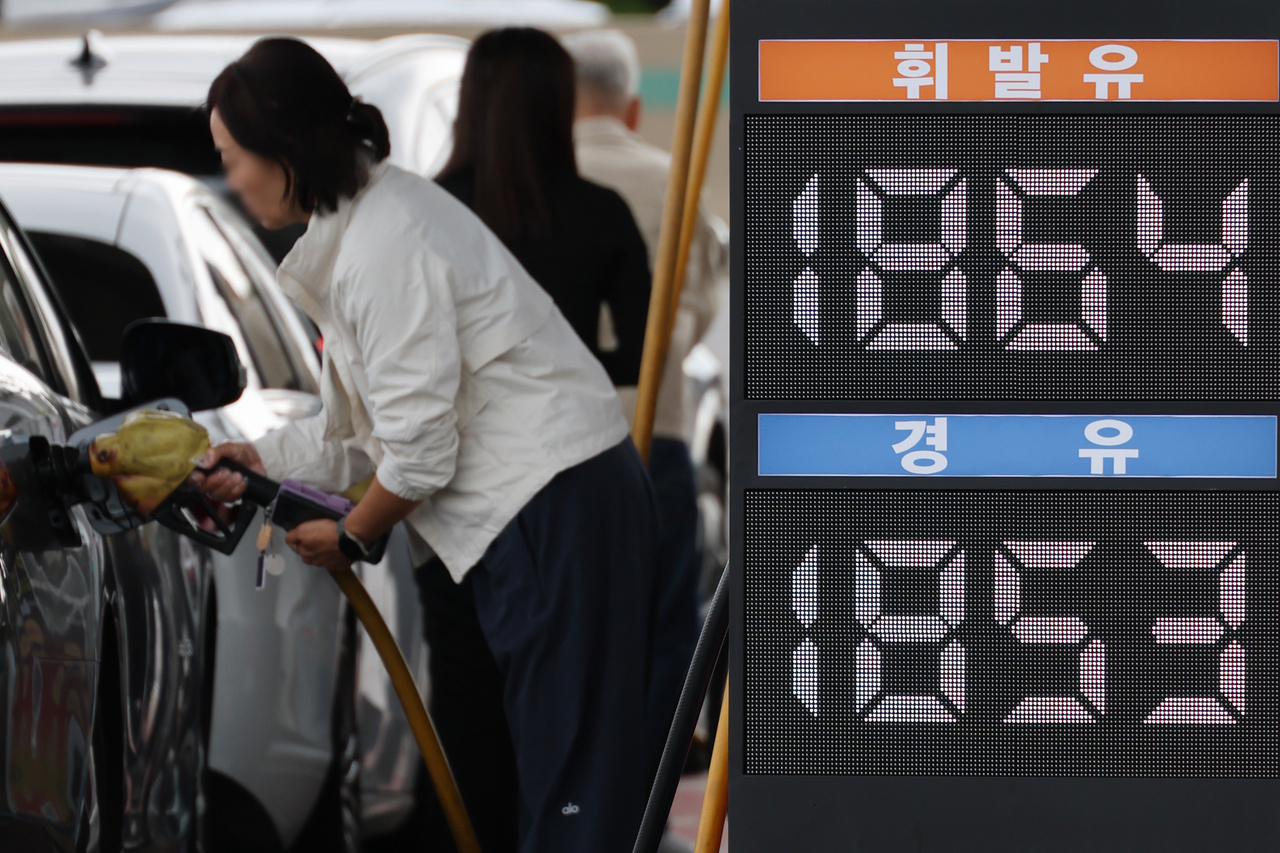
Petroleum prices, by contrast, surged 14.9% from a year earlier, the steepest rise since July's 15.5%, and added 0.56 percentage point to the overall inflation rate. Diesel climbed 19.7% and gasoline rose 11.6%. The government's petroleum price ceiling has helped curb domestic price increases, but upward pressure from higher global crude prices persists. The government estimated that the ceiling measure held October's inflation rate down by about 0.8 percentage point.
Processed food inflation also widened, accelerating from 2.1% in September to 2.9% in October — the highest in 11 months, since November last year's 3.3%. Dining-out prices rose 2.9% as well, the fastest pace since February this year.
The everyday living price index, which tracks frequently purchased items, rose 2.6%, up from 2.5% the previous month. The fresh food index, a gauge of meal-table costs, fell 6.2% from a year earlier. The core inflation index excluding food and energy — the OECD's preferred measure — held steady at 2.8%, unchanged from the prior month.
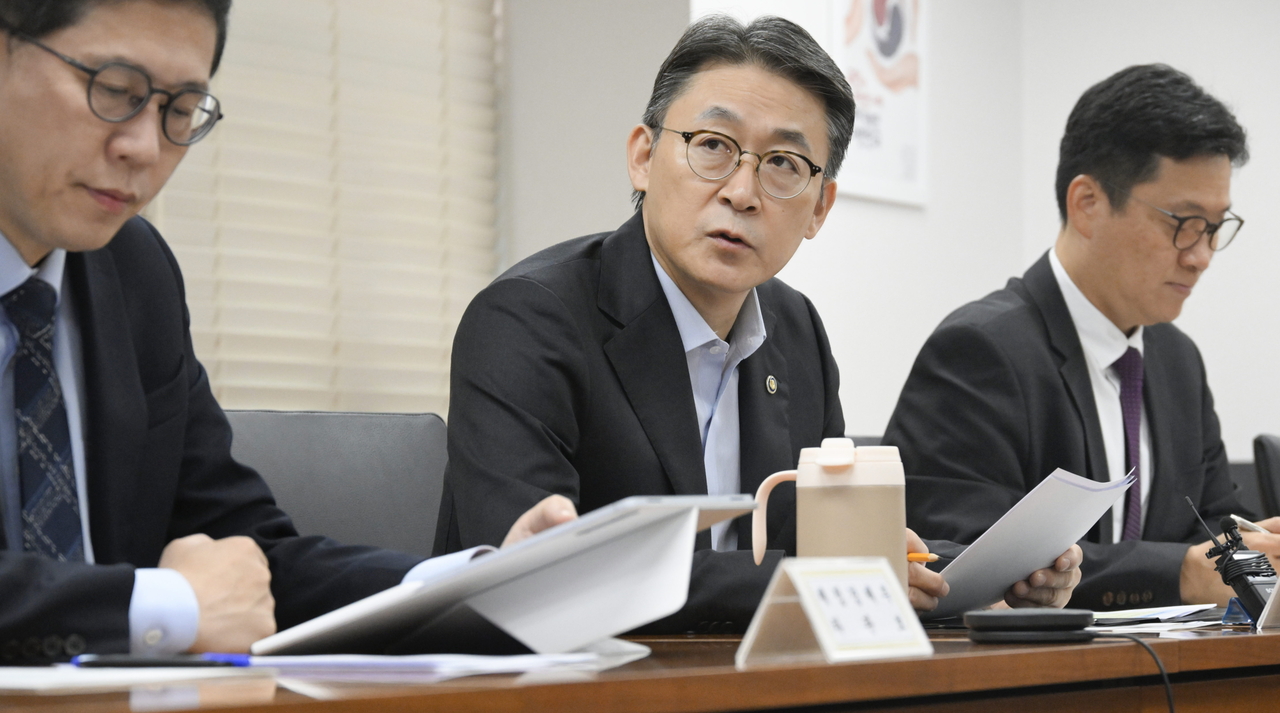
Kwon Dae-young, first vice minister of the Ministry of Economy and Finance, said at the inter-agency vice ministerial meeting on prices Tuesday that "the impact of accumulated price increases means that prices as felt by consumers remain high, and upward pressure and risks to inflation persist," pledging to focus the government's efforts on price management.
To ease the burden on households during the kimchi-making season, the government will allocate 44 billion won to discount support for agricultural and livestock products and 20 billion won to a special kimchi-season seafood sale event. Of the agricultural and livestock support, 40 billion won will fund discount events at more than 4,000 outlets nationwide — including hypermarkets, smaller supermarkets and online retailers. From Thursday through Dec. 2, government subsidies of 20% combined with retailer discounts will bring prices of key kimchi ingredients — including napa cabbage, radish, red pepper powder and garlic — down by as much as 40%.
The remaining 4 billion won will be used to sell 20 billion won worth of agricultural discount vouchers at a 20% markdown from face value. For seafood, up to 50% discounts — combining government and retailer contributions — will be available on kimchi ingredients such as salted shrimp, anchovy sauce, sea salt and oysters, as well as major fish species, at 56 retailers through Nov. 29.
The government said supply conditions for kimchi ingredients are favorable. Output of autumn napa cabbage and autumn radish is forecast to rise 18.5% and 11.1%, respectively, from a year earlier. As of late October, the estimated cost of making kimchi for a family of four stood at 238,280 won, down 4.2% from last year. Should cold snaps or other factors disrupt supply, the government plans to release stockpiled and contract-farmed produce and encourage early harvesting of winter-crop varieties.
The government will also conduct regular monitoring of farm, livestock, fishery and petroleum prices while working to improve distribution efficiency and crack down on collusion and other unfair trade practices. It will additionally check whether tariff quota reductions and discount support are actually translating into lower prices for consumers.
fact0514@heraldcorp.com