Affinity's bid collapsed after 10-month antitrust review; TPG cleared in 3 weeks
TPG relies on equity financing arranged by KB Securities
Simplified deal structure minimizes antitrust and procedural risk
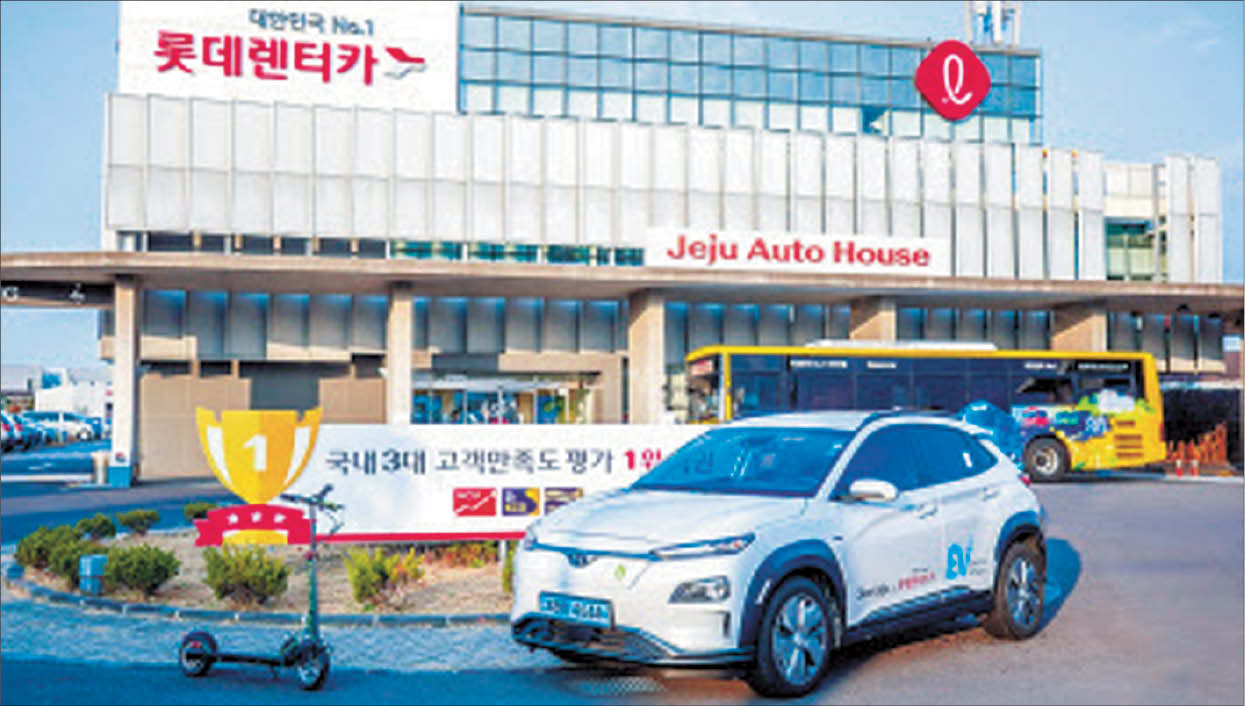
Global private equity fund manager TPG used a combination of equity and acquisition financing to complete its takeover of Lotte Rental, contrary to earlier reports that the deal would be funded entirely with equity. Across the full transaction — from the controlling-stake acquisition to a planned tender offer for remaining shares — TPG relied primarily on its own equity while supplementing with external borrowing.
By minimizing its dependence on acquisition financing, TPG reduced funding uncertainty and proactively managed potential complications in the antitrust review and deal structure. The approach allowed TPG to close the Lotte Rental sale roughly three months after signing the share purchase agreement — a deal that had drifted for about two years after Affinity Equity Partners' earlier bid fell through.
Antitrust review: 10 months vs. 3 weeks — the gap that decided the outcome
According to investment banking industry sources, TPG and Lotte Group completed the payment and share transfer for Lotte Rental on Friday. TPG acquired a 61.17 percent stake in Lotte Rental — held by Hotel Lotte and Busan Lotte Hotel — for approximately 1.31 trillion won ($980 million) through its special purpose company Lexicon Korea Holdco.
Lotte Group had selected Affinity as its preferred bidder in December 2024 and signed a share purchase agreement the following March. Affinity offered 77,115 won per share for the 56.2 percent stake held by Lotte Group, valuing the deal at 1.57 trillion won in total. That price was 2.6 times Lotte Rental's share price of 29,000 won at the time, reflecting a control premium of roughly 160 percent. Affinity secured preferred-bidder status on the strength of that pricing, beating out competing candidates including MBK Partners.
The deal hit a wall at the antitrust review stage, however. After more than 10 months of examination, the Korea Fair Trade Commission rejected the merger in January, sending the sale back to square one. The main reason Affinity failed was concern over competition with SK Rent-a-Car, a company already in its portfolio. Affinity had acquired SK Rent-a-Car, the second-largest player in the domestic car rental market, in August 2024. The plan had been to add Lotte Rental — the market leader — to achieve economies of scale, but that very combination became the stumbling block in the antitrust review.
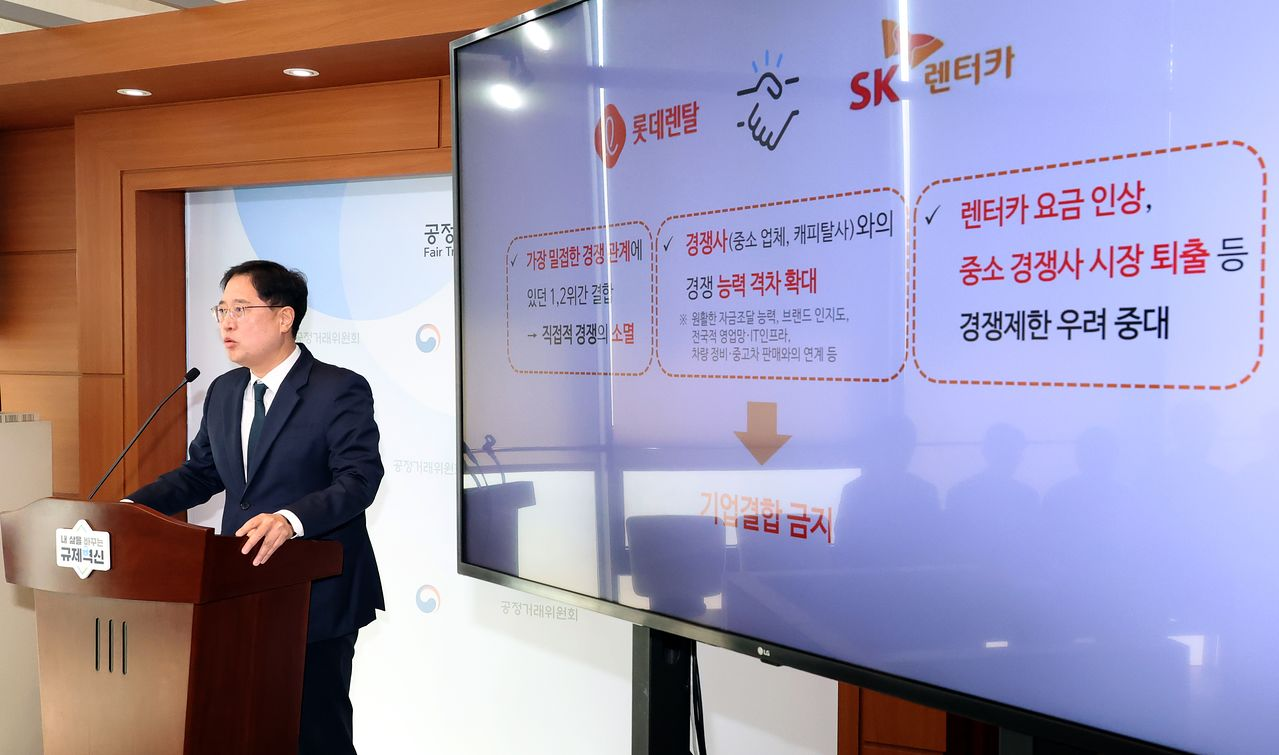
The Fair Trade Commission determined that placing Lotte Rental and SK Rent-a-Car under common ownership would restrict competition. A combined entity would have held a 38.3 percent share of the long-term car rental market as of end-2024, along with 29.3 percent of the short-term inland market and 21.3 percent in Jeju. Outside of the two companies, the domestic car rental market is fragmented among small operators, and the commission concluded that even a combined share below 50 percent could substantially limit competition.
As Lotte Group searched for a new buyer, it placed greater weight on the likelihood of deal closure. The Lotte Rental sale was one of the group's key measures for restructuring its business portfolio and improving its financial position. The unexpected prolongation of the antitrust review made a swift closing all the more important.
In the re-sale process, TPG and Hankook & Company competed for the asset. Both showed strong acquisition intent, but Hankook & Company's status as a listed company meant its decision-making process could face delays — a risk that weighed against it. TPG is understood to have secured the winning bid by emphasizing its speed of decision-making and ability to deploy capital quickly.
TPG also carried a relatively lighter antitrust burden because it had no competing businesses in the domestic car rental market. The Fair Trade Commission found no competition concerns between TPG's existing investment portfolio and Lotte Rental's vehicle rental operations, and swiftly approved the transaction. TPG received FTC approval in September, roughly three weeks after signing the share purchase agreement on Aug. 11.
Lower price, simpler structure — acquisition financing kept to a minimum
TPG and Affinity also differed in their deal structures. TPG opted for a relatively straightforward approach, acquiring the entirety of Lotte Group's existing shares. Affinity, by contrast, had planned to buy 56.2 percent of Lotte Group's stake for 1.57 trillion won while separately participating in a 211.9 billion won third-party rights offering. Completing that capital raise would have lifted Affinity's stake to roughly 63.5 percent.
The planned share issuance drew pushback from minority shareholders, however. While Lotte Group's existing shares were being sold at 77,115 won apiece, the new shares Affinity would receive were priced at just 29,180 won each. Unlike the controlling shareholder selling at a premium, ordinary shareholders faced dilution from the new issuance.
The pressure intensified after an amendment to the Commercial Act mandating directors' fiduciary duty to shareholders took effect last July, strengthening shareholder challenges to transactions seen as destroying shareholder value. Activist fund VIP Asset Management went so far as to publicly demand that the rights offering be withdrawn.
TPG, by contrast, acquired all of Lotte Group's existing shares with no separate rights offering. The per-share price was 59,000 won — lower than what Affinity had offered for the existing shares. From Lotte Group's perspective, the stake sold increased by roughly 5 percentage points, yet total proceeds fell by approximately 260 billion won compared with the earlier deal. In exchange, TPG eliminated the additional shareholder friction and procedural uncertainty that a new share issuance would have created. Lotte Group, for its part, sold its entire stake in one transaction, removing the burden of managing any residual holding.
TPG's financing approach also set it apart. Having completed the acquisition of the controlling stake for around 1.3 trillion won, TPG structured the overall transaction — including the planned tender offer for remaining shares — around equity as the primary funding source, supplemented by a portion of acquisition financing.
TPG plans to launch a tender offer for Lotte Rental's remaining shares following the closing of the controlling-stake acquisition. The aim is to buy additional shares held by general investors and others beyond the 61.17 percent already secured, strengthening its control over the company. To that end, TPG has designated KB Securities and others as arrangers for the acquisition financing needed for the tender offer. Once the specific terms — including the offer price, size and timeline — are finalized, TPG is expected to move forward with acquiring the additional shares.
"It is significant in that it shortened the time required for the financing process — including lender due diligence, commitment letters and loan execution," an investment banking industry official said. "It reduced the risk of payment delays even if acquisition financing was slow to materialize or market conditions deteriorated, and that made it easier for the seller, Lotte Group, to assign a high probability to deal closure."
park.jiyeong@heraldcorp.com