Japanese research team observes 19 people and 29 cats over one month
Higher oxytocin in owners linked to higher levels in their cats
Shared environment may also play a role
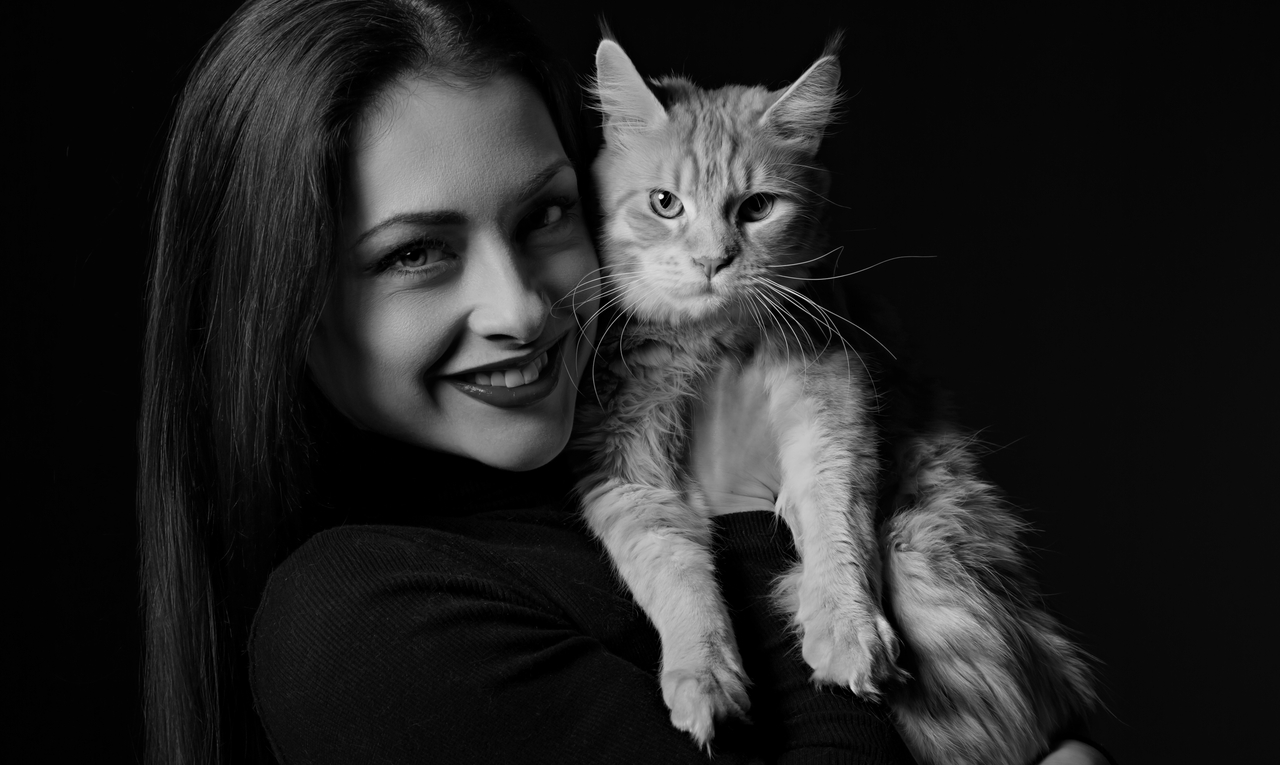
Contrary to the common notion that cats are more indifferent to their owners than dogs, a new study has found that owners whose cats stay physically close to them tend to report higher vitality — and that owners and their cats show similar levels of the so-called "bonding hormone."
The bond between dogs and humans has been well documented. When a person and a dog make eye contact, oxytocin — the hormone associated with attachment and bonding — rises in both. Dogs and their owners also tend to mirror each other's cortisol levels, the stress hormone.
Research on how cat ownership affects human wellbeing has yielded mixed results. While many studies show that dog owners experience improved mental health, findings for cat owners are less consistent — some research found benefits lasting only the first month, while others found cat ownership was associated with worse mental health outcomes.
A research team led by Saho Takagi of Kyoto University and Professor Takefumi Kikusui of Azabu University in Japan recently published findings in the international journal iScience, analyzing hormones and mood in both cats and their owners.
Owners feel more energized the closer their cats stay
The research team observed 19 cat owners and 29 cats over one month. Small Bluetooth-enabled devices were attached to the cats' collars to send signals to the owners' smartphones, allowing the researchers to gauge how closely each cat stayed to its owner while the owner was at home.
The results showed that owners whose cats stayed closer to them reported higher vitality. By contrast, how long a person had lived with a cat showed no clear link to mood. The findings held even when the data were reanalyzed at the household level to account for owners with multiple cats.
When the team collected urine samples from both owners and cats three times each over the month, they found that fluctuations in oxytocin and cortisol levels moved in similar patterns between the two.
A cat's oxytocin level was also linked to its owner's mood. People living with cats that had higher oxytocin levels reported feeling less anger, confusion, depression and tension. Owners with higher cortisol levels, meanwhile, reported greater feelings of depression, tension and fatigue.
In a separate experiment where a cat was brought into a room with both its owner and a stranger, cats with higher oxytocin levels were more likely to approach the unfamiliar person.
The research team wrote in the paper that "when cats form attachments to humans, they may be drawing on the same oxytocin system used in mother-infant bonding."
Shared environment may also be a factor
No clear correlation was found between owners' and cats' cortisol levels — a contrast with dogs, which do tend to mirror their owners' stress hormones. The researchers noted that wolves, the ancestors of dogs, live in packs, whereas cats have largely retained solitary habits.
The team said regulating stress hormones in response to social tension within a group may simply have been less important for cats over the course of their evolution.
However, the team acknowledged that the study could not determine whether cats improved their owners' mood, or whether owners who were already in a better mood simply treated their cats more affectionately.
The researchers also noted that the hormonal similarities between owners and cats may stem not from mutual emotional connection but from sharing the same living environment.
The study's small scale — 19 people and 29 cats — was cited as a limitation, as was the use of Bluetooth signal strength to estimate proximity, which can vary depending on a home's layout and wall materials.
Reference
DOI: 10.1016/j.isci.2026.117934
S. Takagi, T. Tsubomura, M. Nagasawa, & T. Kikusui, Cats and humans show correlated affiliative physiological states, iScience (2026) 117934.
dbsdn1110@heraldcorp.com