Developed by SK Biopharm and sold domestically by Dong-a ST, the drug — South Korea's 41st homegrown new drug — is now covered by national health insurance. Clinical trials showed seizure-freedom rates as high as 52.4% in Asian patients; US sales have approached 200 billion won since FDA approval.
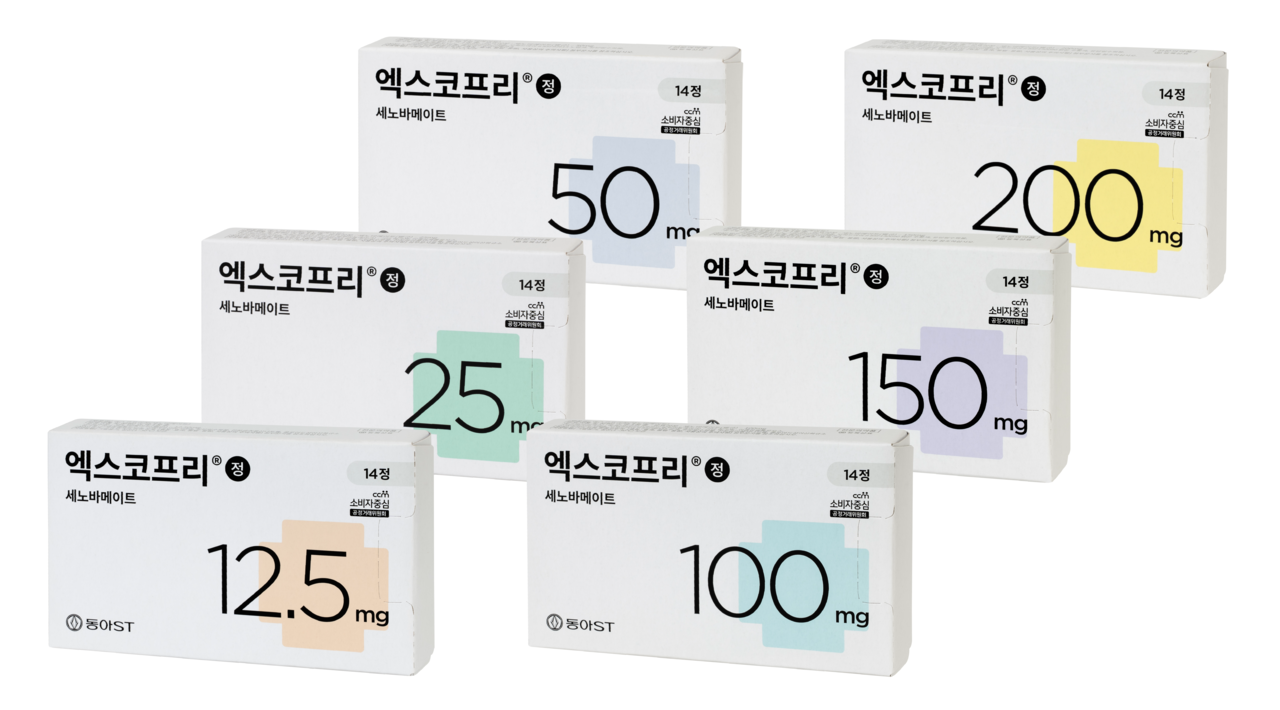
Xcopri (cenobamate), an innovative epilepsy drug developed entirely in-house by SK Biopharm and approved by the US Food and Drug Administration, has officially launched in South Korea under national health insurance coverage, with Dong-a ST handling domestic sales. Dong-a ST announced Monday that it had launched Xcopri tablets as an adjunctive treatment for partial-onset seizures in adult epilepsy patients.
Xcopri received product approval from the Ministry of Food and Drug Safety in November 2025 as South Korea's 41st domestically developed new drug. It has since cleared a review by the Drug Benefit Evaluation Committee and completed drug-price negotiations with the National Health Insurance Service before being formally listed on the national health insurance reimbursement schedule.
The domestic launch is seen as opening a meaningful treatment pathway for patients with drug-resistant epilepsy in South Korea, who have long suffered without adequate therapeutic alternatives.
Epilepsy is a chronic neurological disorder in which abnormal electrical signals in brain neurons trigger unpredictable, recurring seizures — including convulsions, loss of consciousness, sensory disturbances and automatisms. An estimated 360,000 people in South Korea live with the condition, and about 30 percent of them have drug-resistant epilepsy, meaning seizures persist despite adequate doses of existing anti-seizure medications.
Seizures cause serious physical harm — falls, fractures and burns — while severely restricting patients' ability to drive, study and work, drastically diminishing their quality of life. Achieving complete seizure freedom, rather than merely reducing seizure frequency, has therefore long been considered the primary treatment goal in epilepsy care.
Existing third-generation epilepsy treatments have shown consistently low seizure-freedom rates in clinical trials, leaving a clear gap in care for drug-resistant patients. The paradox was stark: a breakthrough drug of overwhelming efficacy had been created by a Korean biotech company and was already sweeping global markets, yet domestic patients could not obtain it at home due to regulatory barriers and were forced to rely on a cumbersome overseas import workaround.
In practice, Korean epilepsy patients had been purchasing the drug — marketed in Europe under the name Ontozry — through the Korea Orphan and Essential Drug Center, paying out of pocket. The process took six to eight weeks from application to receipt, and patients bore the full annual cost of around 3 million won ($2,240) — about 250,000 won per month — covering the uninsured drug price and international shipping.
With Xcopri now listed for national health insurance reimbursement and officially on the market, patients are expected to see a significant reduction in financial burden as well as greatly improved access to prescriptions.
The clinical efficacy that sets Xcopri apart from existing drugs is what has drawn attention from global markets and domestic physicians alike. Xcopri is a third-generation treatment with a dual mechanism of action — it inhibits persistent sodium channel currents while enhancing the activity of GABA, an inhibitory neurotransmitter. It is taken once daily, with doses titrated upward in stages according to each patient's condition.
In the global, multinational clinical trial (Study 017) that formed the basis for FDA approval, 437 adult patients with focal seizures uncontrolled by existing anti-seizure medications were enrolled. Both the 200 mg and 400 mg cenobamate groups achieved roughly a 55 percent reduction in seizure frequency from baseline. The rate of complete seizure freedom during the 12-week maintenance period reached 11 percent in the 200 mg group and 21 percent in the 400 mg group, far exceeding the placebo group's 1 percent.
The drug's seizure-suppression effect was confirmed again in an Asian Phase 3 trial (Study 035) involving 519 adult patients with focal seizures from South Korea, China and Japan. During the six-week maintenance period, complete seizure freedom was achieved by 30.1 percent of patients in the 200 mg group and 52.4 percent in the 400 mg group — a dramatically superior response compared with the placebo group's 2.6 percent.
The drug's commercial success in global markets has already been established. Cenobamate secured US FDA approval in 2019 and has rapidly captured share in the American epilepsy prescription market, sustaining steep growth. In the second quarter of this year, US sales alone surged 45.6 percent year-on-year to 224.4 billion won ($168 million), with first-half US sales topping 422.1 billion won. The drug drove SK Biopharm to a record second-quarter operating profit of 97.1 billion won, cementing its status as a global blockbuster with annual global sales approaching 46 trillion won.
Dong-a ST signed a license-in agreement with SK Biopharm in January 2024 covering 30 countries, including South Korea, East and Southeast Asia, Australia, New Zealand and Turkey. Under the deal, Dong-a ST received a technology transfer from SK Biopharm for finished-product manufacturing and takes responsibility for production, regulatory approval and sales of the finished drug across those 30 markets.
The pharmaceutical and biotech industry regards the launch as a model example of open innovation: a drug developed independently by a Korean company that shook the world's largest pharmaceutical market has now successfully reached domestic patients through a partnership with a large, established pharmaceutical company with finished-product manufacturing and commercialization capabilities.
"We hope Xcopri will establish itself as a new treatment option for epilepsy patients in South Korea who have struggled to achieve seizure control with existing therapies," a Dong-a ST official said. "We will continue to contribute to ensuring that patients can pursue stable, ongoing treatment free from the daily constraints that seizures impose."
silverpaper@heraldcorp.com