
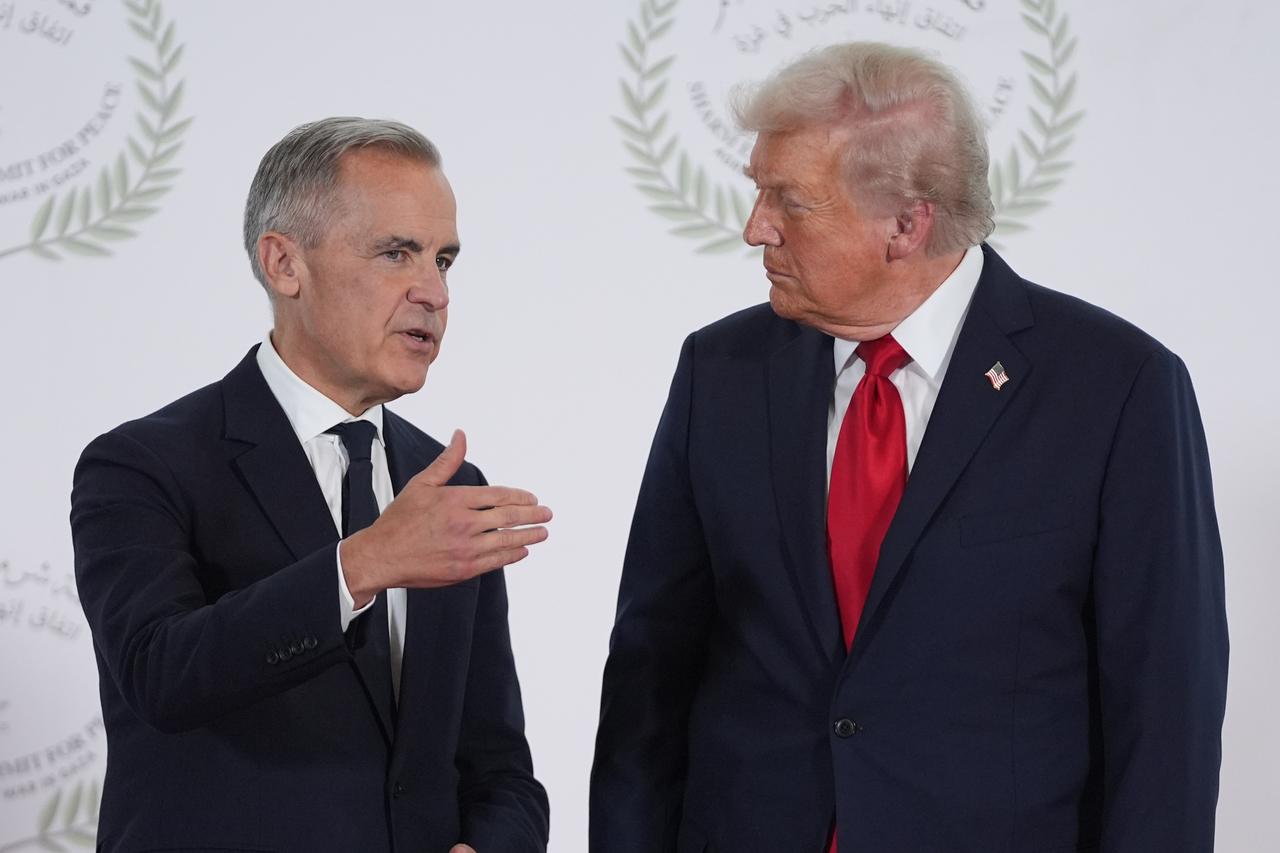
US President Donald Trump said Sunday (local time) that the United States was "very close to a deal" with Canada on trade. Canadian Prime Minister Mark Carney also posted on X that day that the two countries had recently held "constructive discussions" toward a trade agreement.
Trump told reporters after arriving at a campaign event in Iowa that "we've outlined a very good deal with Canada." Trump said he had spoken with Carney by phone on Sunday and that, if a deal were reached, it would be "great for our farmers, great for the United States, and fine for Canada."
Carney had also posted on X, formerly Twitter, confirming the phone call with Trump and saying the two sides had been holding "constructive discussions" on the outlines of a trade agreement. Carney added that the conversation was an extension of recent negotiations aimed at reaching a mutually beneficial trade deal to create jobs, ease the cost of living, and protect Canada's language, culture and sovereignty.
"Our negotiating teams will work to deliver these outcomes over the coming weeks," Carney said.
Trump said the negotiations also include a project to build the Keystone XL pipeline, which would transport Canadian crude oil to the United States, and said Canada would cover the construction costs. The project was halted in 2021 after the Joe Biden administration revoked its cross-border permit citing environmental concerns, and Trump has signaled since returning to office that he intends to revive it.
Canada's Prime Minister's Office did not issue a separate statement on the matter.
The United States and Canada declared their trade negotiations had collapsed in August, and the two countries have since been locked in a dispute, imposing billions of dollars in tariffs on each other. Trump subsequently said he would roll back some tariff measures ahead of the midterm elections, taking into account voters in Maine, Michigan and other states with close economic ties to Canada, but no formal trade agreement between the two countries has been reached.
Analysts say the rhetoric from both leaders may be driven by the electoral calendar. Daniel Béland, a professor at McGill University, said recent US moves to adjust tariffs reflected "an awareness of the political costs of the trade war in border regions." Robert Bothwell, a historian at the University of Toronto, described the improved atmosphere in the bilateral relationship as "a brief patch of sunshine before the rain returns," cautioning against excessive optimism about the progress of negotiations.
kate01@heraldcorp.com




