
A modern temple and forest trails offer a lesson in nature's cycles
An arboretum the size of 90 soccer fields blends tradition with innovation
The world's largest rooftop garden crowns the Government Complex Sejong
The Ieung Bridge traces a gentle arc of rest above the Geum River
Sejong is a city where national governance and everyday life coexist — and where the scenery shifts dramatically as the hours pass.
A grid of orderly roads and modern architecture gives the planned city its backbone, while forests, an arboretum and the Geum River breathe life into the spaces between. When the noise of the day fades and night falls, lights flicker on one by one along the river, and an entirely different city emerges. Poised between structure and ease, Sejong reveals a layered charm that belongs equally to day and night.
A modern temple that teaches the forest's cycle
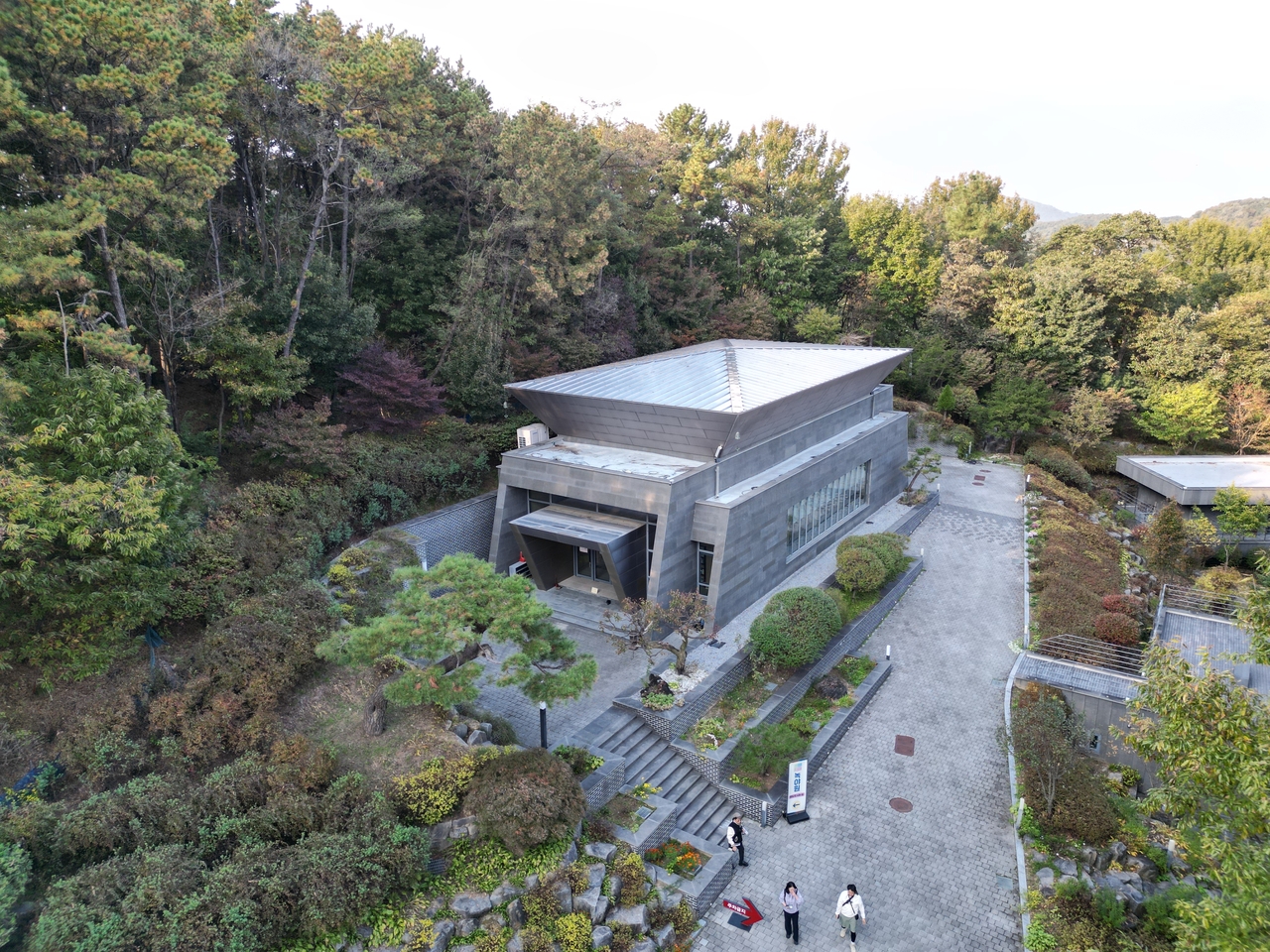
Nogyawon, tucked into Sejong's Bugang-myeon, does not immediately read as a Buddhist temple. Instead of ornate dancheong paintwork, entasis columns or traditional tiled roofs, the eye is drawn first to the clean, unadorned texture of exposed concrete.
Completed in 2020, the temple takes its name from the Deer Park in Sarnath, India — the place where Shakyamuni Buddha delivered his first sermon after attaining enlightenment. The name is traditional, but the architecture boldly departs from conventional temple design, making it one of the most contemporary religious spaces in the country. The main hall is particularly striking, its roofline evoking the pointed hat of the monk Xuanzang.
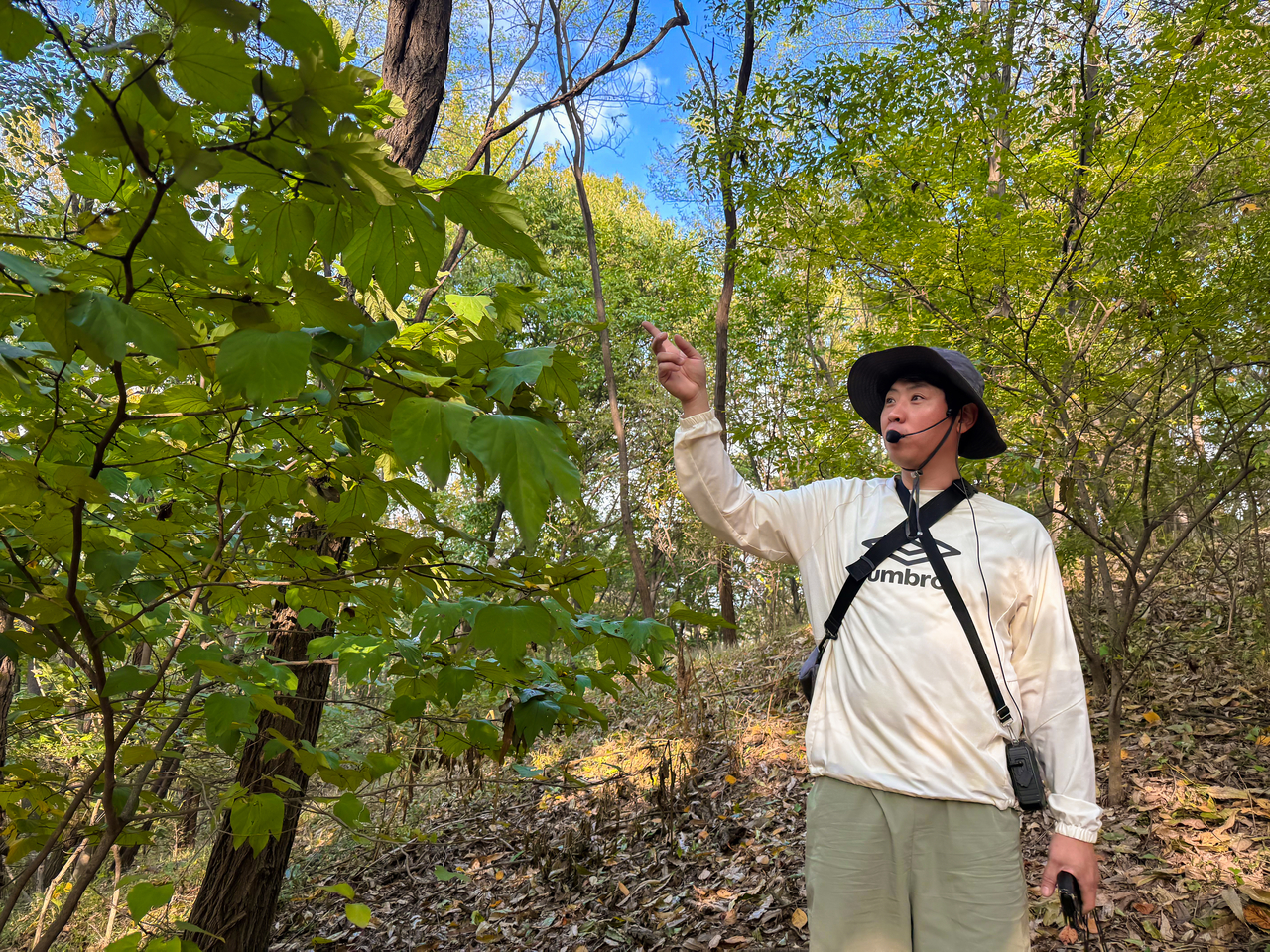
Nogyawon's appeal extends well beyond its buildings. The temple opens its surrounding nature to visitors through temple-stay programs and forest experience activities. Stepping onto the woodland trail, one enters a grove of pine trees. On one branch, an unusually dense cluster of pine cones catches the eye — but the forest guide offered a sobering interpretation, calling it not a sign of abundance but "a struggle on the brink of extinction."
"People often assume a pine tree covered in cones is thriving, but it's actually the opposite," the guide said. "When a tree senses it may be dying, it summons its last strength to produce seeds and preserve the species. It's a distress signal."
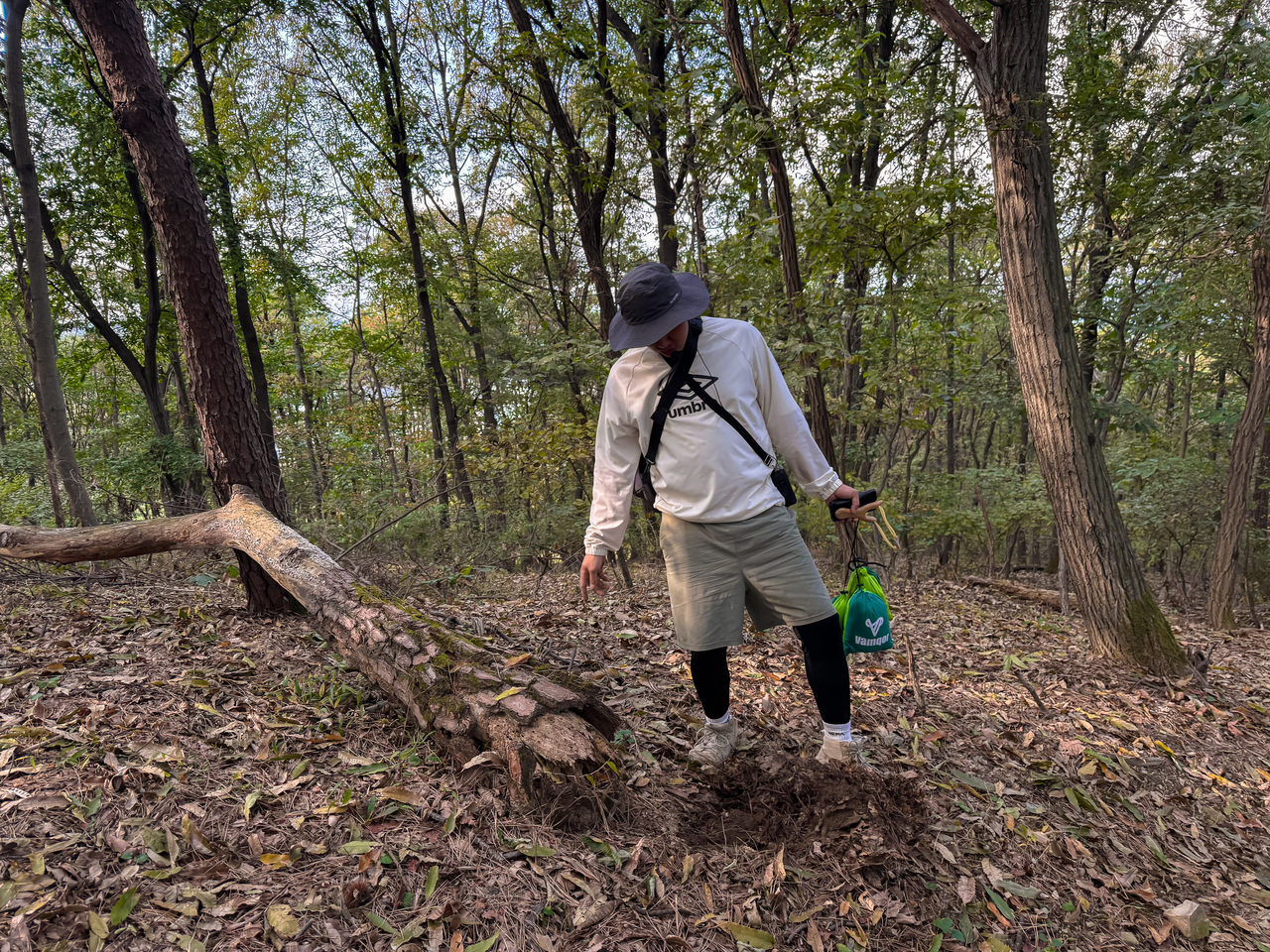
Fallen old trees are visible along the same path. What might look like spent timber has become a nursery for mushrooms and moss — new life taking root on the old. Walking through this cycle of death and return to soil invites quiet, unhurried contemplation. More than any gilded hall, it is this forest trail — saturated with nature's own logic of emptying and replenishing — that feels like Nogyawon's deepest teaching.
A green territory the size of 90 soccer fields
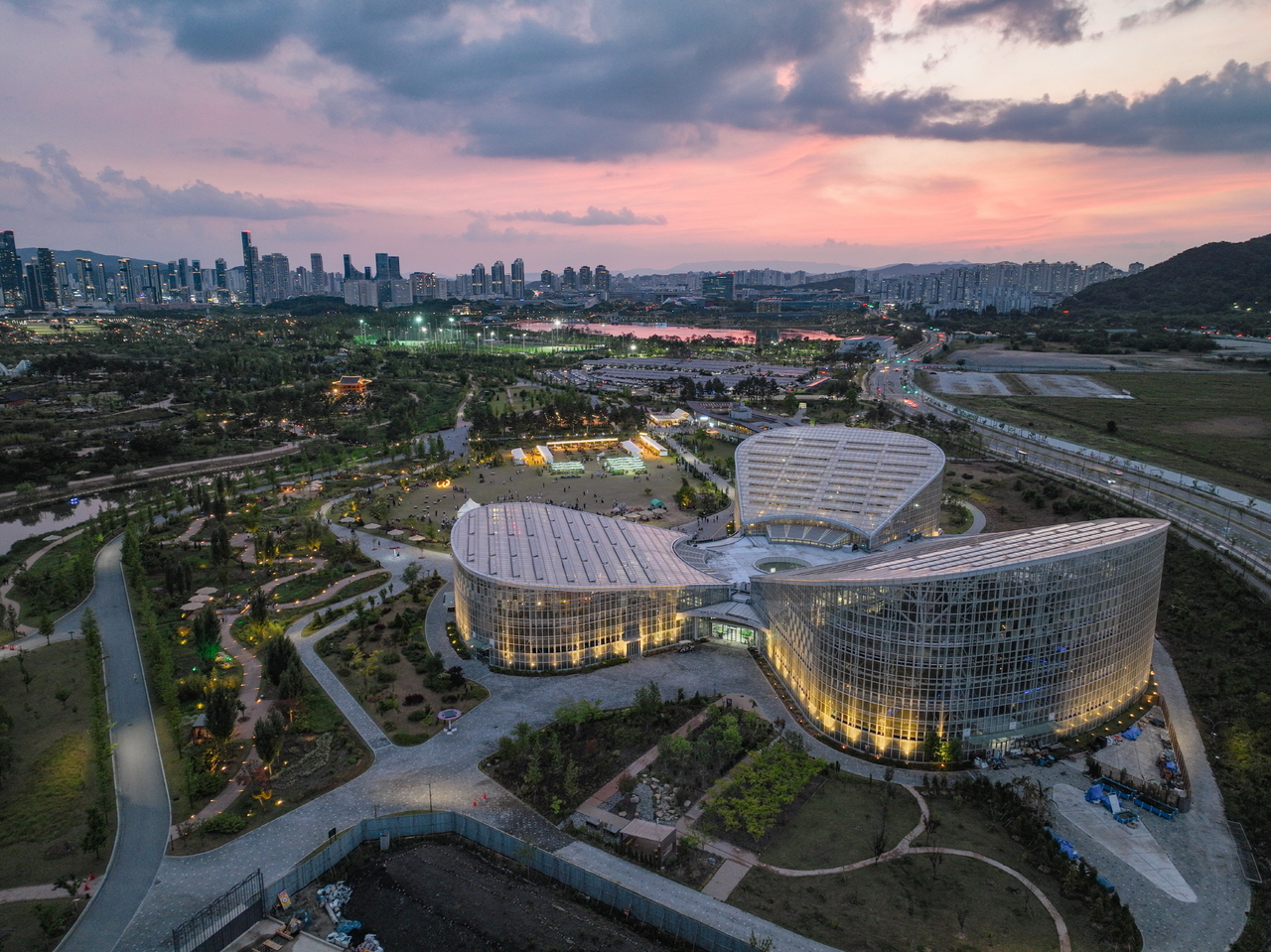
Returning to the city center, the view opens onto a vast, unobstructed expanse of flat land. This is the National Arboretum Sejong, the largest urban national arboretum in South Korea — laid out not on a hillside, as most arboreta are, but across a gently level plain at the heart of the city.
Across grounds equivalent to roughly 90 soccer fields, some 4,367 species and about 2.48 million individual plants have taken root. The arboretum has become a beloved green retreat in an urban environment where nature can be hard to come by, drawing its 5 millionth cumulative visitor earlier this year.
Just past the main gate, the first structure to draw visitors in is the four-seasons greenhouse, shaped after three iris petals. Its sweeping curves — like a flower in full bloom — make the building a work of art in its own right. Inside, the greenhouse is divided into a Mediterranean section, a tropical section and a special exhibition hall, each presenting an entirely different plant landscape according to climate and vegetation.
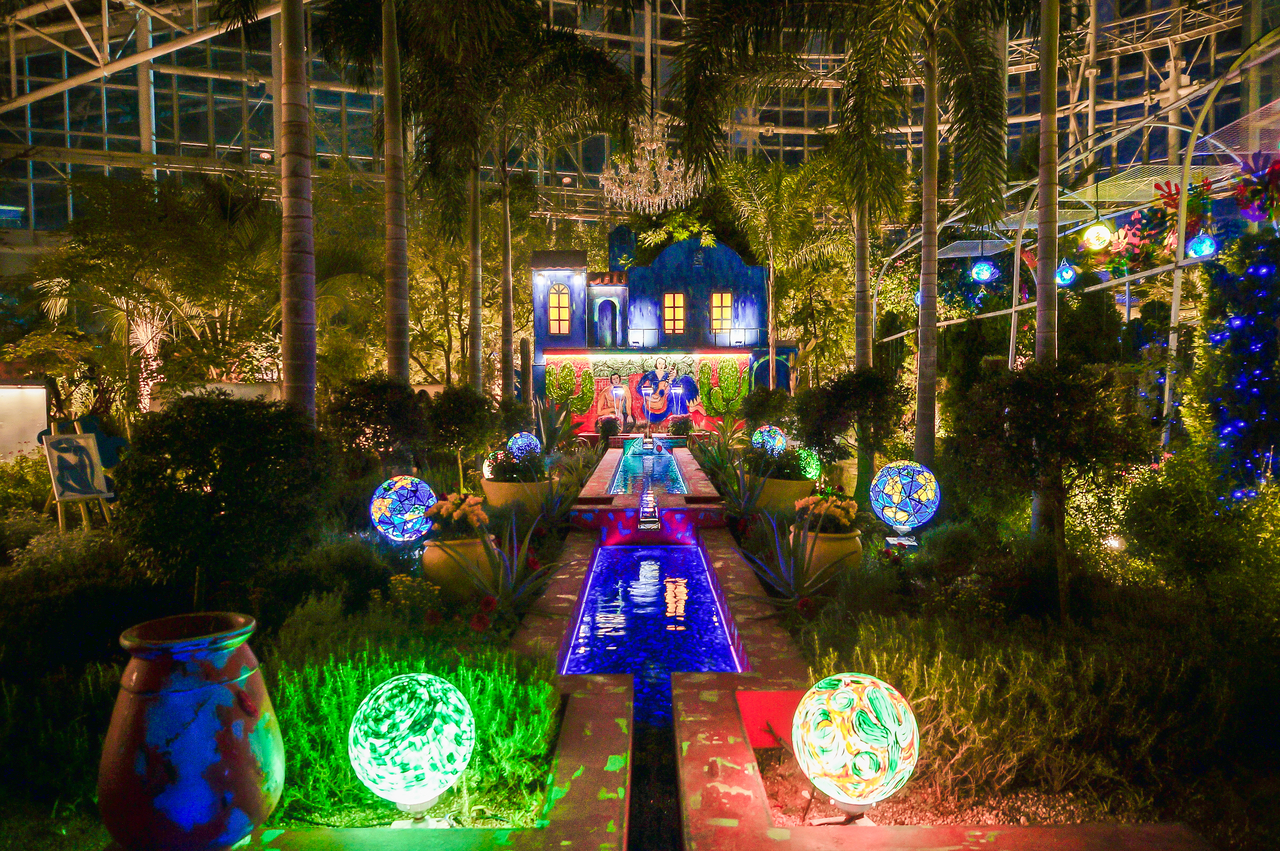
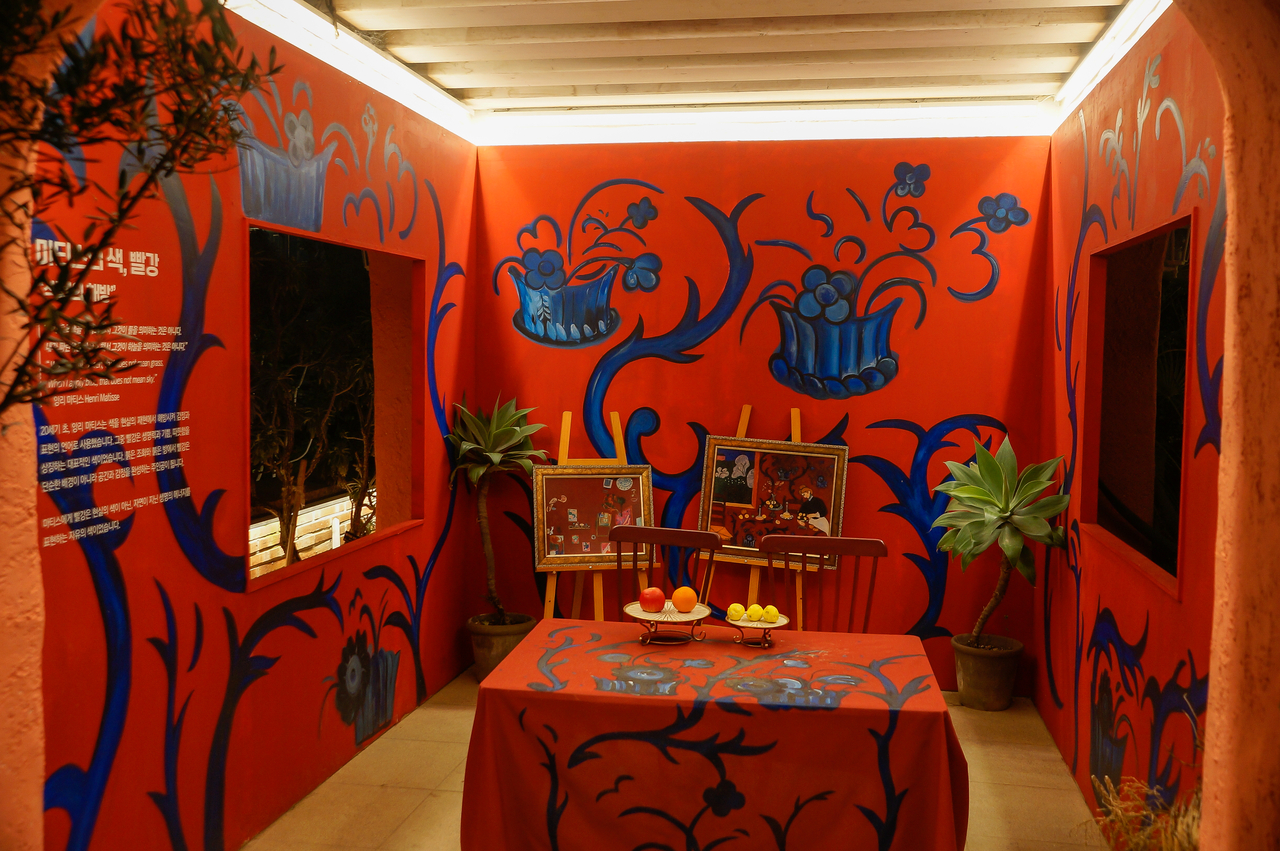
Inside the greenhouse, a special exhibition titled "The Five-Color Garden Painted by Henri Matisse" runs through Dec. 31. The show reinterprets the painter's bold primary colors and sculptural sensibility through plants and spatial design. Themed spaces arrange the colors and objects of Matisse's canvases in three dimensions, offering visitors the vivid sensation of stepping inside the paintings themselves.
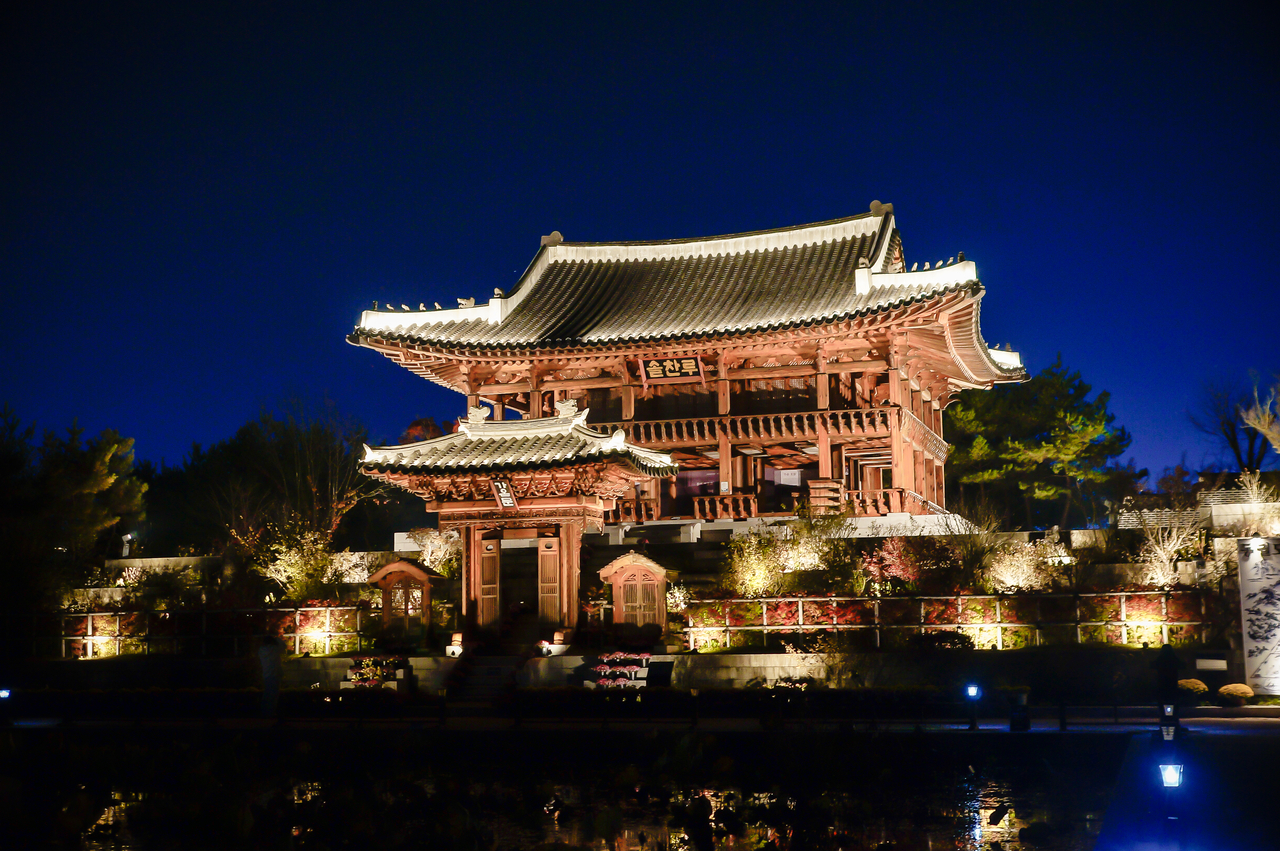
Beyond the greenhouse lies another world entirely: a Korean Traditional Garden recreating the Juhamnu pavilion and Buyongjeong pond area of Changdeokgung's rear garden. Reconstructed from "Donggwoldo," the national treasure painting that documented the Joseon palace grounds, the space conjures the serene atmosphere of a royal garden from centuries past.
Climbing the Solchanru pavilion to look out over the pond, one feels the calm of traditional aesthetics settle in. On one side stands a high-tech glass greenhouse; on the other, the garden sensibility of Joseon unfolds. The juxtaposition mirrors Sejong itself — a city that preserves the past while pressing toward the future.
Where the records of power meet the traces of history
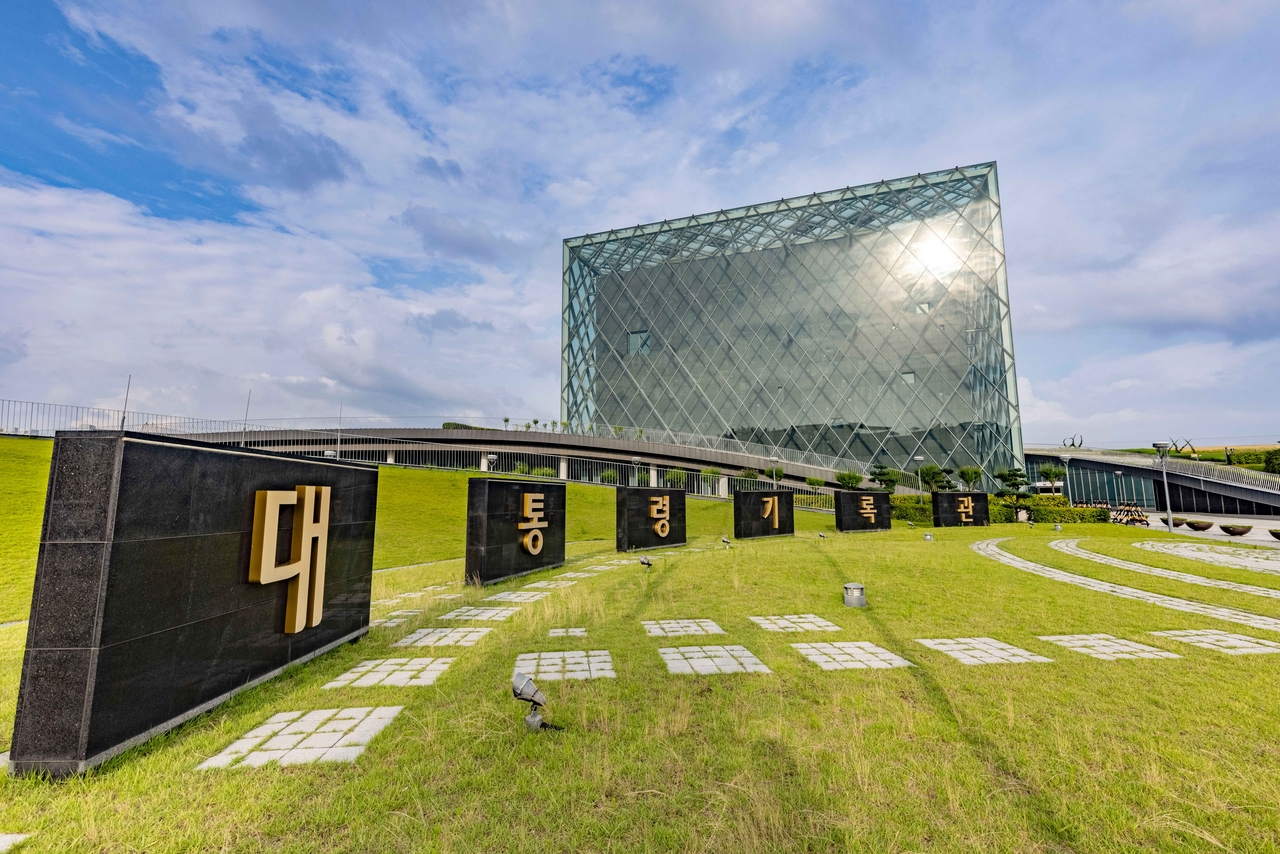
Leaving the arboretum and walking along the waterfront of Sejong Lake Park, visitors come upon a distinctive cube-shaped glass structure: the Presidential Archives Exhibition Hall. The building preserves and displays documents, photographs, footage and diplomatic gifts produced during presidential terms. Its exterior was designed to evoke the case that holds the national seal, and its clean lines of glass and stone convey the solemnity of a place devoted to preservation while sitting harmoniously within the surrounding landscape.
In the first-floor lobby, a large text-art installation renders a presidential face. The work extracts key words from the inaugural addresses of former presidents and arranges them into a portrait.
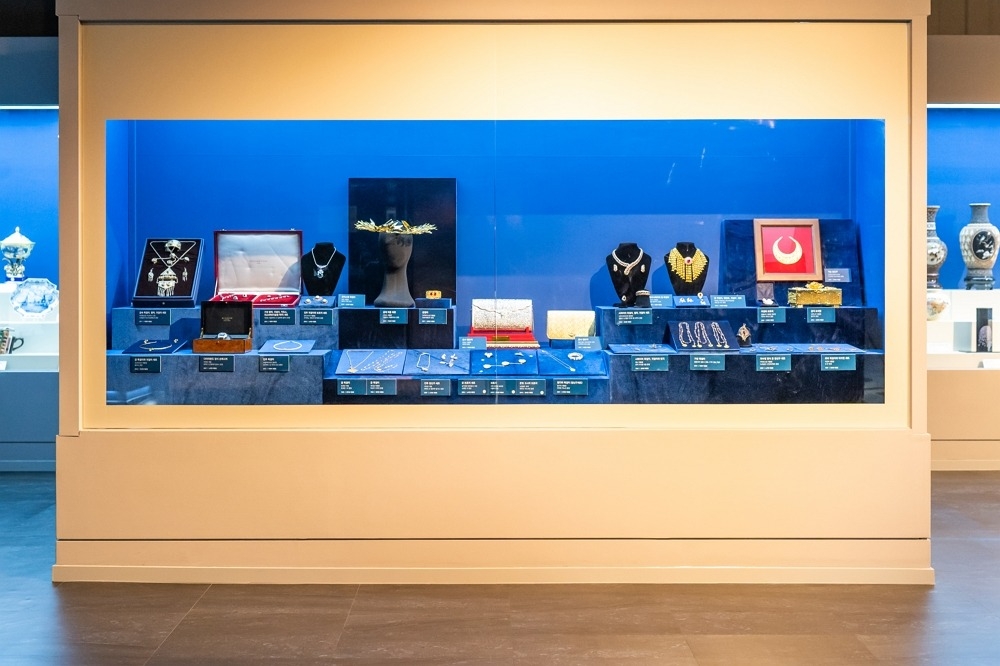
On the second floor, the "Presidential Gifts" gallery tends to hold visitors the longest. It brings together presents given to South Korean presidents by heads of state and dignitaries from around the world, each carrying the culture, history and goodwill of the sending nation. The display is a reminder that diplomacy is conducted not only at grand negotiating tables but also through the small, carefully chosen objects that pass between leaders.
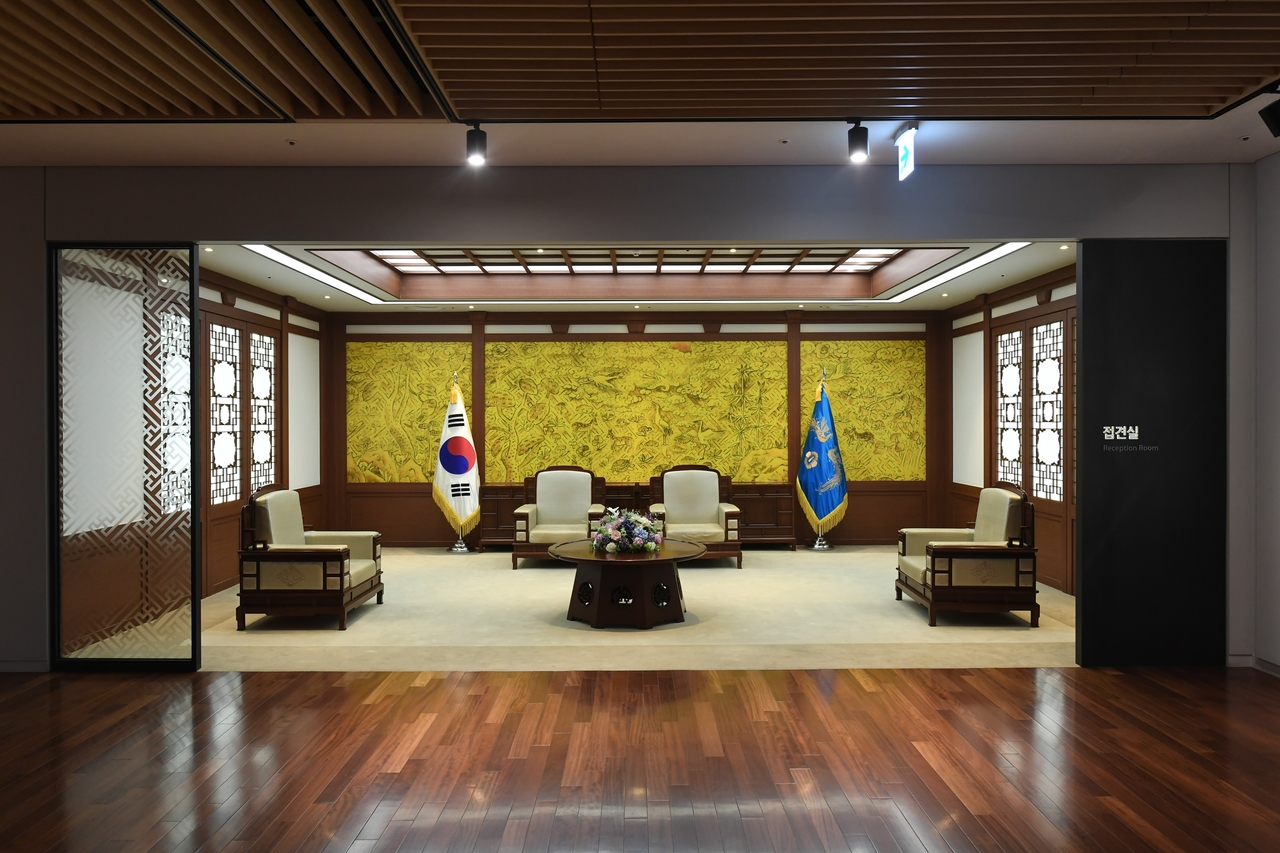
The third floor's "Presidential Spaces" section continues with recreations of key rooms from Cheong Wa Dae — the presidential office, the reception room and the Chunchugwan press briefing room. Walking through them, visitors can briefly inhabit the spaces where executive power was exercised, and sense something of the gravity and urgency that must have attended every consequential decision made there.
When the gates of control opened, the light came in
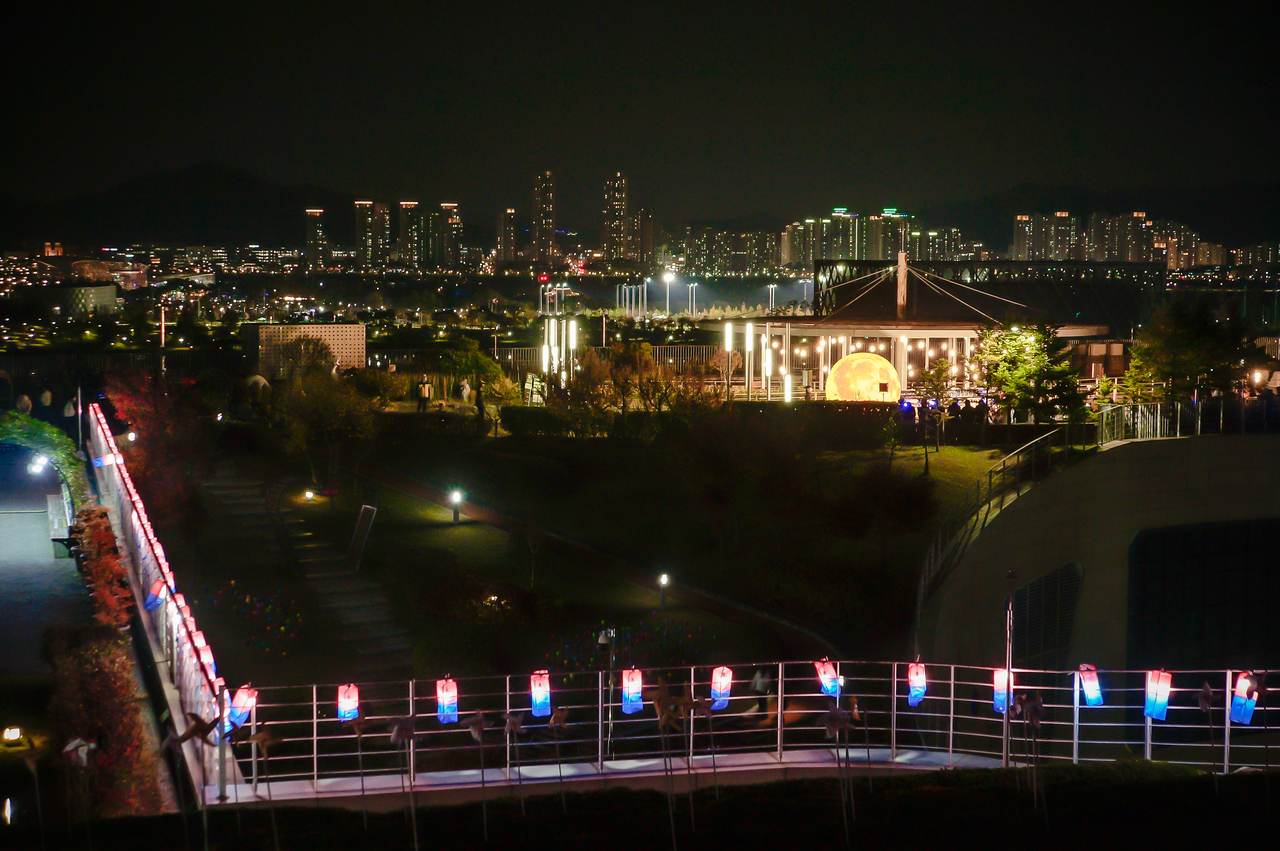
The rooftop garden of Government Complex Sejong is one of the features that makes the city truly distinctive. Connecting 15 government buildings in a single continuous green corridor, it stretches 3.6 kilometers end to end.
Listed in the Guinness World Records in May 2016 as the world's largest rooftop garden, the elevated walkway has become another defining landmark of the city. That a government complex — once closed off in the name of security and control — has been transformed into a public space speaks to Sejong's unusually open civic vision.
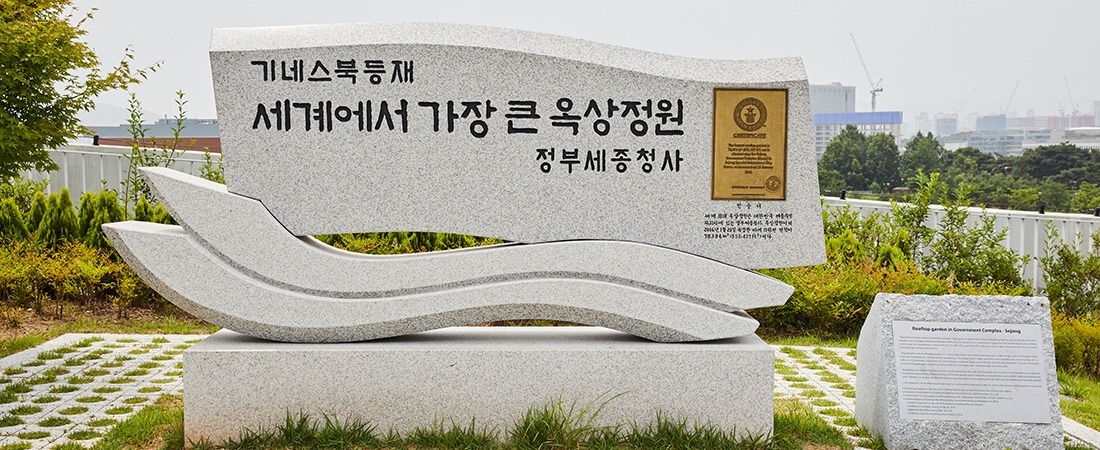
A space normally closed after sunset was lit up for a special evening opening Friday, when the "Government Complex Sejong Rooftop Garden Starlight Night Walk" was held.
After an ID check at the entrance, visitors stepped onto the rooftop to find lanterns and a large moon sculpture illuminating the nighttime path. The strict administrative precinct had been remade into a space for residents and travelers alike. Looking out across the city, the night skyline — Sejong Lake Park, the Sejong Convention Center and the surrounding urban architecture all aglow — spread out in a single sweeping panorama. Where the locks had been undone, a brilliant nocturnal Sejong filled the view.
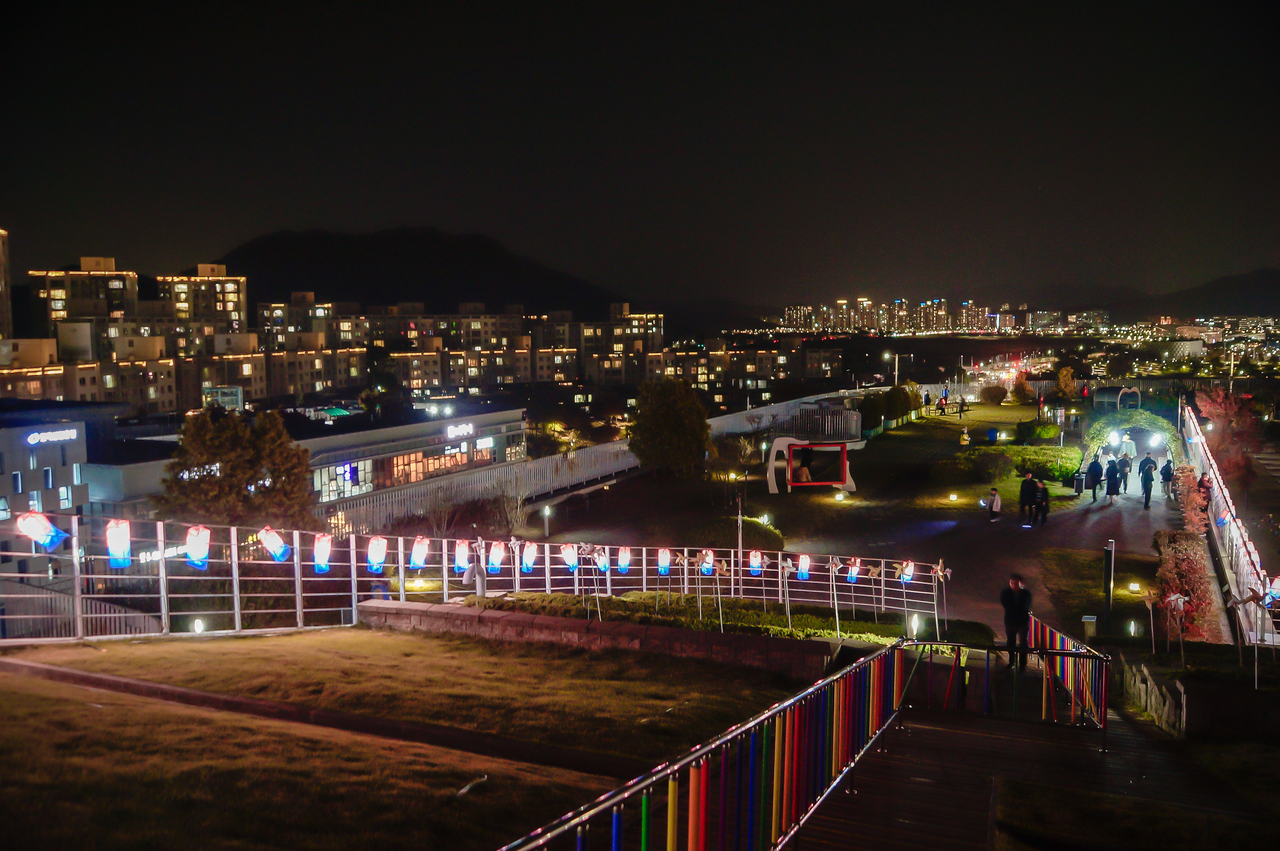
The night walk was part of "Sejong Bammmasil," the city's nighttime tourism brand initiative aimed at drawing visitors after dark. As more people have come to enjoy Sejong's night scenery, their spending has spilled over into nearby performances, dining and local retail, generating a measurable boost to overnight tourism.
Park Young-guk, chief executive of the Sejong City Culture and Tourism Foundation, said visitors from nearby cities such as Daejeon and Cheongju have increased noticeably, pushing local sales up more than 10 percent during the event period. "Bammmasil has grown into an event that other cities are watching closely," Park said. "We will continue to develop it as a nighttime tourism brand that is distinctly Sejong's own."
This year's nighttime sessions have concluded, but daytime visits continue through Nov. 29. Tours depart three times daily on the hour, led by a guide, with a capacity of 50 people per session. Reservations are available through Naver or on-site registration.
The Ieung Bridge: a round comma drawn above the Geum River
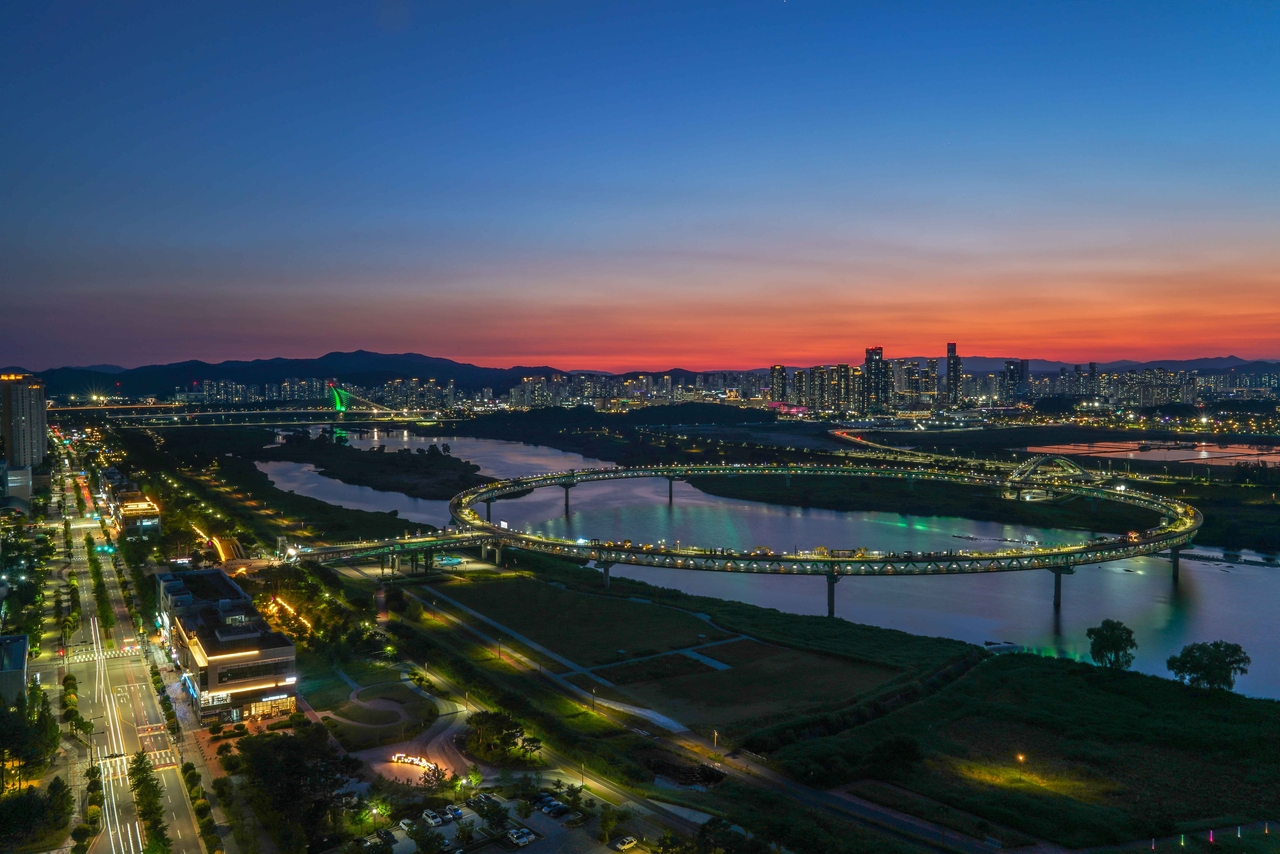
No experience of Sejong at night is complete without the Geum River. Walking to the riverbank, a circular bridge stops the eye — the Ieung Bridge, shaped after the hangul consonant "ieung."
Its official name is the Geumgang Pedestrian Bridge, and its total length of 1,446 meters was chosen to commemorate 1446, the year hangul was promulgated. The double-deck structure runs pedestrians on the upper level and cyclists on the lower, offering an experience unlike any other crossing in the city.
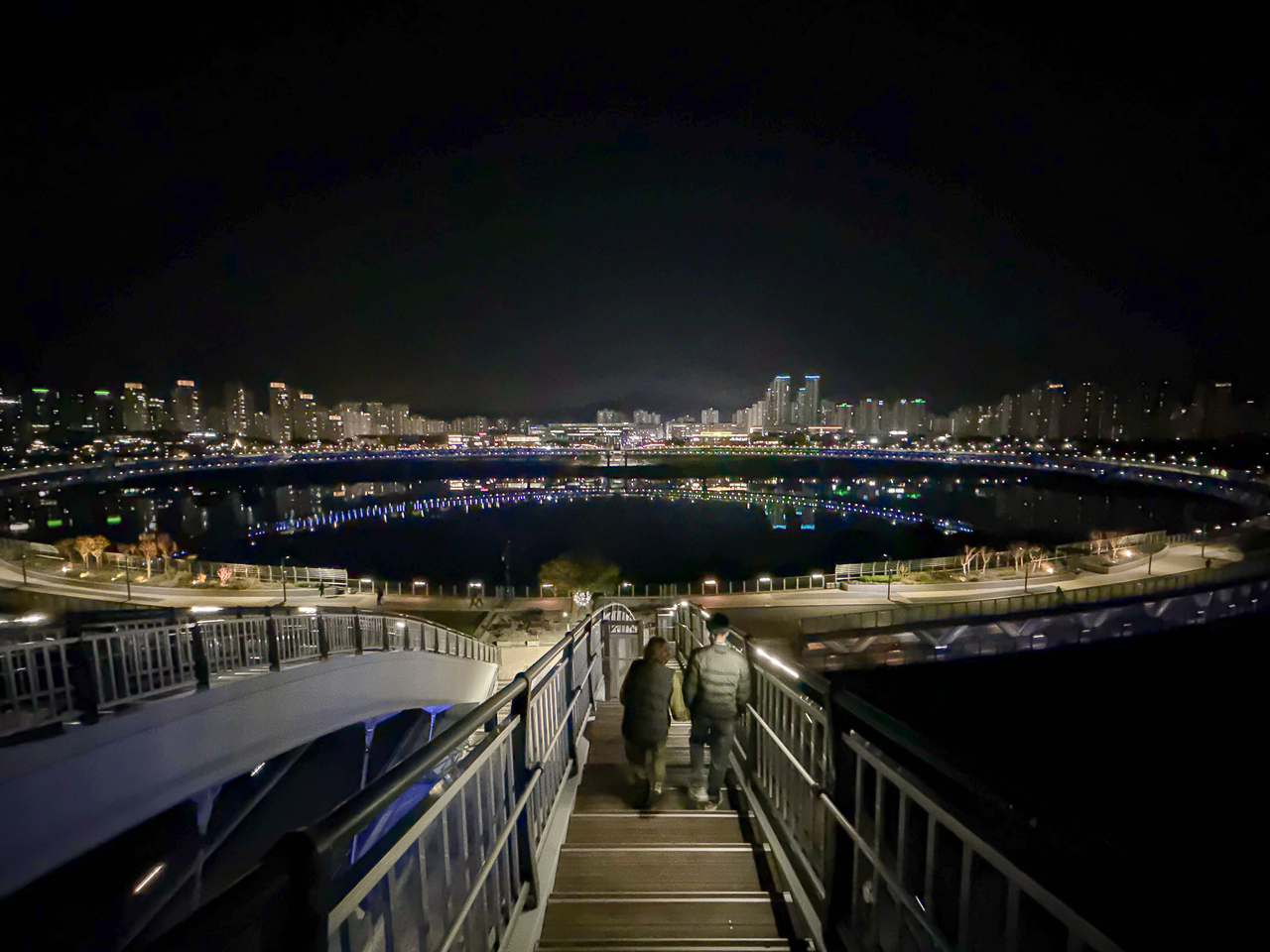
From the observation deck overlooking the upper walkway, the Geum River opens up in an unobstructed sweep. Leaning against the railing, one sees the buildings of the new town across the water shining brightly, their reflections breaking into fragments on the surface below. Walking the circular path at an unhurried pace, the bridge's true character gradually reveals itself.
Stepping away from the straight-line rush of city life to trace a circular form on foot, the act of walking becomes a small pause in the day. Beyond the right angles of a planned city, the gentle arc of a bridge suspended above the Geum River arrives like a quiet word of comfort for the weary.
terry@heraldcorp.com




