
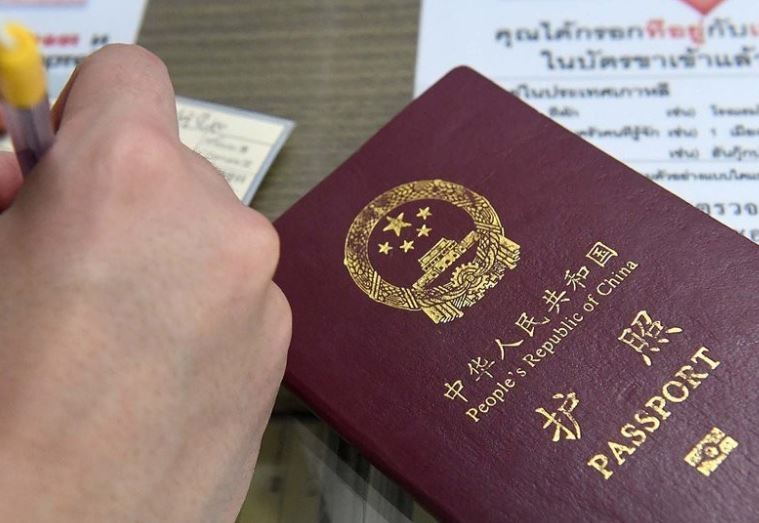
As China tightens taxation and oversight of overseas assets, a growing number of wealthy Chinese are considering renouncing their citizenship. The prospect of taxes on foreign-held wealth has driven a surge in demand for foreign citizenship and permanent residency. Some affluent individuals have also begun restructuring their assets — selling shares or dissolving offshore trusts to raise funds for their tax bills.
The shift accelerated after Chinese authorities in July moved to strengthen taxation on offshore trusts, according to CNBC and Reuters.
Investment migration consultancy Savory & Partners said inquiries from Chinese clients rose 33 percent after July. A separate firm, Global Citizen Solutions, reported a roughly 40 percent increase in Chinese inquiries compared with the same period last year.
Industry insiders say that whereas wealthy clients previously sought only overseas residency rights, many are now actively exploring the option of renouncing Chinese citizenship and acquiring a foreign passport.
The immediate trigger for the exodus is Beijing's crackdown on overseas asset taxation.
Chinese authorities in July began formally imposing personal income tax on assets held in offshore trusts and the income they generate. A 20 percent tax rate applies to gains from certain income streams and transactions.
Offshore trusts are a wealth management structure in which individuals place shares, cash or other assets with an overseas financial institution or trustee. Wealthy Chinese have long used trusts set up in Hong Kong and Singapore to manage their fortunes and transfer assets to their children.
That calculus changed once Chinese authorities began enforcing tax collection on income generated by those trusts.
Chinese tax authorities set a filing deadline of Thursday for declaring offshore trust income and paying the associated taxes, according to Reuters.
Founders and major shareholders of Chinese companies listed on the Hong Kong and US stock exchanges are among the primary targets.
Many of them sold shares held through offshore trusts or received dividends during the 2014–2020 period, when share prices were elevated. Taxes on gains from that era may now be assessed retroactively.
Oscar Liu, CEO of wealth management firm JLT Legacy Group, estimated that individual tax bills could range from millions of yuan to hundreds of millions of yuan, and in some cases into the billions.
The methods used to identify taxable individuals are also becoming more sophisticated.
Reuters reported that Chinese tax authorities are tracking holders of overseas assets by cross-referencing the Hurun Rich List — China's wealth ranking — with corporate filings and publicly available financial information.
In some regions with a high concentration of wealthy entrepreneurs, dedicated task forces have reportedly been set up specifically to collect taxes related to offshore trusts.
The sudden tax burden is prompting some to liquidate assets.
The family office of one Chinese technology billionaire is said to be selling roughly half of its equity holdings while devoting considerable time to calculating and preparing its tax payments.
Some wealthy individuals are taking out bank loans secured against their shareholdings to fund their tax bills. There have also been cases of newly established offshore trusts being dissolved before any assets were actually transferred into them.
China is simultaneously expanding oversight of capital outflows while stepping up taxation of overseas income. Analysts see the moves as an effort to capture tax revenue from assets that have moved abroad, as slowing economic growth and weak domestic demand increase fiscal pressure on the government.
As scrutiny of overseas assets intensifies, some wealthy Chinese are actively pursuing foreign citizenship.
China does not recognize dual nationality. Under Chinese nationality law, a Chinese citizen who voluntarily acquires citizenship of another country while settled abroad automatically loses Chinese citizenship.
Obtaining foreign citizenship therefore carries the significant consequence of surrendering Chinese nationality.
Ryan Lin, a director at Singapore law firm Bayfront Law, told CNBC that the number of wealthy Chinese exploring renunciation of citizenship has grown since July.
Lin said that whereas clients previously inquired only about whether renouncing citizenship was possible, many are now stating explicitly that they intend to go through with it.
Armand Arton, CEO of investment migration firm Arton Capital, also said some clients are seeking to renounce Chinese citizenship and secure multiple foreign passports.
The motivations go beyond taxes and include concerns about ease of international travel, business operations and geopolitical uncertainty.
Wealthy individuals seeking citizenship quickly have shown particular interest in Caribbean nations.
Some Caribbean countries, including Antigua and Barbuda, operate citizenship-by-investment programs that grant citizenship in exchange for a qualifying investment or a donation to a national development fund.
In some cases, citizenship can be obtained within about six months of meeting the eligibility requirements and completing the vetting process.
The speed is a key draw compared with the years of residency required before naturalization in Europe or the United States.
According to Global Citizen Solutions, the Caribbean also saw the sharpest increase this year in investment migration inquiries from Chinese nationals.
Wealthy Chinese are not necessarily seeking permanent residence in these countries. Many are primarily looking to secure additional options for conducting business abroad and traveling internationally.
Manish Tibrewal, co-founder of Singapore wealth manager Farrow Capital, said the number of Chinese families actively exploring foreign citizenship since July far exceeds the number that actually completed the process last year.
Tibrewal said some Chinese families are simultaneously pursuing Caribbean citizenship and Singapore permanent residency, with an eye toward eventually obtaining Singaporean citizenship.
Many wealthy Chinese also want to secure the right to live abroad while retaining their Chinese citizenship.
These individuals are turning to investment residency programs and long-term visas rather than foreign citizenship.
The leading destinations are European countries, particularly Portugal, Italy and Hungary.
Portugal has attracted strong interest through its "golden visa" program, which grants residency in exchange for qualifying investments. Applicants who meet long-term residency requirements may eventually apply for citizenship.
Italy is drawing wealthy migrants with tax incentives for high-net-worth individuals relocating from abroad, along with international schools and financial services.
Hungary has also emerged as a new investment migration destination.
Hungary operates a program under which investors who place a minimum of 250,000 euros ($280,000) in a qualifying fund can apply for long-term residency.
The residency is attracting interest from wealthy individuals seeking an overseas base, as it provides freedom of movement within the Schengen Area.
Global Citizen Solutions noted that Hungary has risen as an alternative as major European countries have scrapped their golden visa programs or raised investment thresholds.
In Asia, Singapore remains the top destination.
Its appeal lies in political stability, a well-developed wealth management industry, international school infrastructure and geographic proximity to mainland China.
A growing number of Chinese families are placing assets in Singapore and seeking permanent residency there. However, permanent residency does not automatically lead to citizenship — naturalization is subject to a separate review by the Singaporean government.
Australia is also popular among wealthy families who prioritize education and quality of life.
Kuala Lumpur and Penang in Malaysia are drawing attention as well, on the strength of relatively low living costs, Chinese-speaking communities and international schools.
Argentina, Serbia, North Macedonia and Bulgaria have also been mentioned as emerging options for overseas relocation.
Obtaining foreign citizenship, however, does not erase existing tax liabilities.
Chinese tax authorities can determine whether to tax overseas income based on factors such as whether a taxpayer's primary economic interests remain in China.
Changing nationality may not eliminate taxes on past investment gains or transactions, depending on how assets are structured and how residency is determined.
Lin of Bayfront Law said those most actively pursuing renunciation tend to be individuals with limited remaining business ties to mainland China who have already moved a substantial portion of their wealth and business operations overseas.
There is also a gap between the number of people considering renunciation and those who actually emigrate.
Meanwhile, Reuters reported Friday that despite China's tightening of overseas income taxation, fresh capital flows into wealth management businesses centered on Hong Kong have remained steady. Even as the tax burden grows, demand for overseas investment continues, driven by a depressed domestic real estate market and low interest rates in China.
Arton of Arton Capital said that exploring overseas residency, securing multiple passports and actually relocating an entire family are three distinct decisions.
As China's crackdown on overseas asset taxation reshapes how the wealthy manage their money and choose their nationalities, competition among global investment migration firms to attract Chinese clients is intensifying.
rainbow@heraldcorp.com




