
Democratic Peace and Unification Advisory Council releases Q3 public opinion survey
62.4% say unification is necessary, down 1.7 percentage points from previous quarter
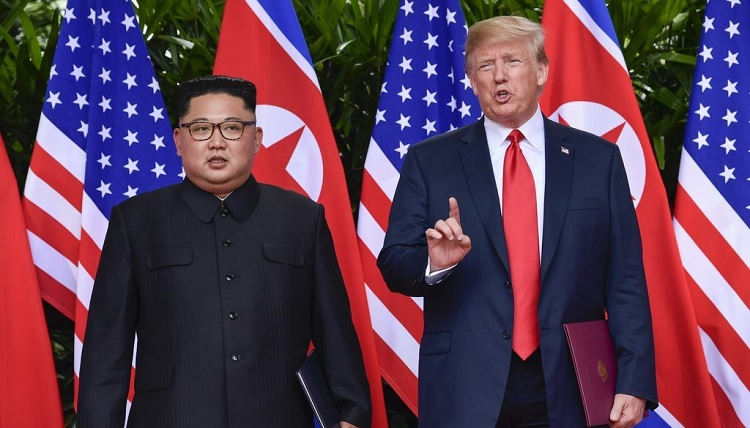
Nearly four in 10 South Koreans believe the chances of a North Korea-US summit taking place this year are "fifty-fifty," according to a new survey. Some 38.9 percent of respondents chose that option, while 37.4 percent said the likelihood was low and 18.3 percent said it was high.
The Democratic Peace and Unification Advisory Council published its Q3 unification public opinion and trends report Friday, compiling results from a nationwide poll along with analysis from academic, media and overseas discussions on unification.
When asked what role the South Korean government should play as North Korea-US dialogue resumes, 40.8 percent of respondents said the priority should be "devising a strategy to connect North Korea-US talks to inter-Korean dialogue." That was followed by "monitoring direct negotiations between the two sides and providing support when necessary" at 31.5 percent, and "actively mediating and facilitating North Korea-US dialogue" at 14.7 percent.
On the impact of reduced joint South Korea-US military exercises — carried out at the direction of US President Donald Trump — on North Korea-US relations, 36.9 percent said the change would have "little effect," while 31.6 percent said it would have a positive effect and 26.4 percent said it would have a negative one.
Some 53.4 percent of respondents said they agreed with President Lee Jae Myung's "three-point blueprint for peaceful coexistence on the Korean Peninsula," which Lee presented in a speech marking the 81st Liberation Day. Some 39.6 percent said they did not agree.
Meanwhile, 62.4 percent of respondents said unification was necessary, down 1.7 percentage points from the previous quarter. The most commonly cited reason for pursuing unification was "eliminating the threat of war," chosen by 32.2 percent.
Both advisory council members (44.1 percent) and experts (53.9 percent) also ranked "eliminating the threat of war" as the top reason for unification. The trend of experts and advisory council members selecting that option at higher rates than the general public continued in this survey.
The poll was conducted by Korea Research on behalf of the advisory council from Sept. 11 to Sept. 13, surveying 1,200 adults aged 19 and older nationwide. It carried a confidence level of 95 percent and a margin of error of plus or minus 2.83 percentage points. Samples were drawn using population-proportional quota sampling by gender, age and region based on resident registration statistics, and the survey was conducted via computer-assisted telephone interviewing using both landline and mobile phones.
youknow@heraldcorp.com




