
Iran confirms receipt of letter from Vice President Vance
Assembly Speaker Galibaff says conditions already conveyed to mediators
US Central Command chief briefs Trump on military strike options
Diplomatic contacts continue even as gap between sides remains wide
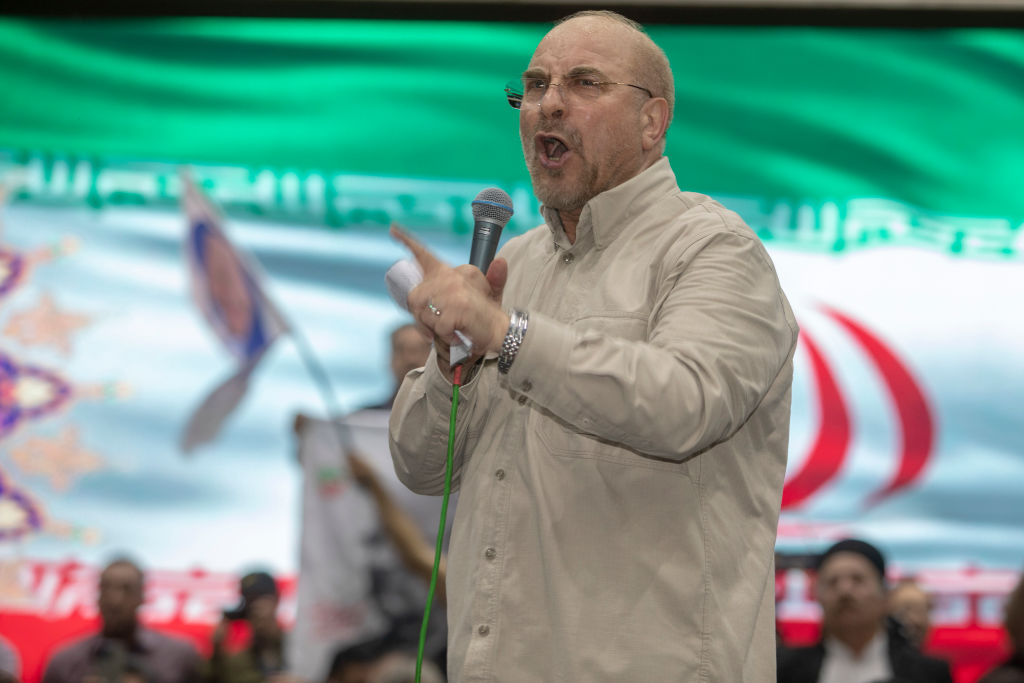
Iran has signaled it will stick to its existing peace negotiation terms even after receiving a letter from US Vice President JD Vance, as the United States prepares to resume large-scale airstrikes. Donald Trump is simultaneously intensifying military pressure and diplomatic outreach, but Iran shows no sign of backing down.
Iran's semi-official Tasnim News Agency reported that Iran had received a letter Vance sent to Mohsen Rezaei, secretary-general of Iran's Supreme National Security Council, Bloomberg reported Friday (Korean Standard Time).
Tasnim did not disclose the letter's contents or whether the Iranian government was preparing a response.
However, shortly after news of the letter's receipt emerged, Iranian parliament Speaker Mohammad Bagher Galibaff signaled on X that Iran had no intention of changing its negotiating conditions.
"Iran's conditions have been clearly conveyed to mediators on multiple occasions," Galibaff said. "The carrot-and-stick strategy has no effect on Iran."
Galibaff is one of the key Iranian figures who participated in past negotiations to end the war with the United States. Galibaff did not directly reference Vance's letter, nor did Galibaff clarify whether the remarks constituted an official response to the US proposal.
The letter was delivered as Trump has repeatedly warned of the possibility of resuming airstrikes against Iran.
Trump told reporters Wednesday that he had authorized Vance to send the letter and make contact with the Iranian side — though Trump described the outreach as being for humanitarian purposes, involving "medical supplies and various items," rather than a resumption of peace negotiations.
Separate from the diplomatic contacts, military tensions between the two sides are rising.
US Central Command chief Gen. Brad Cooper, who oversees American military operations against Iran, briefed Trump directly at the White House on Thursday (local time) on military strike options against Iran, according to the Wall Street Journal.
Defense Secretary Pete Hegseth and Joint Chiefs Chairman Dan Caine were also reported to have attended the meeting. Also on Thursday, senior US military officers met separately with Vance. The Wall Street Journal noted that it is rare for a combatant commander to brief the president directly on military operations, suggesting the meeting may signal a growing likelihood of a large-scale US airstrike resumption.
Trump had also hinted at further military action at a Florida campaign event on Oct. 23, saying, "We could do another little 'Operation Righteous Fury.'"
The US Department of Defense has spent recent weeks sending additional air defense equipment, ammunition and supplies to the Middle East to lay the groundwork for a new airstrike campaign. At the same time, the Pentagon has withdrawn some troops from bases considered vulnerable to Iranian retaliation. The US Army is also repositioning additional Patriot air defense batteries to bolster Israel's defenses.
Iran, for its part, has warned that if US strikes resume, it will target American military facilities in the Middle East and assets belonging to Gulf states allied with the United States.
Amid the escalating military tensions, mediation efforts by regional states continue.
Talks were held in Tehran this week with senior officials from Saudi Arabia, Turkey and Pakistan in attendance. Participants assessed the outcome positively and agreed to continue discussions, but no date has been set for a formal second round. Iran's Supreme Leader Mojtaba Khamenei reiterated earlier this week that several conditions must first be met before the war with the United States can end.
The central sticking points in the current negotiations are the Strait of Hormuz and the US maritime blockade.
Iran has continued to attack vessels transiting the Strait of Hormuz, while the United States has maintained a maritime blockade on Iranian ports. With both sides sustaining military pressure while demanding the other make the first concession, negotiations have made little progress.
Iran says it will keep the door open to a diplomatic resolution while maintaining its military readiness. "Our brave armed forces are fully prepared to defend the homeland, but Iran continues to give diplomacy every opportunity to succeed," Foreign Minister Abbas Araghchi wrote on X on Thursday.
The war, which began when the United States and Israel launched bombing campaigns against Iran in late February, has killed thousands over eight months and disrupted energy shipments through the Strait of Hormuz.
The Trump administration is pressing ahead with military preparations for additional strikes while also pursuing a diplomatic solution, but with Iran holding firm on its negotiating conditions, the gap between the two sides shows little sign of narrowing.
sjy@heraldcorp.com




