
Padoprazan proves non-inferior to esomeprazole; approval application planned by year-end
Takeda's Voquezna set for reimbursed launch in November, intensifying rivalry with K-CAB
P-CAB market seen topping 400 billion won this year as co-promotion deals and new indications reshape landscape
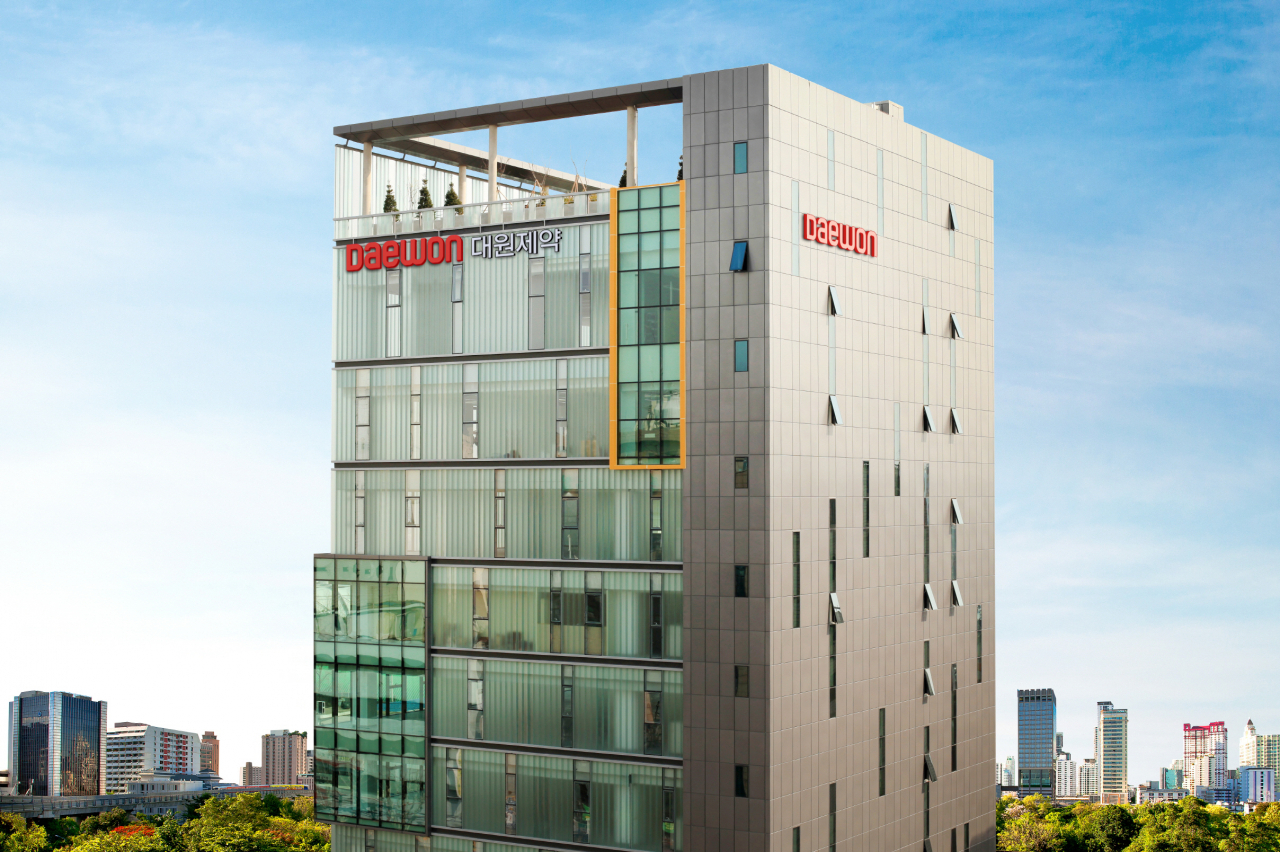
Daewon Pharmaceutical has confirmed the efficacy and safety of its next-generation gastroesophageal reflux disease drug candidate padoprazan in a domestic Phase 3 trial and has begun the commercialization process.
The P-CAB (potassium-competitive acid blocker) market, long dominated by domestic pharmaceutical companies led by HK inno.N's K-CAB, is set to grow more competitive as a global drugmaker's new drug and a salt-modified formulation prepare to enter the reimbursement system in November, while later-stage domestic candidates continue to advance through development.
Daewon Pharmaceutical announced Thursday that its P-CAB drug candidate padoprazan (DW4421) met the primary efficacy endpoint in a domestic Phase 3 trial involving patients with erosive gastroesophageal reflux disease (ERD), demonstrating non-inferiority to the comparator drug.
The trial was conducted at 22 medical institutions across South Korea, with Professor Kim Byung-wook of the Department of Gastroenterology at Incheon St. Mary's Hospital of the Catholic University of Korea serving as the coordinating investigator. Daewon Pharmaceutical received approval from the Ministry of Food and Drug Safety for the clinical trial plan in October 2025, enrolled the first patient in November of that year, and completed the last patient dosing in September.
Among patients who adhered to the trial protocol, the 95% confidence interval for the difference in efficacy rates — measured by complete healing of esophageal mucosal defects — was -2.50% to 6.87% for the padoprazan 40 mg group versus the proton pump inhibitor esomeprazole 40 mg control group, and -3.90% to 6.58% for the 20 mg group. Both doses met the pre-specified non-inferiority margin of greater than -10.0%. Adverse drug reaction rates were 4.59% for the padoprazan 40 mg group, 3.74% for the 20 mg group, and 3.70% for the esomeprazole group, with no statistically significant differences and no serious adverse events.
Based on these top-line results, Daewon Pharmaceutical plans to conduct a detailed analysis, submit a final results report to the Ministry of Food and Drug Safety and apply for product approval by year-end. The company is also running a parallel Phase 3 trial targeting non-erosive gastroesophageal reflux disease (NERD) and additional follow-up trials to secure further indications.
If padoprazan ultimately receives product approval, the range of P-CAB options in the domestic prescription market is expected to expand further. According to pharmaceutical market research firm Ubist, annual outpatient prescription sales of P-CAB drugs in South Korea reached 368.6 billion won ($276 million) in 2025, up about 29 percent from the previous year, and are projected to surpass 400 billion won this year.
The market is currently led by K-CAB — South Korea's 30th domestically developed new drug — which recorded 217.9 billion won in prescription sales last year, holding more than half of the market. Behind it, Jaqubo, the country's 37th domestically developed new drug co-marketed by Jeil Pharmaceutical and Dong-a ST, posted the second-highest outpatient prescription sales for two consecutive months in April (8.52 billion won) and May (7.55 billion won), putting it in a ranking battle with Daewoong Pharma's Fexuclue, the country's 34th domestically developed new drug.
External variables that could reshape the market landscape are also emerging in quick succession. Takeda Pharmaceutical's P-CAB product Voquezna (generic name: vonoprazan) is set to receive national health insurance reimbursement starting Saturday and officially launch Sunday. Vonoprazan salt-modified products from Kyongbo Pharmaceutical (Vonocan) and Mothers Pharmaceutical (Vonom) will also enter the reimbursement system at the same time.
The restructuring of co-promotion networks among major pharmaceutical companies is another key factor to watch. Daewoong Pharma ended its co-marketing agreement with Chong Kun Dang for Fexuclue in September, while the co-promotion contract between Boryeong and HK inno.N for K-CAB is set to expire at the end of December.
"With the three existing domestic new drugs now being joined in earnest in November by the foreign new drug Voquezna and a wave of generic products — and with the approval processes of latecomers such as Daewon Pharmaceutical becoming more visible — competition to enter the market is intensifying," an industry official said. "Whether companies can reorganize their sales networks and secure additional indications will be the deciding factor in long-term market share."
silverpaper@heraldcorp.com




