
Average 26% of fetal brain cells show genetic abnormalities
Cells with autism-linked mutations filtered out first
Brain loses 13% of cells over 60 years as cleanup continues into adulthood

About one in four brain cells in a fetus carries significant genetic defects — but most of those cells disappear by the time of birth, a new study has found.
Cells in the human body are generally thought to carry identical genetic material. However, as cells divide, mutations can arise in which segments of DNA are entirely lost or duplicated. Brain cells are particularly vulnerable to such changes. Even a single extra or missing gene copy can lead to conditions such as autism, schizophrenia, epilepsy or intellectual disability.
A research team led by Professor Christopher Walsh of Boston Children's Hospital and Professor Peter Park of Harvard Medical School published findings in the international journal Nature after analyzing the genes of individual brain cells from donors ranging from fetuses to elderly adults.
Genetic mutations found in average 26% of fetal brain cells
The research team selected 2,357 brain cells from the cerebral cortex of fetuses, infants and elderly donors who had died without neurological disease and had donated their brains. The fetuses were between 14 and 25 weeks of gestation, while postnatal donors ranged from infancy to over 90 years of age.
The team sequenced the entire genome of each individual brain cell to check for abnormalities.
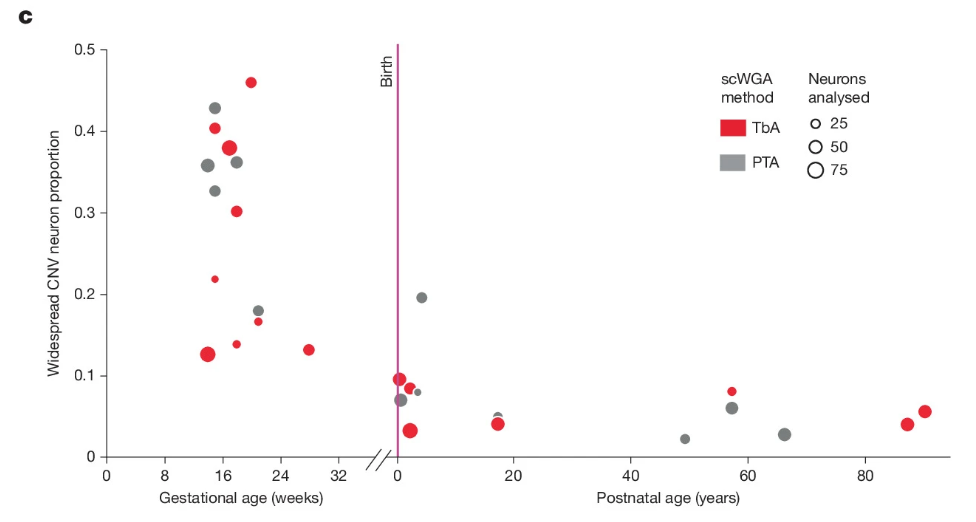
An average of 25.9 percent of fetal brain cells showed large-scale gains or losses of genetic material spanning multiple chromosomes.
The team also found numerous micronuclei in the fetal cerebral cortex. Micronuclei are clumps formed by chromosome fragments that fail to reach their proper location during cell division — a sign of severe genomic disruption.
The research team said the pattern of genetic abnormalities in fetal brain cells resembled what is seen in fertilized eggs during their earliest divisions, as well as in cancer cells.
Most defective brain cells gone by birth
After birth, the proportion of brain cells with major genetic abnormalities dropped to about one-fourth of the fetal level. Cells with smaller genetic defects declined more gradually after birth.
A combined analysis of six other studies estimated that as these defective cells disappear, the total number of brain cells falls by about 13 percent over 60 years.
This period coincides with a phase of massive brain cell death in humans. In mammals, including humans, roughly 30 percent of brain cells die off naturally around the time of birth.
The research team suggested that this phenomenon — whose cause had long been unclear — may be the brain's way of filtering out cells with genetic abnormalities.

In the paper, the research team said that "eliminating neurons with defective genomes may be an important genomic quality-control mechanism during development."
Among the brain cells that survived after the defective ones were filtered out, genes associated with autism or developmental disorders were rarely found. The team concluded that cells carrying such genetic abnormalities were likely eliminated first.
The team said the period around birth "is a critical window for ensuring that most neurons surviving into adulthood carry a normal genome."
However, the study compared brains from people of different ages rather than tracking the disappearance of cells in the same individual over time. Brain tissue from fetuses at seven to nine months of gestation was also unavailable and could not be analyzed.
Reference
DOI: 10.1038/s41586-026-11190-3
Shao, D.D., Zhao, Y., Brew, J. et al. Perinatal elimination of genetically aberrant human cortical neurons. Nature (2026).
dbsdn1110@heraldcorp.com




