
Demo covers simultaneous entry-exit, double-parking resolution
Land Ministry, local governments, public institutions attend
Smart control system manages up to 200 robots at once
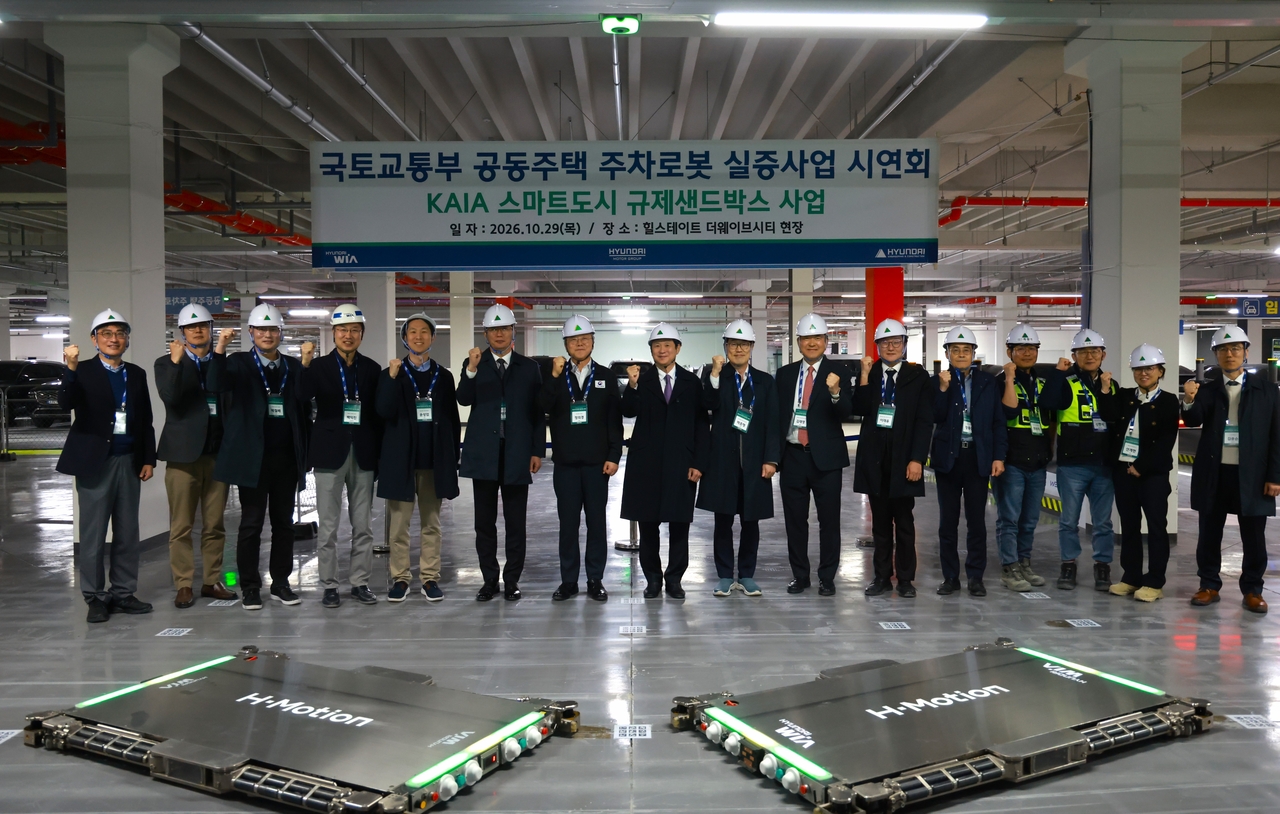
Hyundai Motor Group held a parking robot demonstration at Hillstate The Wave City in Siheung, Gyeonggi Province on Thursday, showcasing results from a pilot project being carried out by a consortium of Hyundai Motor, Hyundai Wia and Hyundai Engineering & Construction.
The event was organized to share progress on the pilot project, which is being conducted under the smart city regulatory sandbox framework, and to present operating scenarios in a real residential setting along with proposed directions for future regulatory reform. Officials from the Ministry of Land, Infrastructure and Transport, the Korea Agency for Infrastructure Technology Advancement, Gyeonggi Province, Suwon, Siheung, the Korea Land and Housing Corporation, Korea Airports Corporation, the Korea Institute of Civil Engineering and Building Technology, and the Korea Transportation Safety Authority attended.
Hyundai Motor Group said the pilot marks the first case in South Korea in which parking robots have been operated in a residential complex with 50 or more parking spaces, verifying operational feasibility. The group said it confirmed the potential to deliver a practical mobility service by testing the technology and service in the everyday living spaces residents use.
The demonstration was structured around three scenarios reflecting situations that can arise in real apartment parking environments: simultaneous vehicle entry and exit, resolution of double-parking, and temporary vehicle retrieval.
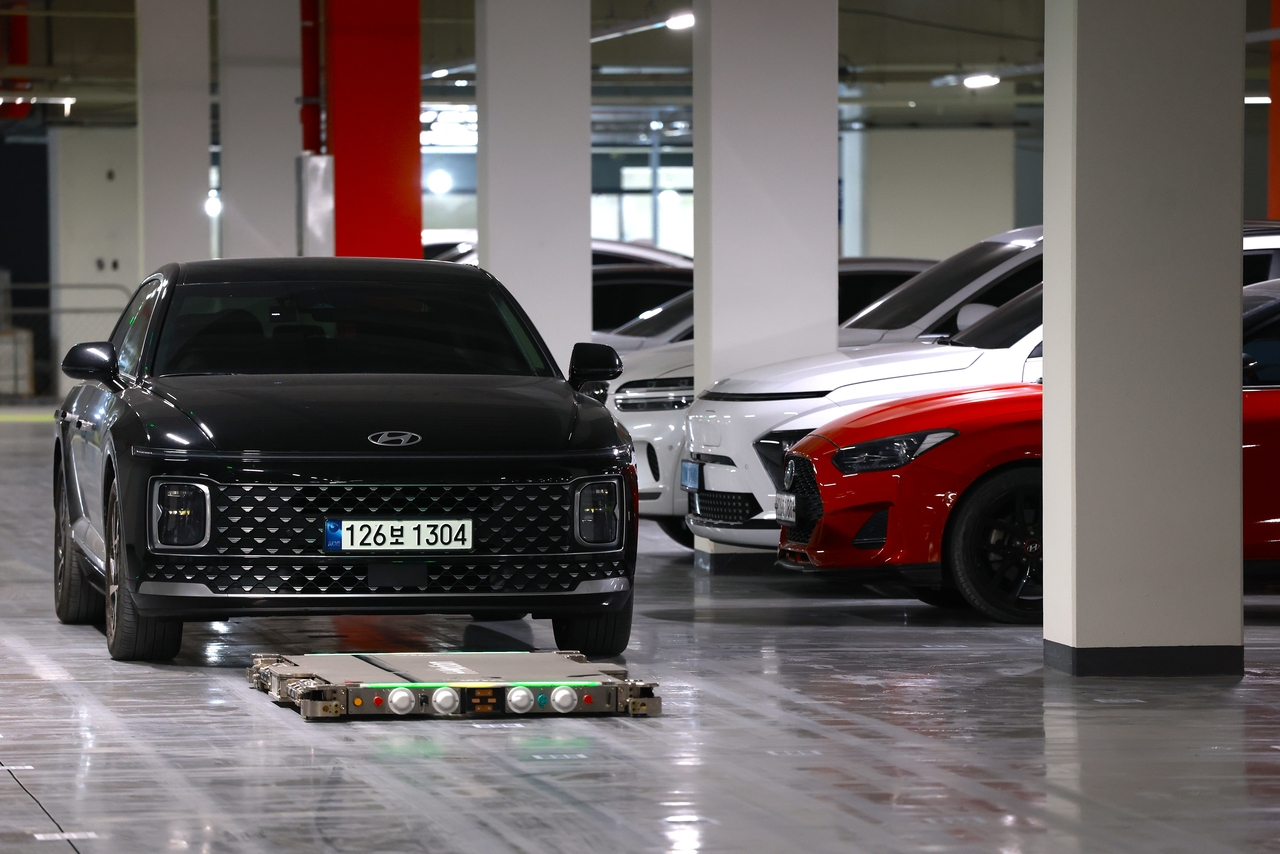
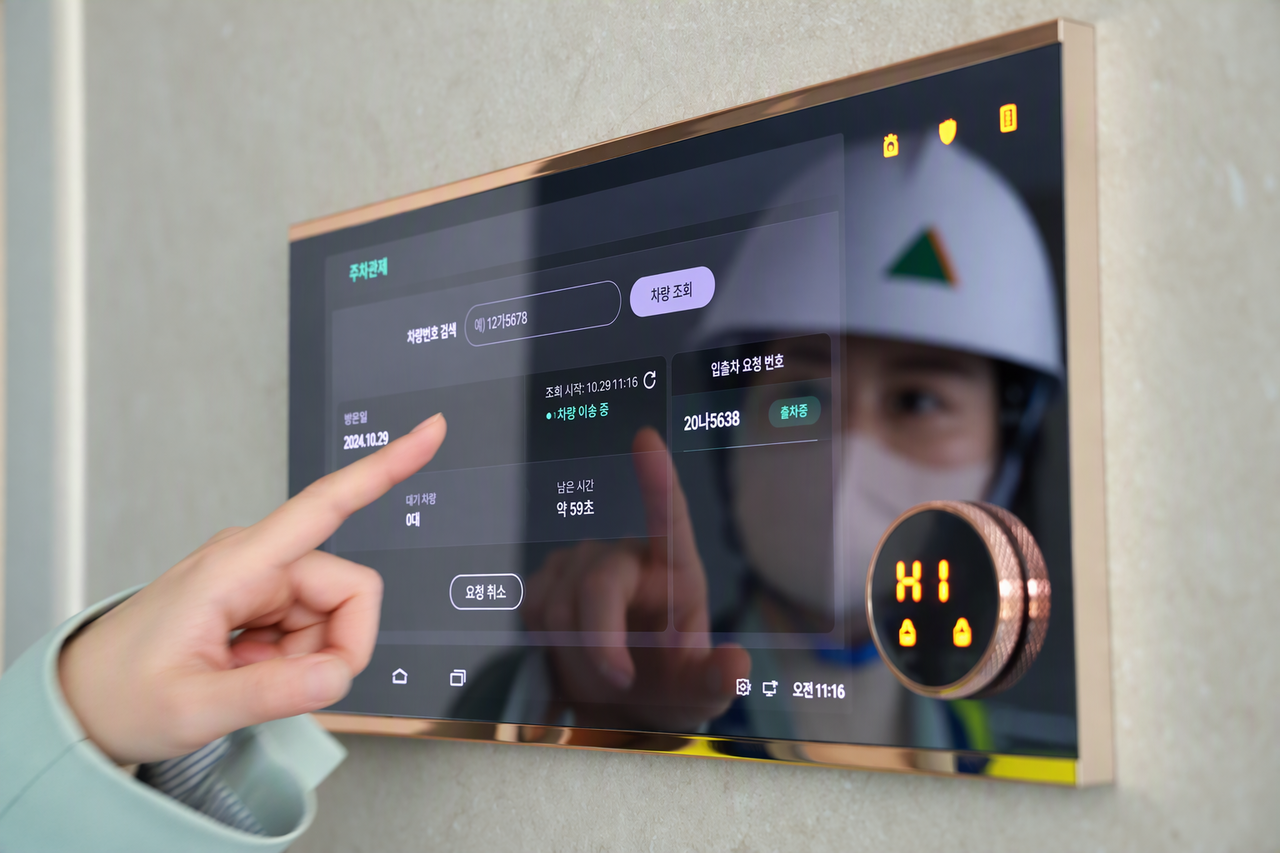
In the simultaneous entry-exit scenario, the system handled concurrent requests to bring a vehicle in and take one out. The exit function was linked to the in-unit wall-pad home terminal: when a resident submitted a retrieval request through the wall pad, the parking robot moved the vehicle to the exit zone, a process that took about three minutes.
The double-parking scenario demonstrated the robot moving and repositioning vehicles. Hyundai Motor Group said the system reduces the space needed to maneuver vehicles, allowing more efficient use of limited parking areas. In the temporary retrieval scenario, the robot moved a vehicle out temporarily — simulating a resident who requested retrieval but then did not drive away or only needed to retrieve an item from inside — before returning it to its parking space.
Hyundai Motor Group said the pilot verified the potential to integrate parking robots with smart infrastructure — including complex barrier gates, in-unit wall pads and an AI-based vehicle inspection system — to deliver the entire process, from vehicle intake and storage to inspection and release, as a single seamless service.
Separately, the group added that it has developed version 2.0 of a smart parking control system that supports optimal route planning and vehicle dispatching for the robots, and that the system can now simultaneously control up to 200 parking robots.
Building on experience gained from the pilot, Hyundai Motor Group plans to establish the technical and operational standards needed for real-world deployment and to explore expanding the technology beyond residential complexes to transportation hubs, commercial facilities and office buildings. The group also said it will work with relevant authorities to identify regulatory improvements needed for the stable operation and wider rollout of parking robots.
Jeong Ho-geun, executive vice president of Hyundai Motor's Future Strategy Division, said the pilot "is meaningful not only as a confirmation of parking robot technology's potential, but also as a process of applying robotics and mobility technology to actual urban spaces." Jeong added that the group would "work to realize the possibilities of parking spaces evolving into smart city hubs where people, mobility, robots and urban infrastructure are all connected."
eyre@heraldcorp.com




