
360-degree imaging detects contamination and cracks automatically
At 120 million won per unit, rollout targets 52 sites nationwide
AI to handle 56.5% of graded eggs by 2030
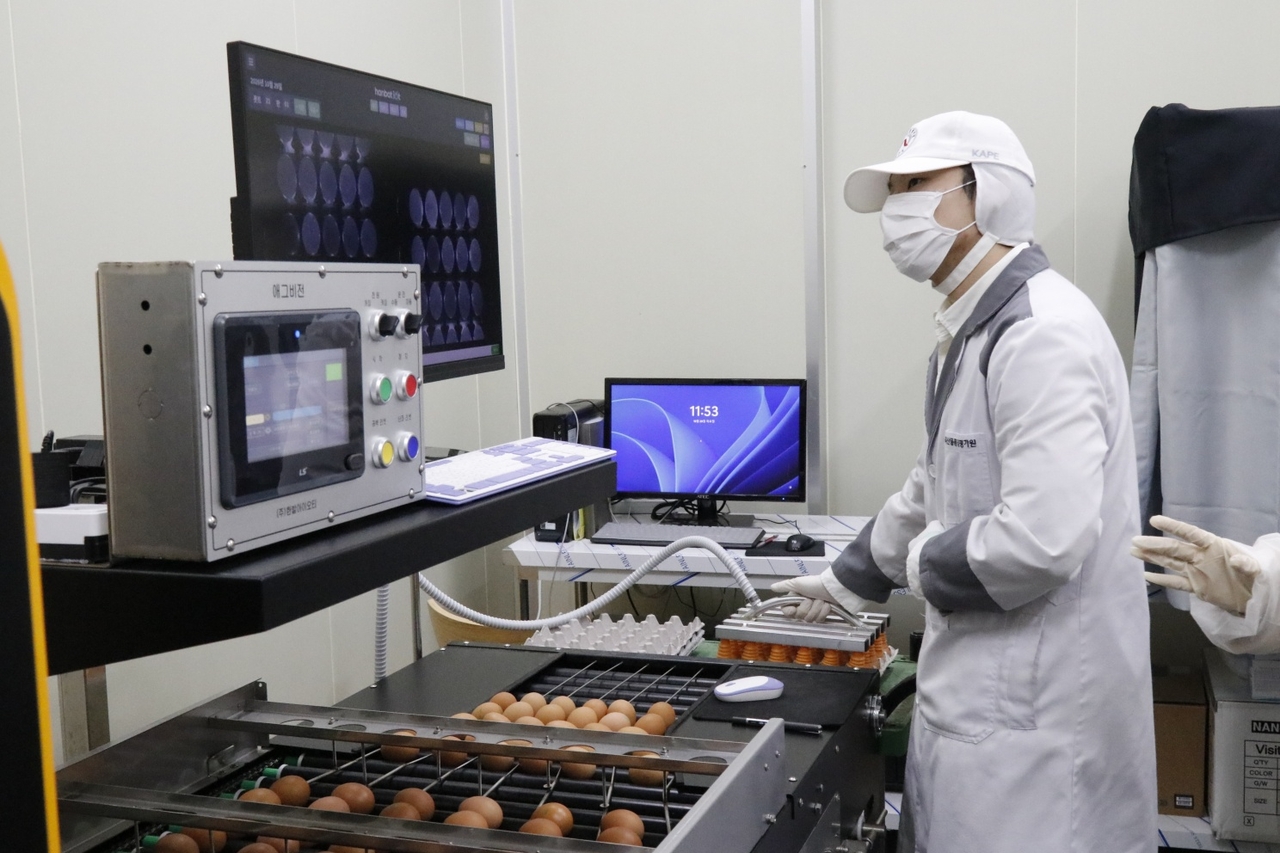
From tiny specks of dirt on an eggshell to hairline cracks barely visible to the naked eye, AI can now find them all. A task that took a human inspector 30 minutes — checking the appearance and candling 300 eggs — takes an AI system just 11 minutes, cutting inspection time by 63.3 percent. As AI enters grading facilities that once relied on workers examining eggs one by one, the technology is changing not only how fast inspections run but how quality is managed.
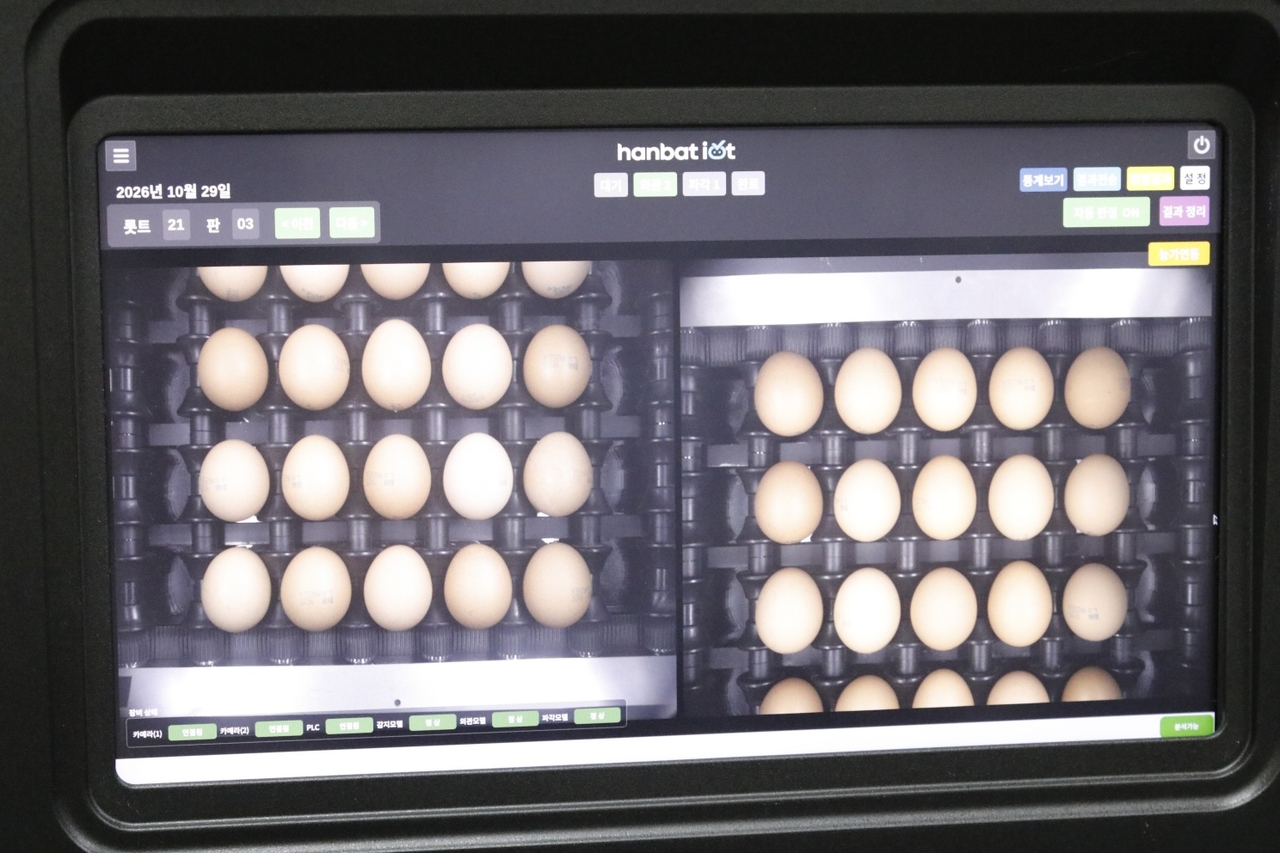
At YJ Food, an agricultural company in Pyeongtaek, Gyeonggi Province, on Thursday, a tray of eggs fed into an AI grading machine installed beside the sorting and packaging line. As the eggs moved along rollers and automatically aligned themselves, cameras began capturing images in the inspection chamber. While each egg rotated, four cameras photographed its exterior from different angles as light shone from below to check for shell cracks.
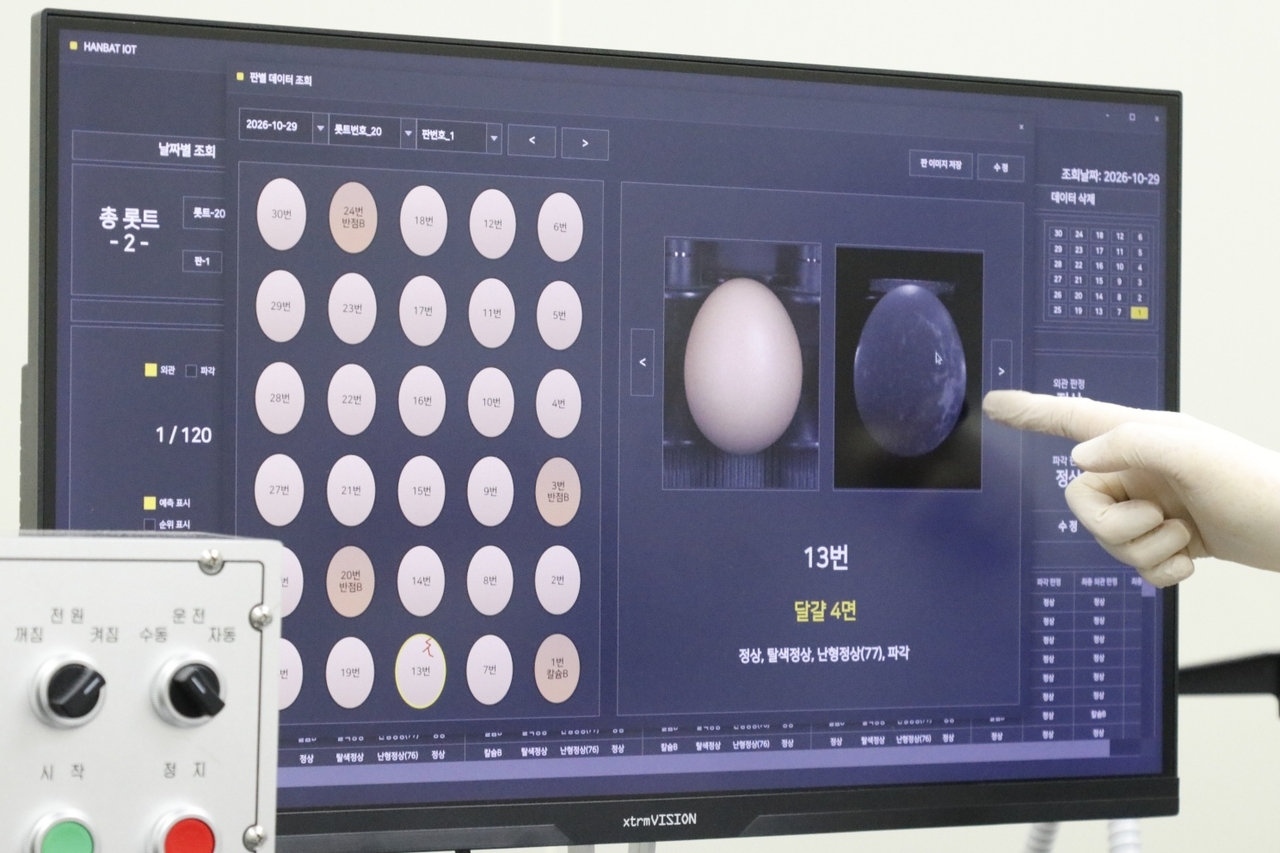
The eggs then returned to their tray. On a monitor, analysis results appeared for each egg individually. Selecting a specific egg allowed inspectors to examine surface contamination and any area suspected of cracking in detail — work that once required a person to hold each egg up to a light source, now handled by AI through video analysis.
The Korea Institute for Animal Products Quality Evaluation held a field briefing at YJ Food on Thursday, presenting how the AI-based egg quality assessment equipment operates and outlining its deployment plans.
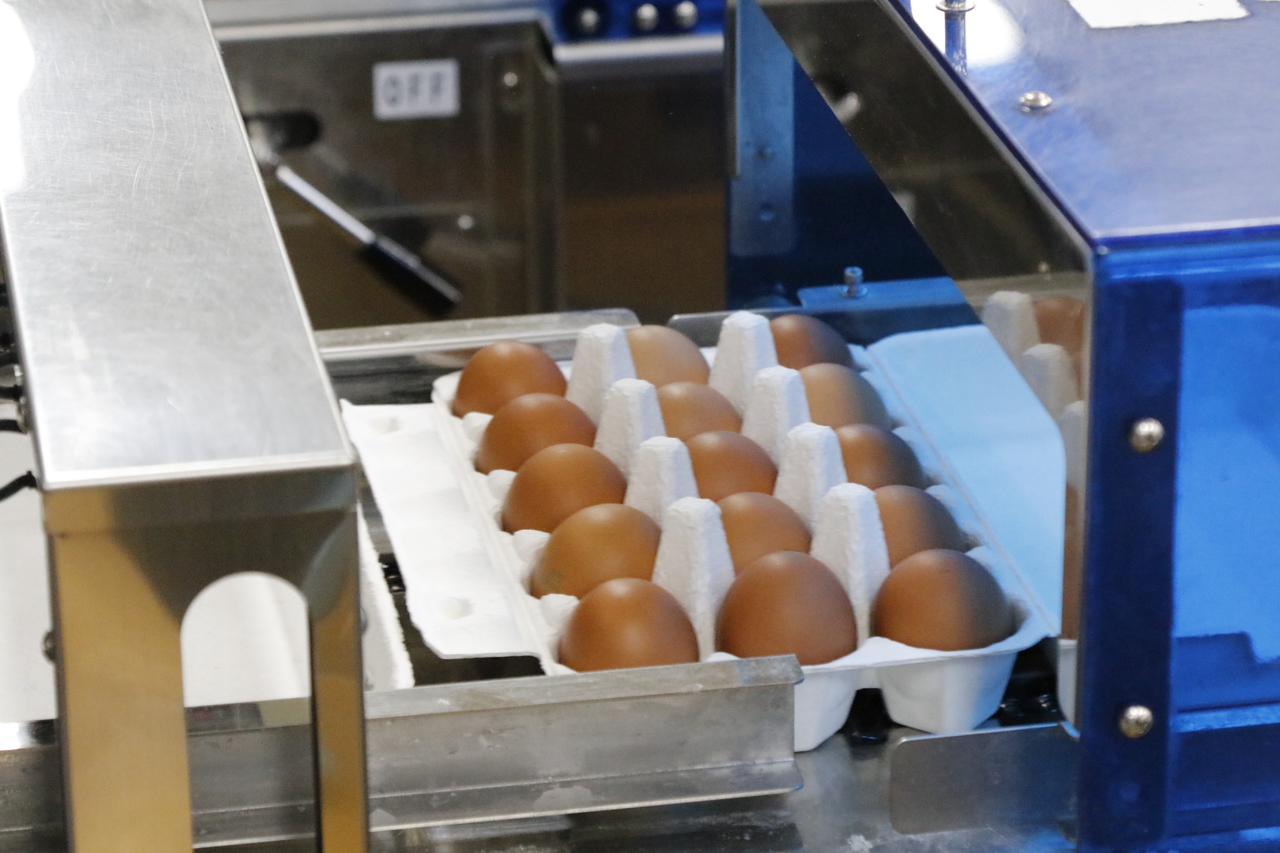
The AI system handles two of the three components of egg grading: exterior inspection and candling. The exterior check assesses shell cleanliness and any abnormalities, while candling uses light to detect cracks. The third component — breaking the egg open to examine the yolk and albumen — continues to rely on existing equipment and procedures.
Egg grading does not involve inspecting every single egg. Instead, eggs from the same farm, laid on the same date and of similar quality, are grouped into a lot, and a random sample is drawn from it. The sample's exterior, candling and breaking results are combined to assign the entire lot a grade of 1-plus, grade 1 or grade 2.
The most immediate benefit of AI is faster inspection. According to the institute, the exterior and candling assessment of 300 eggs took about 30 minutes under the previous manual method; the AI system completes the same work in 11 minutes, saving 19 minutes per batch.
Accuracy has also been verified. The institute said it applied Cohen's kappa — a statistical measure of agreement between human and AI assessments — and found the AI equipment scored 0.84 or higher. A score above 0.81 is generally considered a very high level of agreement.
Each unit costs about 120 million won ($89,900). The institute covered the cost of the machine installed at YJ Food, while the company provided the installation space. How much the technology has actually reduced labor and operating costs has not yet been determined. The institute is conducting a research study to analyze changes in inspection staffing and operating expenses following the AI rollout.
The introduction of AI will not immediately lead to cuts in grading staff. The institute plans to retain its existing workforce and redeploy inspectors freed up by shorter inspection times to other duties.
Yoo Im-jong, head of the institute's consumer support division, said demand for egg grading is growing while the available workforce has limits. "We needed to secure fairness and objectivity in grading through machinery and manage the data systematically, which is why we began developing this technology," Yoo said.
The institute is also pursuing a plan to feed AI analysis results back to farms. Until now, egg grading has focused on assigning a grade to a given lot. Going forward, the institute plans to analyze which farms are producing eggs with frequent contamination or cracking and share that information with farms and sorting and packaging companies.
For example, if hairline cracks are repeatedly detected in eggs from a particular farm, the data could help the farm or its sorting and packaging facility identify the cause. The institute is working to establish this quality-data feedback system and begin providing the information from November.
The AI grading equipment will be deployed across the country. The institute installed the first unit at YJ Food last year for a trial run and added 10 more units this year. The new machines are set to begin full operation after accuracy verification.
The institute's rollout target is to expand from 12 units this year to 52 by 2030. Over the same period, the volume of eggs graded using AI equipment is set to grow from about 88.08 million per year to about 2.73 billion. The share of total graded eggs handled by AI is planned to rise from 6.1 percent to 56.5 percent. This year's figures are projections based on the assumption that the new machines will be in operation.
A distinction must be drawn, however, between total egg production and the volume subject to grading. Last year, domestic egg production stood at about 18.15 billion eggs, while the volume that underwent grading was about 1.5 billion — roughly 8 percent of the total. The 56.5 percent AI grading target for 2030 is also based on the graded volume, not all eggs produced in South Korea.
On top of the current system of drawing separate samples for inspection, the institute is developing technology to connect AI directly to egg sorting lines. Once complete, the technology would allow quality data on eggs passing through a sorting line to be analyzed and shared with farms regardless of whether a grading application has been filed. The development is not yet finished, and results are expected to be confirmed by the end of the year.
Budget and installation space remain the main challenges to accelerating the rollout. "Installing the equipment requires a certain amount of floor space in the facility, and there are also budget constraints," Yoo said. "We have drawn up a plan to prioritize deploying 10 units per year."
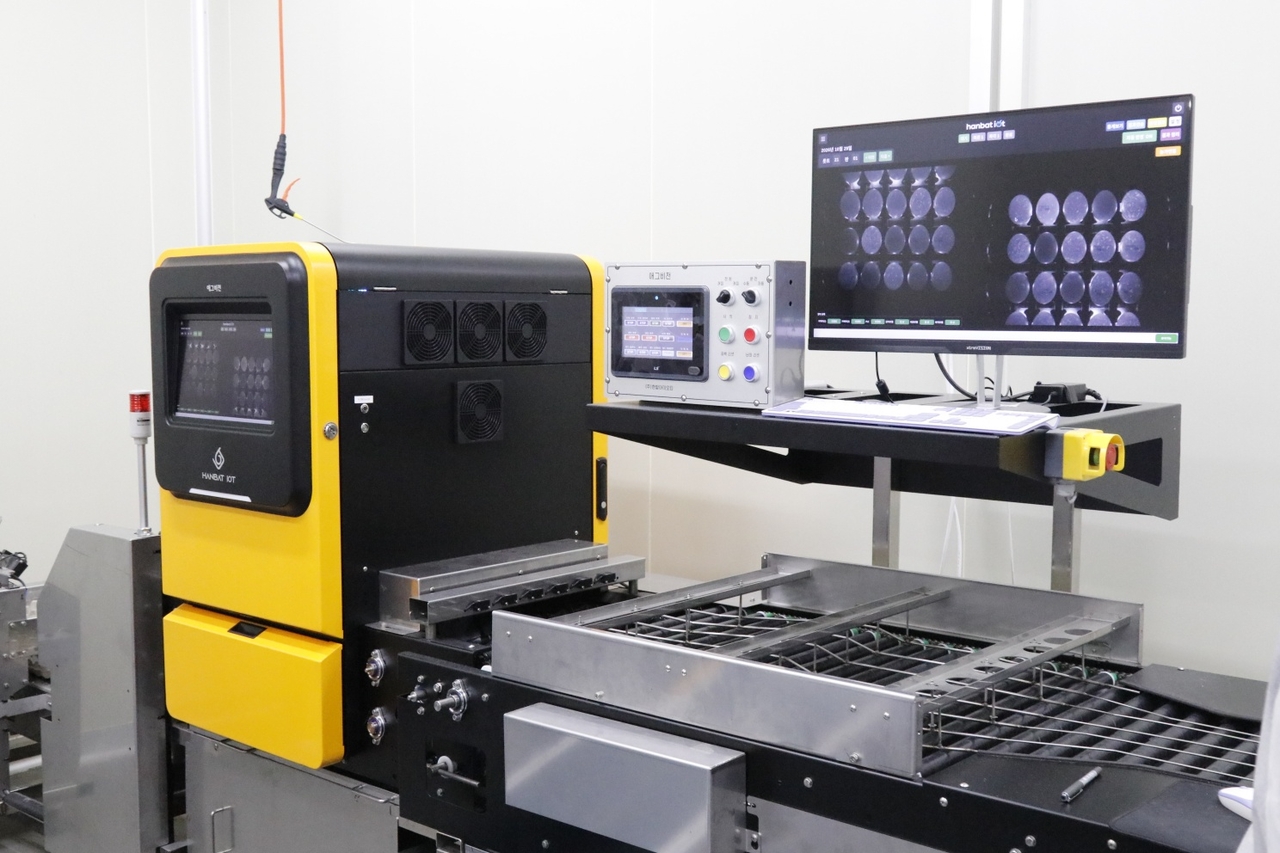
YJ Food is a working example of AI grading technology in a real egg distribution setting. Founded in 2018, the company operates three sorting lines capable of processing 60,000 eggs per hour each. On an average day, it sorts and packages about 1.2 million eggs, of which about 300,000 are shipped as graded eggs.
Im Jang-muk, chief executive of YJ Food, said graded eggs are products consumers seek out because they trust the quality, and expressed optimism about the expansion of egg grading.
The way grades are displayed on packaging will also change for consumers. The weight classifications currently printed on cartons — extra-large, special, large, medium and small in Korean designations — will be replaced with 2XL, XL, L, M and S starting Nov. 22, making it easier for consumers to distinguish sizes at a glance.
Han Hyo-dong, head of the institute's research and development division, said the institute plans to provide AI grading data to farms and sorting and packaging companies for use in quality improvement. "We will connect data from production through retail to improve the efficiency of egg quality management," Han said.
adastra@heraldcorp.com




