
Omliclor captures 30% market share within a year of launch; Aptuzma and Steqeyma prescriptions expand; Remsima family holds 77% share in EU5; new product lines account for 67% of biopharmaceutical sales
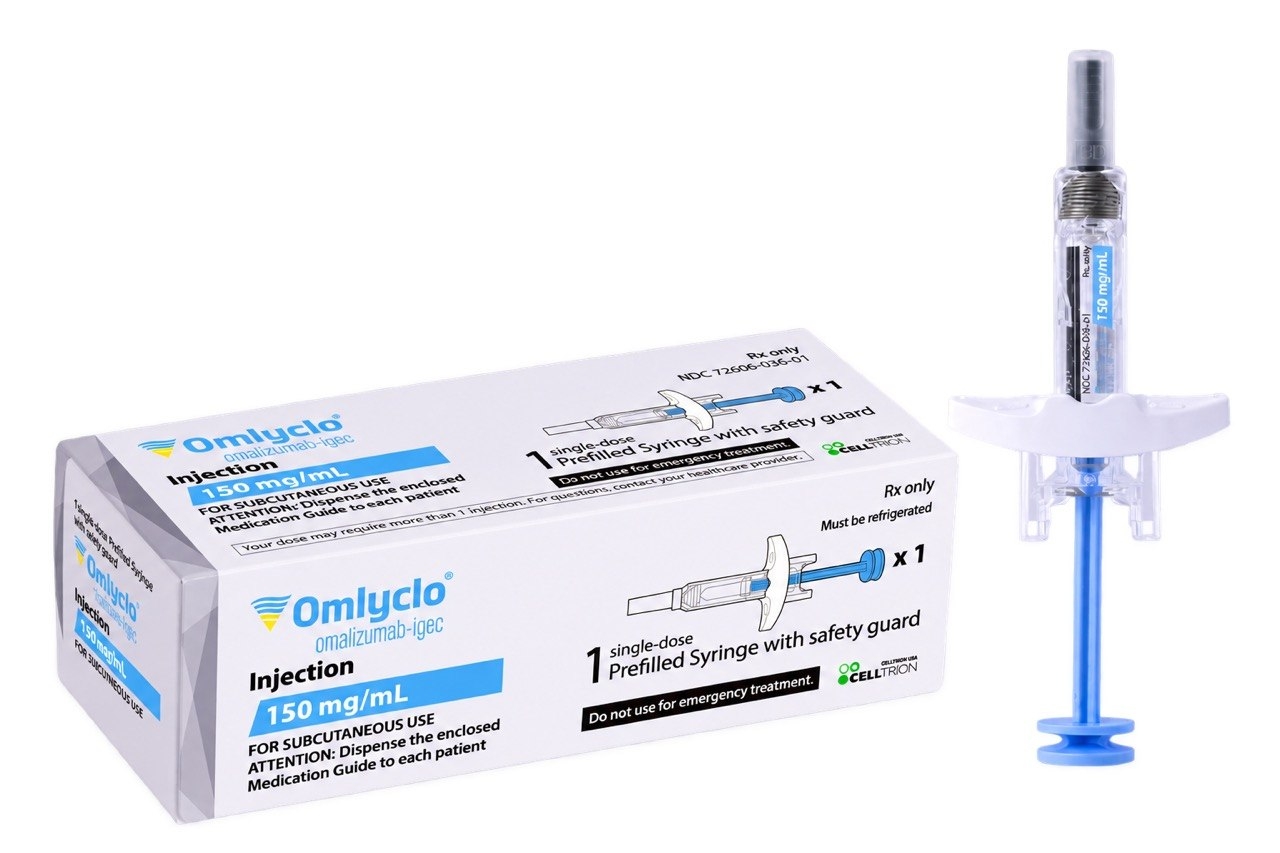
Celltrion's high-margin new biosimilar lineup is driving earnings growth in Europe, securing a string of prescription expansions and tender wins across the region.
Celltrion said Friday that the successful rollout of its new pipeline products, combined with steady market share held by its established portfolio, is expected to sustain the strong performance through year-end, following a record-breaking third quarter.
The standout performer is Omliclor (omalizumab), a treatment for chronic spontaneous urticaria and allergic conditions that Celltrion launched in Europe as a first mover.
Since its launch in the second half of last year, Omliclor has established a firm foothold, reaching a 30% share of the European market in the second quarter of this year, according to pharmaceutical market research firm IQVIA. Among the five major European Union markets, known as EU5, it captured a 47% share in the United Kingdom and 25% in Italy.
Two autoimmune disease treatments — Aptuzma (tocilizumab) and Steqeyma (ustekinumab) — are also gaining prescription momentum. Aptuzma's European market share nearly doubled quarter-on-quarter to 13% in the second quarter, reaching 32% in Spain and 66% in Portugal. Steqeyma secured a 28% share in Italy after winning major regional government tenders in Tuscany and Emilia-Romagna.
Celltrion's established products continue to dominate their respective markets. The Remsima family — spanning both intravenous and subcutaneous formulations — commands a 70% share of the overall European infliximab market and 77% among EU5 countries, with France approaching 80%.
Supply results from the liquid formulation of Remsima IV, launched earlier this year, are also becoming visible. Celltrion's Netherlands subsidiary recently signed a supply agreement with the country's largest hospital group, a consortium of seven university hospitals, to provide the group's entire infliximab demand in the Remsima IV liquid formulation starting in February 2027.
Yuflyma (adalimumab), an autoimmune disease treatment that entered the market as a late mover, holds first place in EU5 with a 30% share despite competing against numerous rivals. Vegzelma (bevacizumab), an oncology biosimilar for metastatic colorectal and breast cancer, also leads the market with a 34% share, surpassing the originator drug.
The strong sales performance reflects the successful establishment of country-specific direct sales networks. In the third quarter, revenue from the high-margin new product lineup reached 905.8 billion won ($678 million), accounting for 67 percent of total biopharmaceutical sales. Omliclor alone contributed 320.5 billion won in cumulative third-quarter sales. Celltrion plans to strengthen its sales network further and raise the new product lineup's share of revenue to 70 percent.
With the robust direct distribution infrastructure built by first-generation biosimilars such as Remsima now enabling immediate prescription uptake for high-margin second-generation products including Omliclor and Aptuzma, Celltrion's shift toward a profitability-focused business model is firmly on track.
"New products such as Omliclor and Aptuzma are rapidly establishing themselves in Europe, expanding their tender wins, and the results are now being validated in real-world prescription data," a Celltrion official said. "We will continue to focus on securing major national tenders and expanding prescriptions at medical institutions through our field-driven, tailored direct sales strategy, sustaining our growth momentum through year-end."
silverpaper@heraldcorp.com




