
Upfront payment of 93.5 billion won secured at Phase 1/2 stage — about 15% of total deal value
Global exclusive license covers all markets outside Korea; subcutaneous formulation aims to ease patient burden
Third license-out for Hanmi this year; second global deal for GC Biopharma following Curevo transaction
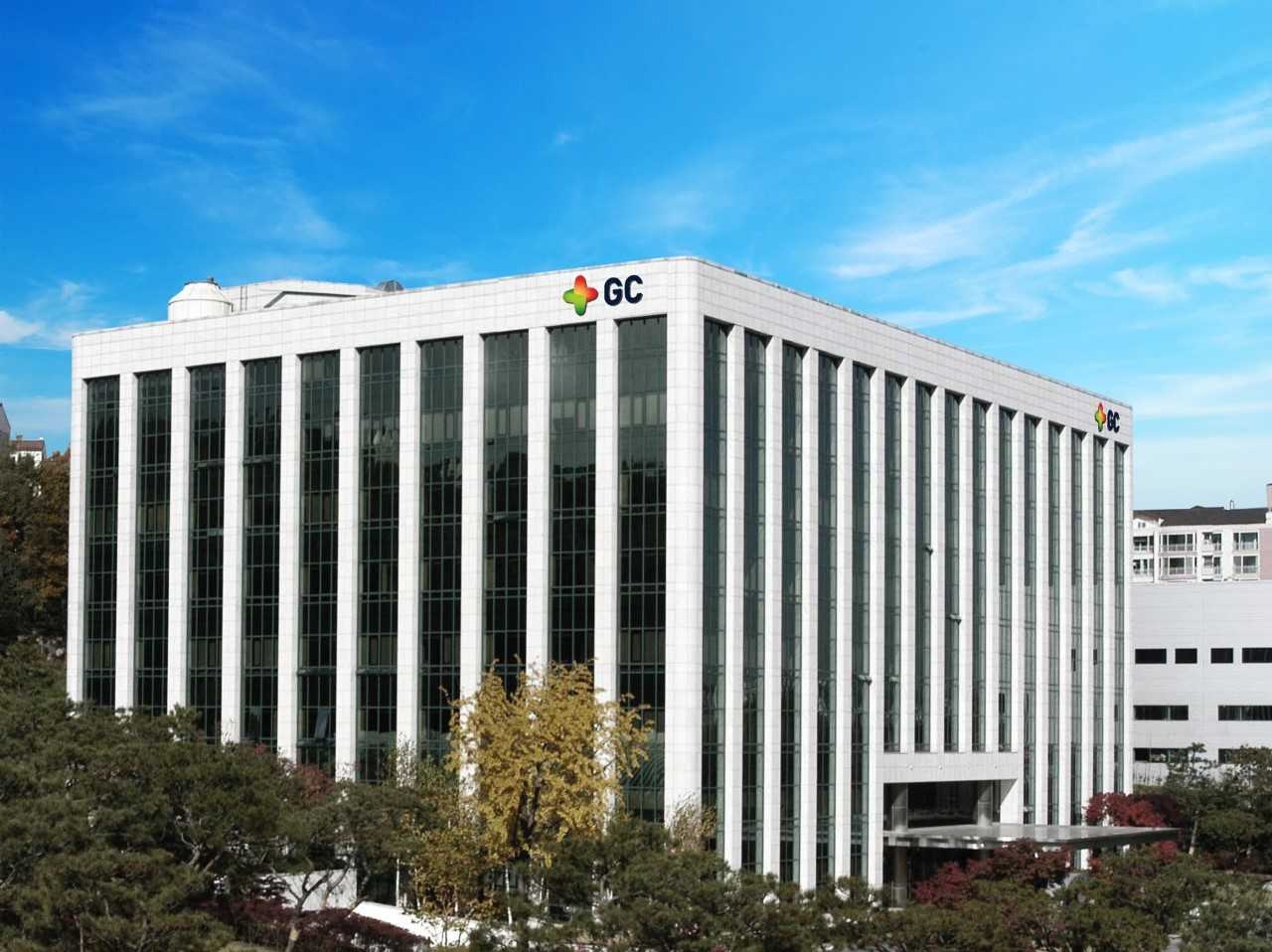
GC Biopharma and Hanmi Pharm have licensed out a next-generation Fabry disease treatment candidate they jointly developed to a global rare-disease specialist.
The deal is worth up to $475 million, with an upfront payment of $70 million (93.5 billion won) — roughly 15% of the total contract value — secured despite the asset being at the early Phase 1/2 clinical stage, underscoring the compound's competitive standing.
Industry observers say the transaction extends the Korean pharmaceutical sector's technology-export horizon beyond its traditional focus on anticancer drugs and obesity and metabolic diseases into the rare-disease space.
GC Biopharma and Hanmi Pharm announced Friday they had signed a global exclusive license agreement with US-based BioMarin Pharmaceutical for their jointly developed Fabry disease treatment candidate LA-GLA (code name: HM15421/GC1134A).
Under the agreement, BioMarin will take full responsibility for clinical development and commercialization of LA-GLA in all markets outside Korea. GC Biopharma and Hanmi Pharm will jointly retain domestic approval and commercialization rights.
Beyond the upfront payment, the two Korean companies will receive milestone payments of up to $405 million tied to development and commercialization progress, as well as tiered royalties on net sales after the product reaches the market.
LA-GLA is a next-generation long-acting enzyme replacement therapy (ERT) candidate for Fabry disease, a lysosomal storage disorder. The hereditary condition results from a deficiency of an enzyme that breaks down glycolipids, causing progressive damage to the kidneys, heart and nervous system.
Unlike existing ERT products, which require intravenous infusions every two weeks, LA-GLA is engineered with an extended half-life and improved stability that allows subcutaneous injection — a change expected to reduce the treatment burden and improve convenience for patients.
Preclinical studies confirmed differentiated efficacy across kidney function, vascular and peripheral nervous system markers, earning the candidate Orphan Drug Designation from the US Food and Drug Administration in 2024. A global Phase 1/2 trial is currently underway.
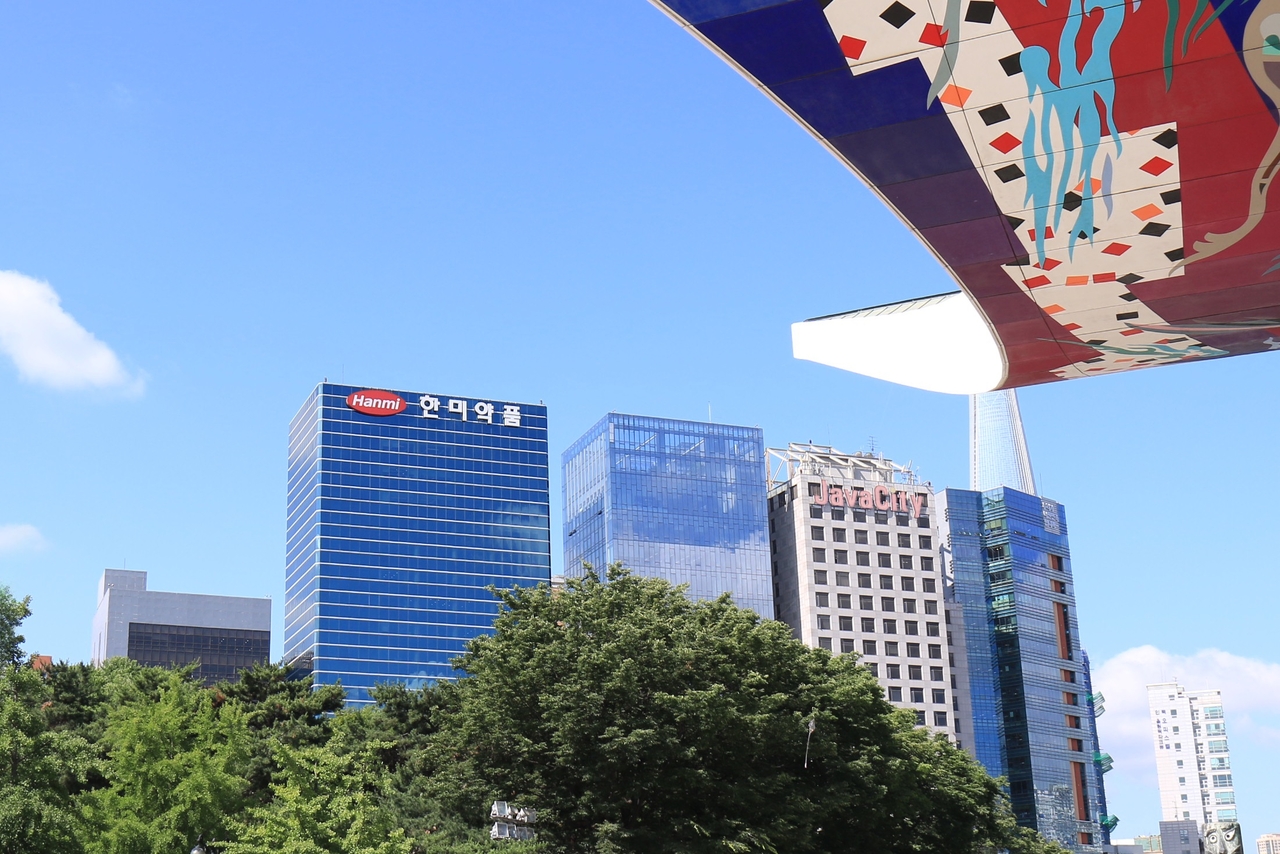
GC Biopharma, Hanmi chose collaboration over competition — and it paid off
The deal has drawn attention because two of Korea's largest established pharmaceutical companies combined their core technologies from the earliest stages of research and development to achieve a global license-out — a model that stands apart from the industry's usual playbook.
Where past inter-company cooperation in Korea has leaned toward co-promotion agreements centered on distribution rights or minority stakes in biotech ventures, this deal offers a successful template for large-company R&D collaboration producing a globally significant outcome.
The division of labor was complementary. Hanmi Pharm contributed its proprietary long-acting drug platform technology, designed to extend a compound's duration in the body and improve dosing convenience, while GC Biopharma brought its rare-disease ERT manufacturing and clinical expertise, validated through the development and commercialization of Hunterase, its Hunter syndrome treatment.
The combination of the two companies' platform technologies and manufacturing know-how allowed them to take direct aim at the global enzyme replacement therapy market, which has long been dominated by multinational pharmaceutical companies.
The profile of the partner and the deal's specific terms are also noteworthy. BioMarin is a biotech company with established capabilities in rare genetic disease drug development and global commercialization; it recently expanded its Fabry disease pipeline by acquiring Amicus Therapeutics, which holds Galafold, an oral Fabry disease treatment.
BioMarin's decision to commit a $70 million upfront payment for a pipeline asset still at the early Phase 1/2 human dosing stage reflects its assessment of the candidate's competitive potential.
The transaction gives both companies a second global licensing milestone this year.
Hanmi Pharm had already transferred rights to its short bowel syndrome treatment sonepeglutide to Eli Lilly in June in a deal worth up to $1.26 billion (upfront payment of about 112.9 billion won), then in August signed a major agreement with Genentech, a member of the Roche Group, covering non-incretin obesity treatment candidate HM17321 for up to approximately $2.3 billion (upfront payment of about 262.9 billion won).
With the BioMarin Fabry disease deal now added, Hanmi Pharm's cumulative 2026 license-out value has reached $4.04 billion, with confirmed upfront payments totaling $335 million.
Equally significant is the qualitative diversification of the portfolio. Of the three deals closed this year, two — the short bowel syndrome and Fabry disease treatments — address rare diseases, while one targets metabolic disease. Analysts say Hanmi's R&D focus, once concentrated on chronic-disease blockbusters, has expanded in a balanced way toward rare diseases and next-generation metabolic conditions, both areas of substantial unmet global medical need.
GC Biopharma has also secured its second global result of the year. In May, the company sold its stake in US vaccine affiliate Curevo Vaccine to Eli Lilly, completing a structure that effectively functions as a license-out through commercialization-stage milestones and royalties tied to a shingles vaccine candidate (amezosvaxine).
The LA-GLA agreement now adds a medium- to long-term royalty pipeline in the rare-disease segment to complement GC Biopharma's existing North American plasma-derived product supply business.
Hanmi Pharm Group Vice Chairman Lim Joo-hyun said LA-GLA represents "a meaningful achievement from an open-innovation perspective, as joint research between two of Korea's leading pharmaceutical companies has raised the prospects for global drug development," adding that the company would "do its utmost to accelerate LA-GLA's global development through this partnership while also providing new treatment options for patients in Korea."
GC Biopharma Chief Executive Heo Eun-cheol called the deal "a meaningful result achieved through close R&D collaboration between the two companies," and said GC Biopharma would "continue to expand global partnering and commercialization on the basis of a competitive pipeline."
silverpaper@heraldcorp.com




