
Incompatible blood type transplant succeeds; patient returns to work
Patient marks one-year anniversary with letters of gratitude to family, medical team
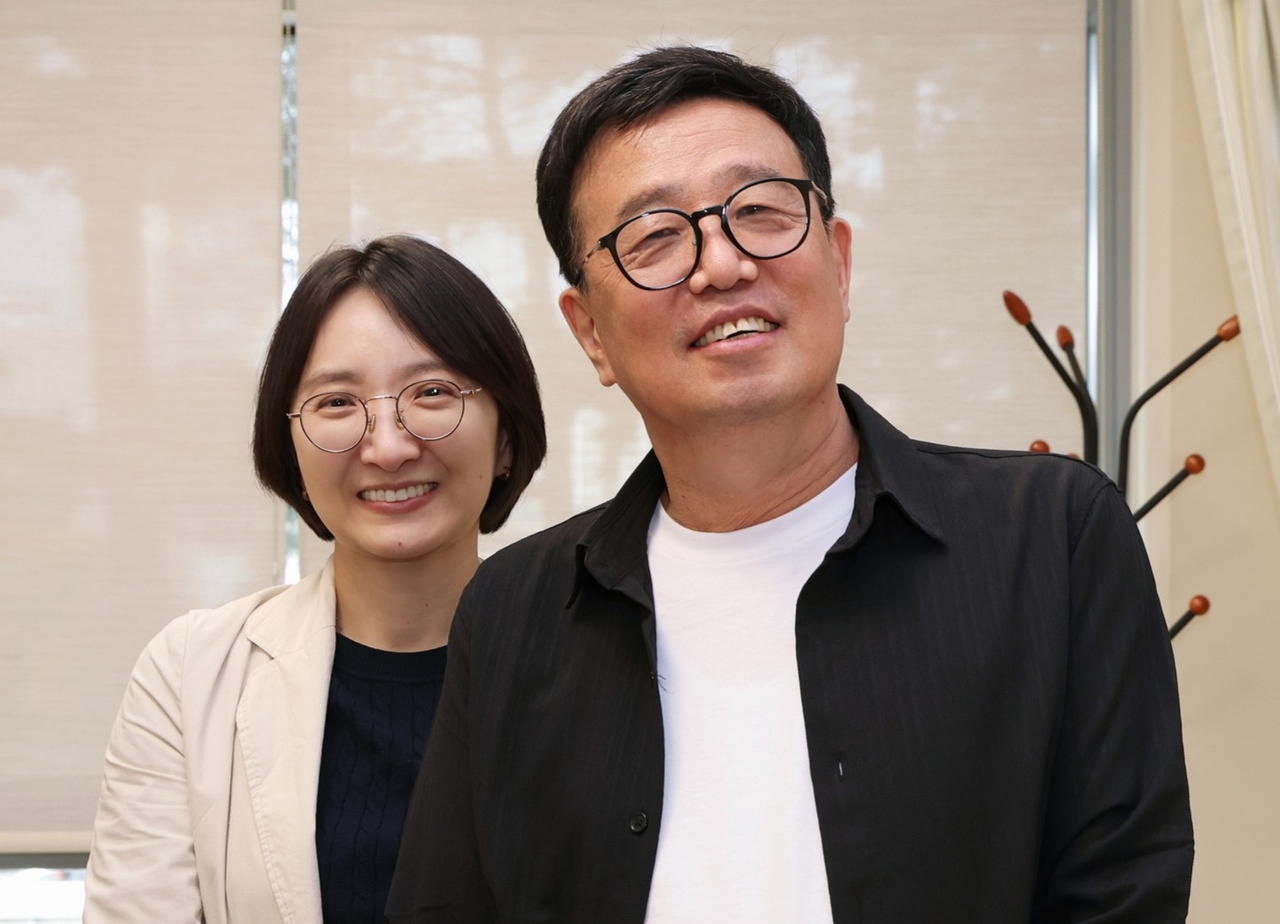
A man in his 60s who received a kidney from his wife at Catholic University of Korea Seoul St. Mary's Hospital has marked the one-year anniversary of his surgery by expressing gratitude to his family and medical team. The high-difficulty procedure — a transplant from a donor with a different blood type — was completed successfully, and the patient has since recovered well enough to return to work.
Kang Se-dong, 63, underwent kidney transplant surgery on Oct. 16 last year and recently delivered letters of thanks to his family and medical team to mark the one-year milestone, Seoul St. Mary's Hospital said Friday.
Kang first visited a hospital after a routine health checkup last year revealed elevated creatinine levels, a marker of kidney function. He was subsequently diagnosed with acute kidney failure of unknown cause and began dialysis in March last year.
Kang's son, who had been working abroad, volunteered to donate a kidney after learning of his father's sudden need for dialysis. The son quietly began preparing for the donation without telling his mother, not wanting to worry her.
When Kang's wife discovered that her son had visited the hospital for testing, she stepped forward to donate her own kidney. Ultimately, Kang received a transplant from his wife, despite the two having different blood types.
Blood type-incompatible kidney transplants are more complex and demanding than those between donors and recipients with matching blood types. Kang completed the surgery successfully at Seoul St. Mary's Hospital and recovered under the care of his family.
Kang expressed deep gratitude to his wife, who had supported him since their youth. Originally from Haenam in South Jeolla Province, Kang had moved to Seoul for university and met his wife while living in modest circumstances. At the time, she was working at a bank and would treat him to meals; she even helped cover his tuition during his final semester.
"My wife, who is the same age as me, has been endlessly generous to me since we were young — and now she has given me one of her kidneys," Kang said. "I could spend a lifetime trying to repay her and it still would not be enough."
"A year ago today, I walked into the operating room with fear in my heart," Kang added. "Today, a year later, I am greeting a new morning with a heart full of gratitude." Kang extended his thanks to his family, friends and the medical team.
Kang's health has also shown clear improvement since the surgery. At an outpatient visit Monday, Yoon Hye-eun, Kang's attending physician and a nephrology professor at Seoul St. Mary's Hospital, said all kidney function indicators had improved following the operation, allowing a reduction in the medications Kang had been taking.
"It is not an easy decision for a family member to donate a kidney," Yoon said. "The fact that both his son and his wife came forward to offer theirs shows the strength of his family's love and support, and I believe that played a significant role in his swift recovery."
Park Soon-cheol, director of the Organ Transplantation Center at Seoul St. Mary's Hospital and a professor of vascular and transplant surgery, said the introduction of blood type-incompatible kidney transplants had opened the door for patients who previously could not find a compatible donor. "Patients who once had little hope of receiving a transplant can now start a new life, just as this patient has," Park said. "We will continue to do our best to bring hope to those for whom organ transplantation is the only treatment option."
Seoul St. Mary's Hospital reached the milestone of 500 blood type-incompatible kidney transplants last February. An analysis released by the hospital at the time showed that such transplants accounted for 35 percent of all living-donor kidney transplants performed there. The rate at which transplanted kidneys continued to function without the need for dialysis or re-transplantation stood at 98 percent at one year, 94 percent at five years and 85 percent at 10 years after surgery.
woo@heraldcorp.com




