
Lagarde signals possible return to French politics
Early exit draws criticism over central bank independence
Dutch, Spanish central bank chiefs emerge as top candidates
France and Germany spar over chief economist post
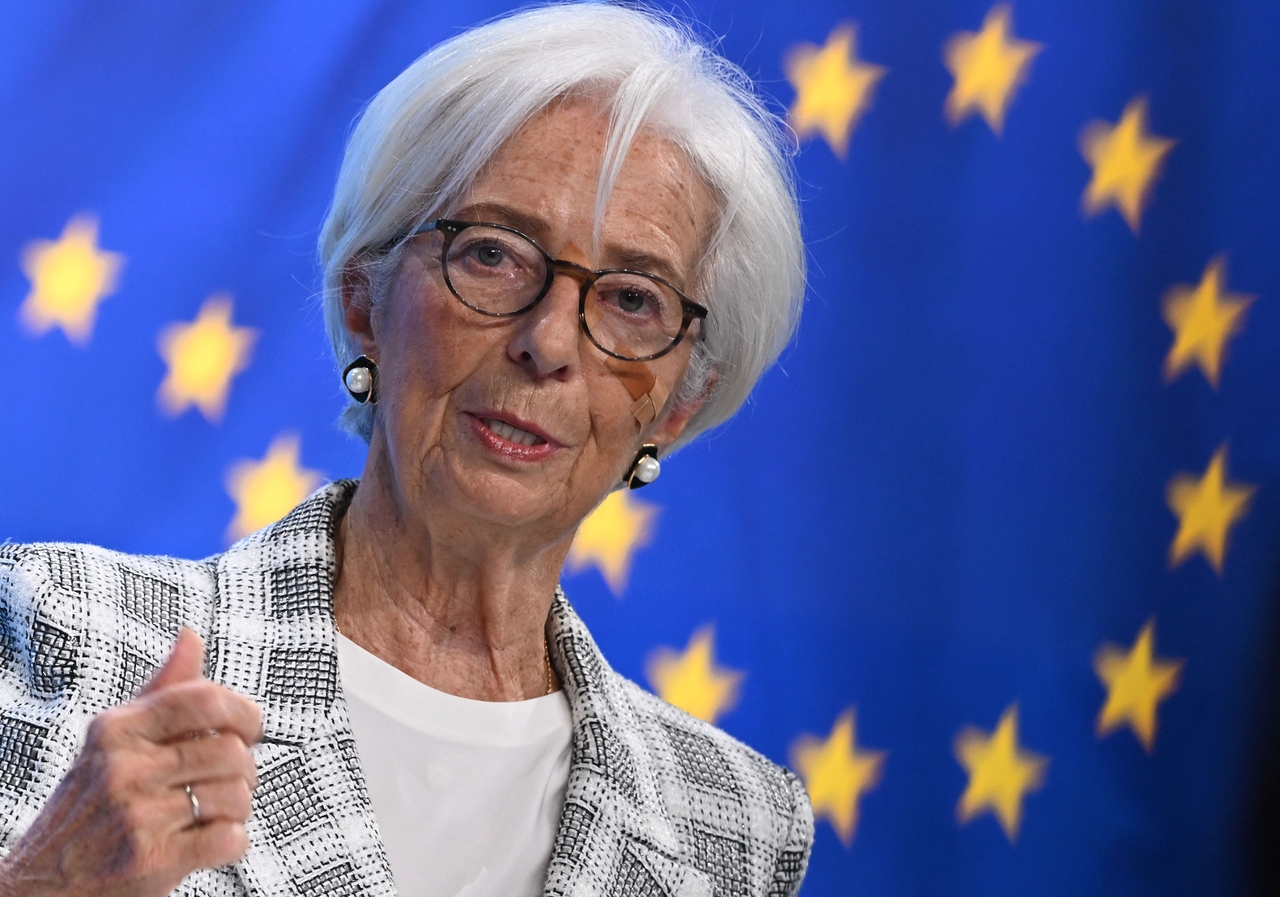
European Central Bank President Christine Lagarde, 70, who has long been the subject of early-exit speculation, confirmed Thursday she will step down in February — more than eight months before her term was due to end.
The ECB said in a statement Thursday (local time) that Lagarde had notified European Council President António Costa of her intention to step down on Feb. 7. The bank added that the European Council would appoint a successor in accordance with procedures set out in the Treaty on the Functioning of the EU. Costa said the selection process had begun that day and would proceed without delay.
Lagarde, a former French finance minister and IMF managing director, took office as ECB president in November 2019. The post carries an eight-year term, meaning Lagarde's mandate was set to run until late October next year. Rumors had nonetheless circulated for some time that Lagarde would leave early — either to chair the World Economic Forum or to re-enter French politics ahead of the country's presidential election in April next year.
Speculation about a return to French politics intensified as Marine Le Pen, the presidential candidate of the far-right National Rally party, consistently held the lead in polling. The argument was that President Emmanuel Macron needed to secure a successor at the ECB before leaving office — one who could counter Le Pen, whose platform is hostile to eurozone integration and the broader European project.
A source told Reuters that Lagarde stepped down in order to speak out on political issues in France and around the world. Lagarde has long described herself as a committed European integrationist.
In a video message released Thursday, Lagarde said working at the institution had been "a great source of pride and honor," adding that she was leaving with a sense of having done well and with confidence in an ECB prepared for the future. At a press conference following the ECB's monetary policy meeting, Lagarde did not rule out a return to French politics, saying she wanted "the freedom to speak, express myself and engage on matters unrelated to monetary policy" and that she believed her voice could be of use.
The decision has drawn criticism. With France itself grappling with a fiscal crisis — one that has even prompted discussion of possible ECB intervention — some argue that stepping down mid-term to accommodate a domestic political timetable undermines the independence of the central bank.
European Parliament lawmaker Markus Ferber said Thursday that if the resignation gave the impression of being timed to a domestic electoral calendar, it would damage the credibility of an institution that must stand above political calculation. Others pushed back. Marcel Fratzscher, president of the German Institute for Economic Research, said the early departure gave governments and institutions the opportunity to appoint a successor who would protect European values and ECB independence.
Top EU positions, including the ECB presidency, are decided through a process requiring nominations from member states and approval by at least 15 countries representing 65 percent of the EU's total population. In practice, agreement between the leaders of the EU's two largest powers — Germany and France — is decisive.
Former Dutch central bank governor Klaas Knot and former Bank of Spain Governor Pablo Hernández de Cos have emerged as the leading candidates to succeed Lagarde.
Handelsblatt, a German business daily, reported that German Chancellor Friedrich Merz recently met separately with both candidates. Macron is understood to support Knot on the condition that France secures the ECB's chief economist post. Germany is also seeking that position, setting the stage for a Franco-German tug-of-war over the role.
The rivalry between the two countries could produce a surprise appointment. When the ECB and EU leadership were both replaced simultaneously in 2019, Franco-German friction led to the selection of Lagarde and European Commission President Ursula von der Leyen — neither of whom had been considered a frontrunner at the outset. Bloomberg reported that Bank of Italy Governor Fabio Panetta and European Investment Bank President Nadia Calviño, a former Spanish deputy prime minister, are also being mentioned as potential ECB candidates.
With Lagarde's early departure confirmed, much of the ECB's senior leadership is also expected to change, with the exception of Vice President Boris Vujčić of Croatia. Chief Economist Philip Lane of Ireland is set to leave when his term expires at the end of May next year. Isabel Schnabel of Germany, widely regarded as one of the ECB's most influential executive board members, will take up the role of director of the IMF's Monetary and Capital Markets Department starting in January.
kate01@heraldcorp.com




