
Deposit rate kept at 2.50% per year
'Bond intervention requires conditions to be met'
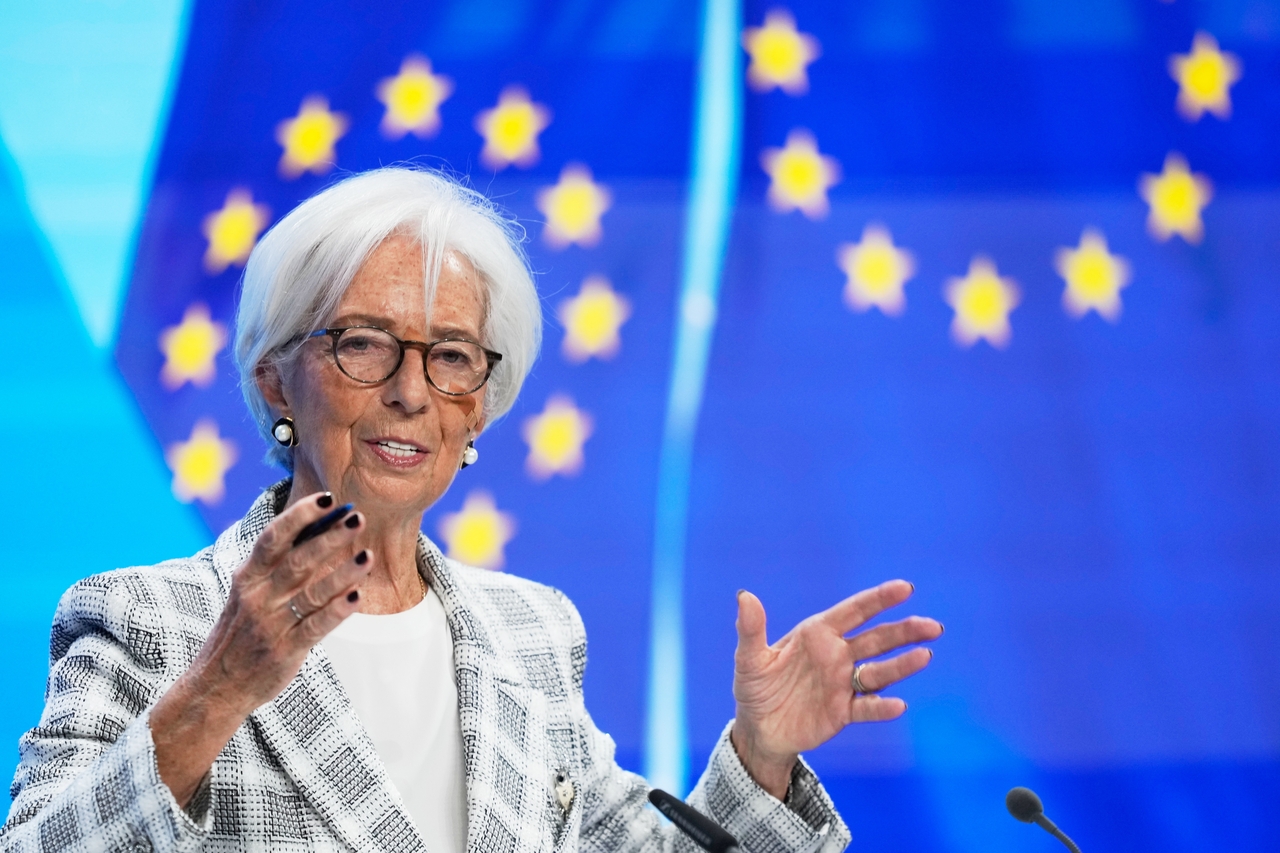
The European Central Bank held all three of its key interest rates steady Thursday (local time), following a similar move by the US Federal Reserve.
At a monetary policy meeting in Frankfurt, Germany, the ECB kept its deposit rate at 2.50 percent per year, its main refinancing rate at 2.65 percent, and its marginal lending rate at 2.90 percent.
The decision leaves the gap between the ECB's benchmark deposit rate and South Korea's benchmark interest rate (3.00 percent) at 0.50 percentage points, while the spread with the United States (3.75–4.00 percent) remains at 1.25–1.50 percentage points.
In a statement following the decision, the ECB said "the full effects of the energy shock continue to materialize," while also noting that "underlying inflation has remained broadly stable so far and wages have not shown a marked reaction at this stage."
The bank stopped short of ruling out further rate increases, however, saying that "given the scale and duration of the energy shock and the potential for indirect and second-round effects, prices could rise and growth could slow."
ECB President Christine Lagarde told a press conference that energy prices had risen beyond the baseline path assumed in last month's projections, adding that "this could push inflation higher in the near term and keep it well above target for several quarters." Lagarde said upside pressure on inflation was intensifying.
Lagarde went on to explain the rationale for holding rates, saying that material second-round effects had not yet been confirmed.
The ECB had already raised its policy rates twice — by 0.25 percentage points each time, in June and last month — after the outbreak of the Iran war in late February sent prices higher. The moves came ahead of the Federal Reserve's own hikes and were widely seen as a preemptive response to inflation.
Soaring energy prices driven by the war pushed eurozone consumer prices 3.8 percent higher last month compared with last year — the highest reading since September 2023 and nearly double the ECB's 2 percent target. The eurozone comprises 21 countries that use the euro.
The ECB's future rate path is seen as hinging on energy price trends and whether second-round effects materialize. Some analysts expect the bank could move as early as December.
Meanwhile, the ECB declined to give a clear answer on whether it would intervene in French financial markets, where a surge in government bond yields has deepened a fiscal crisis.
Lagarde said the ECB has tools to respond "if market conditions, including disorderly and unwarranted moves, threaten the smooth transmission of monetary policy," but stressed that any intervention would require specific conditions to be met.
The ECB has a policy instrument known as the Transmission Protection Instrument, or TPI, which allows it to purchase government bonds of specific eurozone countries in effectively unlimited quantities. Under its rules, however, the measure can only be activated for countries that meet EU fiscal thresholds — a deficit of no more than 3 percent of GDP and public debt of no more than 60 percent of GDP. France recorded a fiscal deficit of 5.1 percent of GDP and public debt of 115.6 percent last year, putting it outside those limits and making it unlikely the ECB would activate the TPI on France's behalf.
kate01@heraldcorp.com




