
Consortium releases rebuttal to Korea Hydro's Q&A
Cites transfer of uncontrollable risks, unreasonable demands
Says Korea Hydro unilaterally set negotiation deadline, may have already vetted replacement contractor
Warns of damage to Team Korea's credibility and entire project
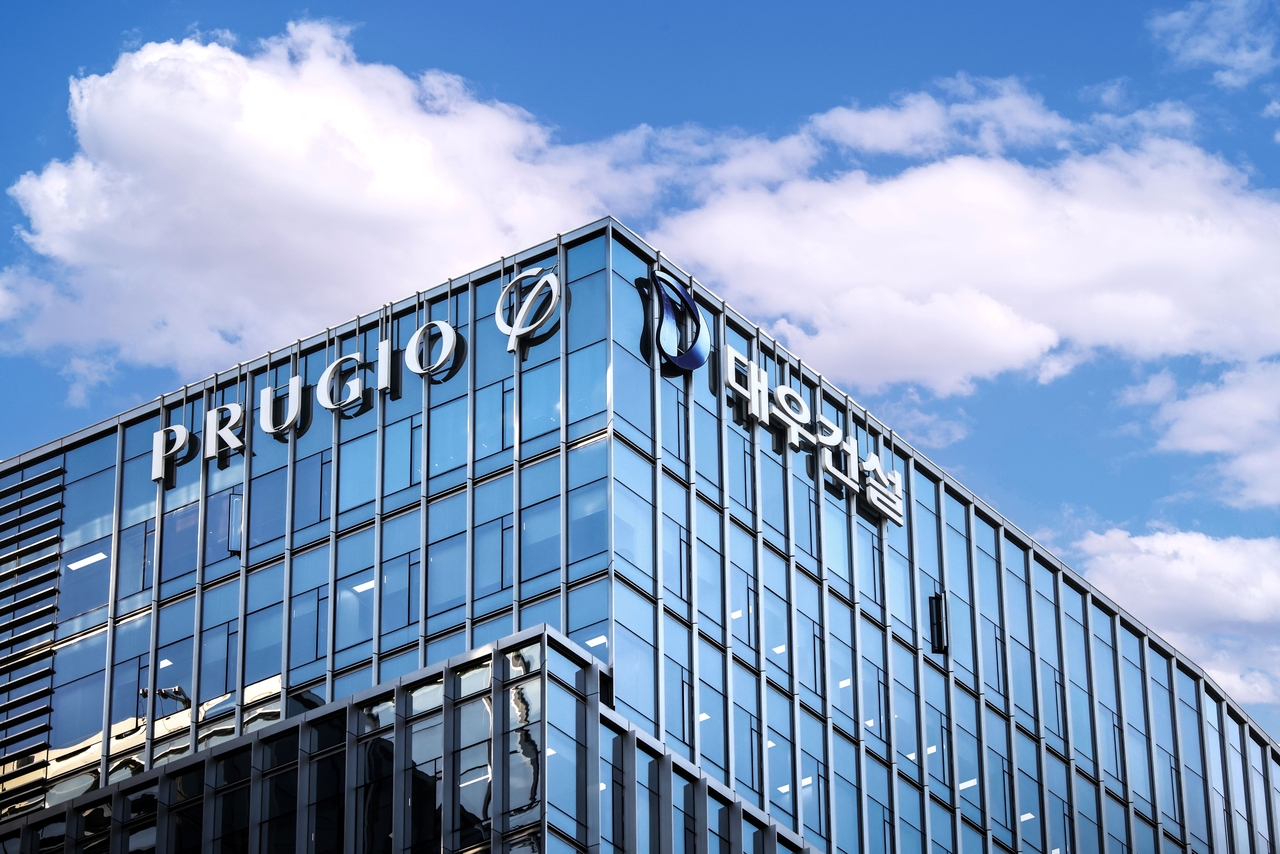
A consortium of Daewoo Engineering & Construction and Doosan Enerbility has pushed back point by point against Korea Hydro & Nuclear Power's account of the breakdown in contract negotiations for the Dukovany nuclear power plant project in the Czech Republic.
The consortium said Korea Hydro tried to transfer "uncontrollable risks" onto the contractors, saying Korea Hydro had proposed increased work volumes beyond the original bid quantities while refusing to reflect the corresponding cost increases and instead demanding that the contractor lower its unit prices to keep the total contract amount in line. The consortium also raised the possibility that Korea Hydro had already begun vetting a replacement contractor during the negotiations, citing instances in which Korea Hydro mentioned other construction companies.
The consortium released the rebuttal material Thursday in response to a question-and-answer document Korea Hydro had published earlier. Earlier that morning, Korea Hydro announced it was ending negotiations over the construction contract for the Dukovany project, citing irreconcilable differences over contract terms.
Korea Hydro is reported to have demanded that Daewoo E&C cut its construction costs to more than 10 percent below the original bid price during negotiations. The proposed reduction is said to exceed 1 trillion won ($748 million). The two sides held working-level talks, convened a dispute-adjustment committee and engaged in executive-level negotiations, but failed to reach an agreement.
Korea Hydro said negotiations had been conducted under a lump-sum contract framework and that the contractor's failure to submit required documents had made it difficult to verify the appropriateness of construction costs. The consortium rebuffed that account, saying Korea Hydro had "unilaterally imposed on the construction team main-contract requirements that go beyond the contractor's scope of work and responsibilities."
The consortium cited five specific examples: Korea Hydro treating any failure to detect design errors made by Korea Hydro itself as the contractor's liability; Korea Hydro refusing to include a clause explicitly assigning responsibility to Korea Hydro for faults by its other subcontractors — covering design, major equipment and commissioning; Korea Hydro refusing to compensate for construction delays caused by its failure to secure and hand over project sites; prohibiting any design changes beyond what Korea Hydro itself recovers from the project owner; and applying all "gray-area" work not explicitly designated as Korea Hydro's responsibility as falling under the construction team's scope.
The consortium said Korea Hydro claimed to have offered a compromise that took the contractor's position into account, but "in practice fully incorporated the EPC main-contract conditions into the construction contract and demanded unconditional acceptance of the special contract terms Korea Hydro applies as a project owner in domestic nuclear projects." The consortium called this "an unreasonable demand that ignores the difference in roles and responsibilities between Korea Hydro as the EPC main contractor and the construction team."
The consortium also said Korea Hydro unilaterally set Thursday as the negotiation deadline after first presenting its executive-level proposal on Oct. 7, adding that "it was physically impossible to review Korea Hydro's proposals covering the contract amount and overall contract terms in just three weeks."
The consortium said Korea Hydro "in effect pressured acceptance by warning that negotiations would be terminated if its terms were not accepted," and said the failure to reach a final agreement "stemmed not from any lack of willingness to negotiate on the construction team's part, but from Korea Hydro's insistence on its original position despite the construction team's compromise proposals for reasonable risk-sharing."
On Korea Hydro's negative characterization of Daewoo E&C's capabilities — citing the company's nuclear construction track record and calls to ease personnel qualification requirements — the consortium said this amounted to "a set of retrofitted criteria designed to disparage Daewoo E&C from among the various points of disagreement on special contract terms." It added that the request to remove the experienced-personnel requirement was part of an ongoing negotiation over the double application of both the EPC main-contract personnel requirements and Korea Hydro's own separately set experience requirements.
On concerns about communication with local Czech firms, the consortium said its staff had been stationed in the Czech Republic since before the bid was submitted and had been working in collaboration with Korea Hydro, and that the team had grown to five people handling local-firm communications after Korea Hydro signed its contract. It called Korea Hydro's negative assessment of the contractor's localization and project-execution capabilities "a one-sided claim lacking objective basis."
The consortium said the dispute over the construction contract would also have a negative impact on cooperation with the Czech government, warning that "a deterioration in relations with the Czech government and in Team Korea's international credibility would be unavoidable" if the partnership ended. It added that replacing the lead construction contractor — which had spent eight years building local networks and completing technical verification — "could have a severe adverse impact on the entire project."
The Dukovany project involves Korea Hydro supplying two APR1000 Korean-model reactors — units 5 and 6 — each rated at 1,000 MW, to the Dukovany site in the Czech Republic. The total project cost is approximately 422 billion Czech koruna (about 26 trillion won). Construction is scheduled to begin in November 2029, with trial operations for units 5 and 6 set to start in April 2037 and April 2038, respectively, followed by commercial operations two years later.
lucky@heraldcorp.com




