
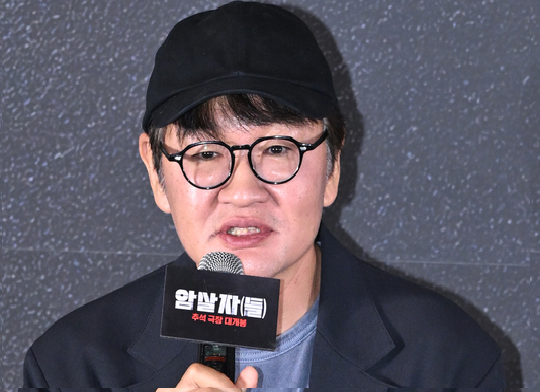
Heo Jin-ho, the director of "The Assassin," has pushed back against misconceptions surrounding the film.
Heo appeared on the YouTube channel Maeul Bulsyo on Wednesday to address claims that had been made about the work.
"The Assassin" is based on the Aug. 15, 1974, Liberation Day ceremony at which first lady Yuk Young-soo was killed. South Korean investigators concluded that Mun Se-gwang, a Japan-based ethnic Korean, acted alone at the direction of Chongryon and North Korea — but the case has long been clouded by unanswered questions, including the disappearance of the bullet that killed Yuk. After the Japanese government declassified documents in 2005, the allegations were taken up by nearly every major outlet, from MBC's "Ije-neun Malhal Su Itda," a documentary program, and SBS's "Geugeosi Algo Sipda," an investigative program, to conservative media. The film introduces no new allegations; it follows those already on the record and ends without identifying a mastermind.
Conservative circles, however, began claiming the film portrays former President Park Chung-hee as the man behind the assassination, sparking a historical-distortion controversy. Protesters showed up outside the home of lead actor Yoo Hae-jin, and 109 former People Power Party lawmakers sent a letter to the executive director of the Singapore International Film Festival urging the festival to rescind its selection of "The Assassin" as its opening film.
Heo said he was caught off guard when the film — which had drawn no objections at press screenings or public previews before its release — suddenly found itself at the center of a controversy. "Did those 109 PPP lawmakers watch the film before making their judgment? I doubt most of them did. How can you judge a film you haven't seen?" Heo said.
"The fact that people are saying these things without fact-checking the film makes me furious as the person who made it," Heo added.
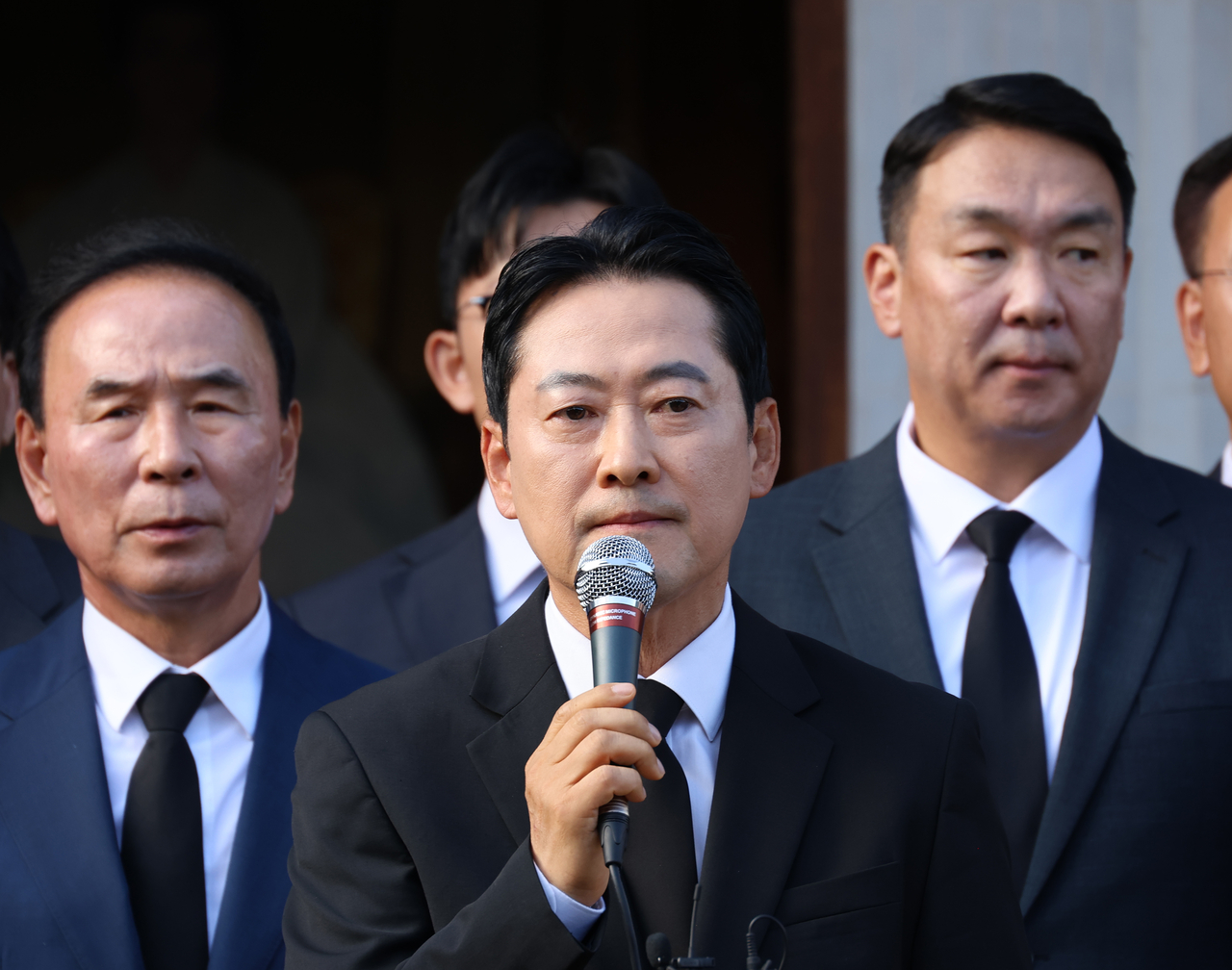
The "fact-checking" Heo referred to concerns specific claims PPP lawmakers made while criticizing the film.
PPP lawmaker Ju Jin-woo wrote on Facebook, citing a conversation that took place during former President Park Geun-hye's 2002 visit to North Korea, that "Kim Jong-il personally apologized for the incident in which first lady Yuk Young-soo was killed in the course of an attempt to assassinate President Park Chung-hee," calling it "a confession that it was North Korea's doing."
The claim spread as though it were fact, but Park Geun-hye's autobiography, "Despair Tempers Me, Hope Moves Me," makes clear that Kim Jong-il's apology was not for the Yuk Young-soo incident but for the 1968 Kim Shin-jo infiltration raid.
Heo also took issue with the claim that Chinese capital was invested in the film. Ju said in a YouTube broadcast that "there were reports that CLSA Capital, an affiliate of Chinese state-owned conglomerate Citic Group, was set to invest 40 billion won ($29.9 million) in Hive MEDIAcorp," citing past coverage, and argued that this showed the film was "directly tied to Chinese capital" and that "the possibility of China pulling strings behind the scenes under the guise of investment must be kept in mind." Hive MEDIAcorp, however, has said the claim of any Chinese capital involvement is entirely false.
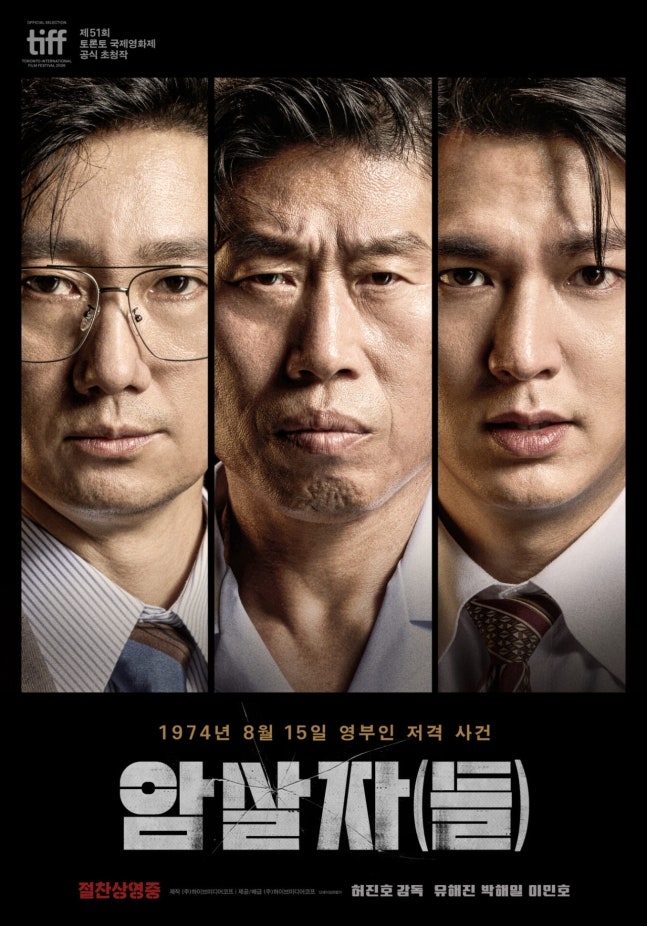
Heo also addressed the claim that the film plagiarized a North Korean production. "There's even the claim that it copied a North Korean film — I don't even want to talk about that," Heo said. The allegation that "The Assassin" was identical to the North Korean propaganda film "Nation and Destiny" originated with a North Korean defector YouTuber named Han Song-i and was amplified through lawmakers and media outlets. "Nation and Destiny" depicts the killing of Yuk Young-soo as a scheme Park Chung-hee orchestrated to sacrifice his own wife in order to maintain his dictatorship.
Heo's rebuttal is that "The Assassin" does not portray Park Chung-hee as the mastermind — unlike "Nation and Destiny." Park appears on screen for barely a minute, in scenes including the shooting, and is entirely absent from the investigation into who was behind the attack. The film's primary focus of suspicion is the Korean Central Intelligence Agency. Some have argued that because Park controlled the KCIA, the film implicitly points to Park — but Heo counters that the two cannot be equated. Heo notes that Kim Jae-gyu, the KCIA director who later assassinated Park, is a central figure, and that the film even includes a scene in which Park grows angry upon learning that the KCIA had planned the abduction of Kim Dae-jung without presidential approval — illustrating that the KCIA and Park operated with separate interests.
Heo also noted that the KCIA itself cannot be treated as a single unified body. The Kim Dae-jung abduction, Heo said, was carried out by the KCIA's Eighth Bureau, the overseas operations division, while the Sixth Bureau, which handled domestic investigations, reportedly said at the time that it had no part in the operation and moved to distance itself and prepare for the fallout — showing that even within the agency, different factions pursued different interests.
"When I made the film, I did not conclude that any particular person was behind it," Heo said. "I thought it made no sense that Park would plan something that could put himself in danger from the gunfire. And it seemed strange that the KCIA would plan it without even giving Mun Se-gwang a security pass to enter the venue."
paq@heraldcorp.com




