
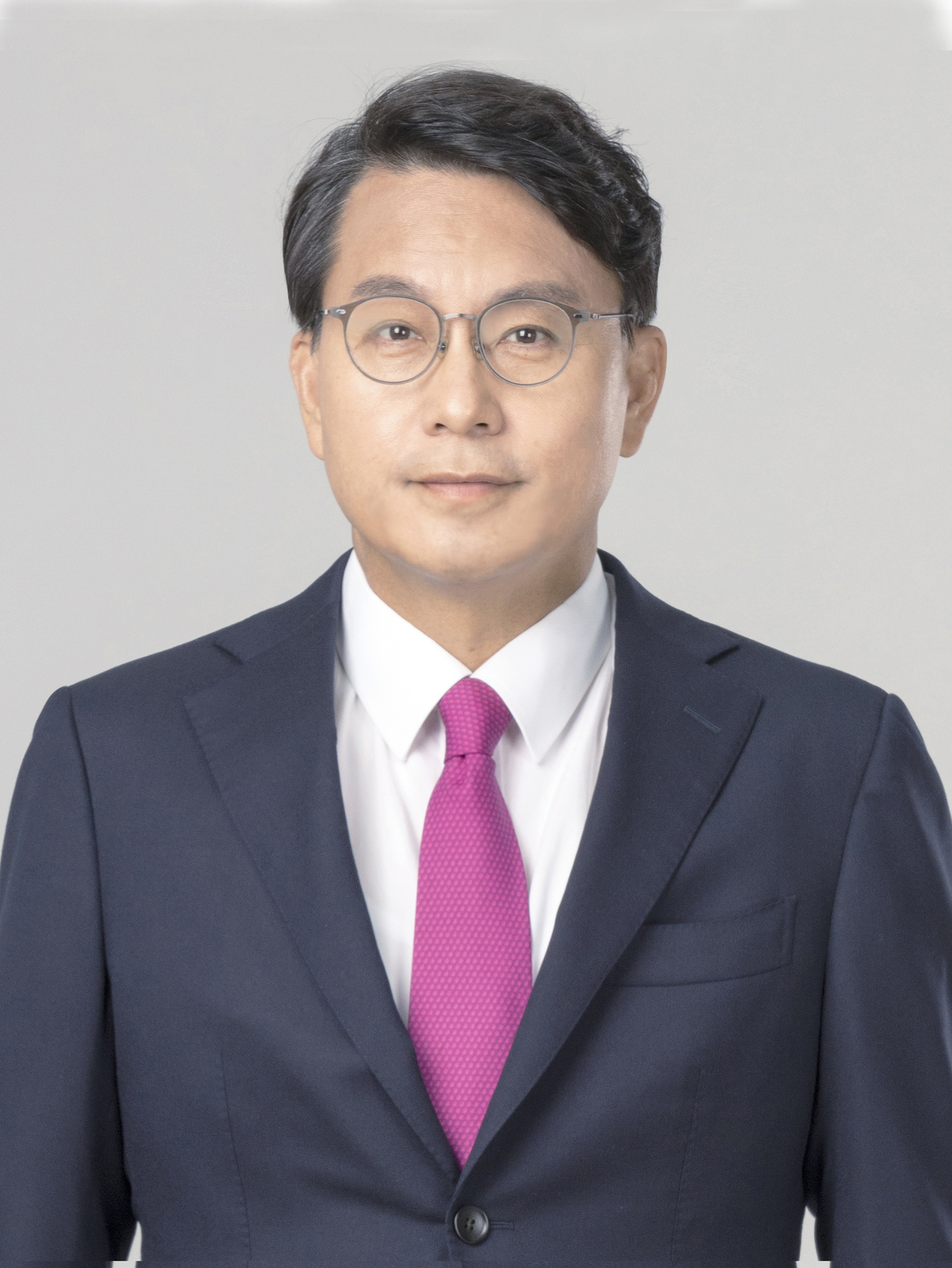
People Power Party lawmaker Yun Sang-hyun said Thursday that National Assembly Defense Committee Chairman Jin Seong-jun was denied a US visa while planning a visit to US Indo-Pacific Command, calling the development "a sign of unsettling turbulence in the South Korea-US alliance."
Yun wrote on Facebook that Jin had been sentenced to three years in prison for violating the National Security Act during military service. "Court documents from the military tribunal reportedly stated that Jin viewed US forces as an 'occupation army' and called for the withdrawal of USFK," Yun said. "Jin has explained that the case was recognized as part of the pro-democracy movement."
Yun also placed blame on the Democratic Party of Korea. "This background was already known, and concerns were raised from the moment of Jin's election as committee chair," Yun said. "Yet the Democratic Party pushed through the appointment without bipartisan agreement."
Yun added: "When recommending someone with this kind of record to a position that handles core national security issues and leads parliamentary diplomacy with allies, did the party fully consider the diplomatic and security repercussions?"
Yun said the US side reportedly requested Jin's past court documents, though the specific grounds for the visa denial had not been disclosed. "The United States must also respect the legitimate diplomatic activities of an allied nation's legislature," Yun said. "But this situation cannot be brushed aside with a simple expression of regret toward Washington."
Yun noted that lawmaker Jung Chung-rae had previously had a US visa delayed, forcing a change in the national audit schedule, and that now the defense committee chair had been denied a visa outright. "With disagreements between Seoul and Washington over the transfer of wartime operational control already in the air, the Security Consultative Meeting has now been pushed past the end of the year for the first time in 28 years," Yun said. "The reasons in each case may differ, but troubling signals are emerging across the board in the South Korea-US relationship."
Yun said that with North Korea's nuclear and missile threats growing more sophisticated and the security order in Northeast Asia in flux, the credibility of the South Korea-US alliance had never been more important. "Even a small crack in alliance management will fall squarely on South Korea's security," Yun said. "The government and the Democratic Party must stop simply expressing regret to Washington and instead take a hard look at what has gone wrong — from the selection of the defense committee chair to the transfer of wartime operational control to the broader framework of security cooperation. They must confront the turbulence hanging over the alliance and pursue responsible diplomacy to preserve its trust."
bigroot@heraldcorp.com




