
Government unveils first tobacco hazard management plan; manufacturers and importers to submit broader data
The government plans to expand tobacco hazardous ingredient testing to include smokeless tobacco and water pipes, while laying the regulatory groundwork to address menthol and fruit-flavored additives that attract consumers.
However, nicotine-free and nicotine-analog products were left out of the plan, leaving a regulatory gap.
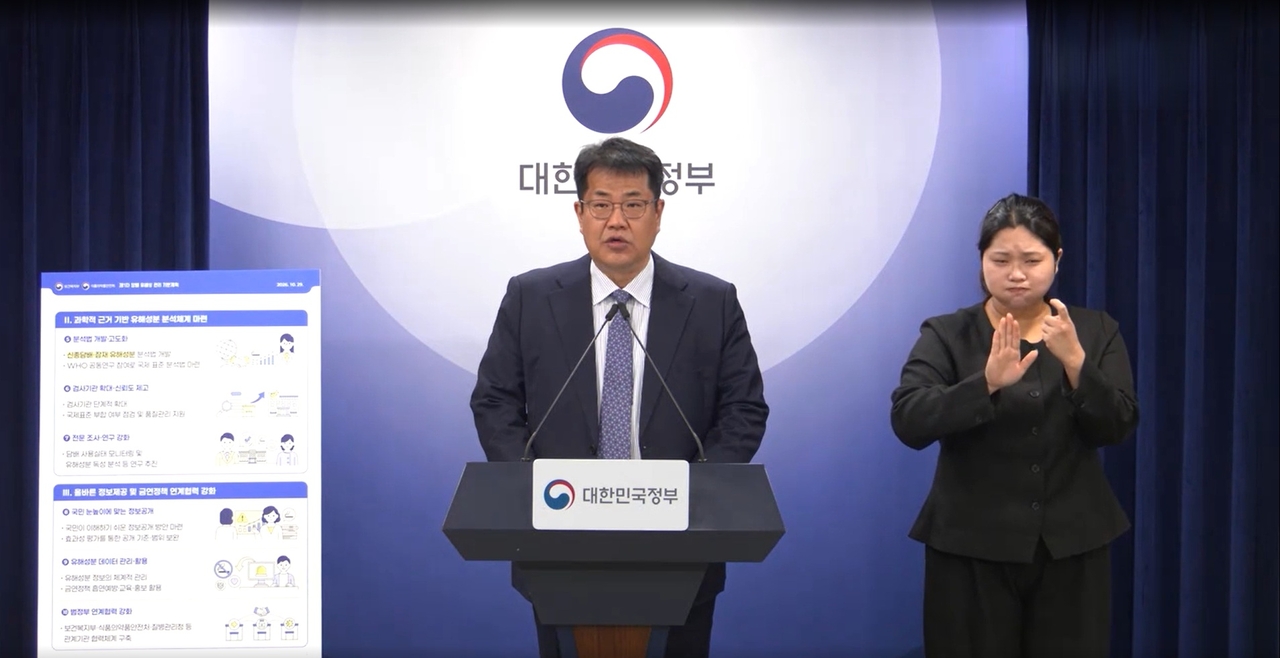
The Ministry of Health and Welfare and the Ministry of Food and Drug Safety convened the Tobacco Hazard Management Policy Committee at the Korea Press Center on Thursday to finalize and announce the first Basic Plan for Tobacco Hazard Management (2027–2031).
The plan is a five-year medium- to long-term framework required under the Act on the Management of Tobacco Hazards, which took effect in November last year, and marks the first time such a plan has been established.
Under the plan, the government will gradually expand the range of hazardous ingredients subject to testing and bring previously untested products — including smokeless tobacco, cigars and water-pipe tobacco — under the testing regime.
The number of ingredients tested in conventional cigarettes and heated tobacco products will increase from 44 to about 50 by 2030, while the number tested in liquid e-cigarettes will rise from 20 to about 30.
The government also plans to establish a periodic review mechanism for the list of hazardous ingredients so it can be updated quickly to reflect changing smoking patterns.
The scope of data that tobacco manufacturers and importers are required to submit will be broadened, and unannounced on-site inspections of submitted materials will be introduced to strengthen oversight and verification.
Currently, manufacturers and importers must submit test results and the names of ingredients used in their products. Going forward, they will also be required to disclose the intended purpose of each ingredient.
For additives such as menthol and fruit flavors used to make tobacco products more appealing to consumers, the government will collect and analyze additive information to build a regulatory basis for managing them.
The plan calls for subsequently reviewing measures to phase in bans on specific ingredients.
WHO guidelines under the Framework Convention on Tobacco Control also recommend banning additives used to enhance the taste of tobacco products.
"We are not yet designating specific additives as subject to regulation — we will first identify the ingredients and then assess whether they pose health risks," a Ministry of Health and Welfare official said. "The first basic plan sets the direction. We have a medium- to long-term plan to conduct ingredient analysis and ultimately bring ingredients that require regulation into the management framework."
The government will also develop new analytical methods and re-evaluate existing testing methods to progressively tighten regulation of hazardous ingredients and additives.
To keep pace with the growing variety of new tobacco product types, the number of testing agencies will be expanded in stages, and those agencies will be regularly checked to ensure they meet international standards.
Alongside this, the government will make tobacco hazard information more accessible to the public and evaluate the effectiveness of its disclosures to improve existing information-release standards.
Meanwhile, the first plan does not include specific regulatory measures based on hazard test results, nor does it address nicotine-free or nicotine-analog products.
"Since this is the first time we are drawing up a basic plan, it is difficult to present specific regulatory measures at this stage — our priority is to analyze the ingredients in domestic tobacco products," a Ministry of Health and Welfare official said. "Because the plan falls under the Tobacco Hazard Management Act, which covers tobacco as defined by that law, nicotine-free and nicotine-analog products were not included."
Lee Hyeong-hun, second vice minister of health and welfare, said the government would move quickly to establish a tobacco hazard ingredient management system capable of responding to a rapidly changing tobacco market and pursue strong regulatory policies. "Through this, we will protect the public from the harms of tobacco — including reducing adult tobacco product use rates to 29.0 percent for men and 6.0 percent for women by 2030, as set out in the sixth National Health Promotion Comprehensive Plan (HP2030) announced in March this year," Lee said.
According to the 2025 Korea National Health and Nutrition Examination Survey by the KDCA, adult tobacco product use rates stand at 36.3 percent for men and 8.6 percent for women.
thlee@heraldcorp.com




