
Construction sector job losses also widen; real wages rise for first time in 5 months
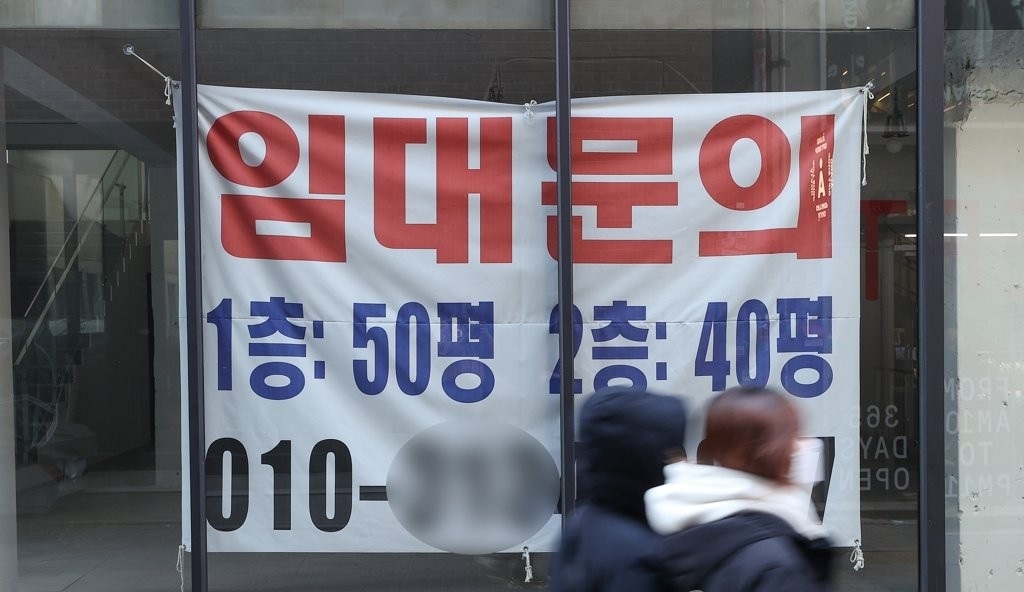
The number of workers in the wholesale and retail sector fell for the 30th consecutive month, dragged down by hypermarket closures and suspensions, while job losses in the construction industry deepened amid a prolonged slump in the sector, government data showed Thursday.
Overall employment at businesses nonetheless grew by more than 200,000 from a year earlier, and inflation-adjusted real wages reversed a four-month decline to post their first gain in five months.
The Ministry of Employment and Labor released the findings Thursday as part of its business labor force survey for September this year.
As of the end of last month, the total number of workers at establishments with at least one employee stood at 20.748 million, up 209,000, or 1.0 percent, from the same month a year ago.
The number of regular workers rose by 73,000, or 0.4 percent, from the end of September last year. Temporary and daily workers increased by 123,000, or 6.3 percent.
Growth was particularly strong in health care and social welfare services, which added 113,000 workers, followed by finance and insurance with 28,000 and professional, scientific and technology services with 27,000.
By contrast, wholesale and retail trade shed 23,000 workers, construction lost 14,000, and arts, sports and leisure-related services fell by 8,000.
The wholesale and retail sector has now recorded 30 consecutive months of decline through last month, a trend the ministry attributed to hypermarket closures and temporary shutdowns.
Construction employment fell by 14,000 last month compared with the same period a year ago, a sharp deterioration from August, when the sector posted a year-on-year decline of just 1,000.
Jeong Hyang-suk, head of the Labor Market Survey Division at the Ministry of Employment and Labor, said the widening drop appeared to reflect a slowdown in construction activity and the completion of large-scale projects.
New hires last month totaled 1.078 million, up 123,000, or 12.9 percent, from a year earlier, while separations reached 1.022 million, up 160,000, or 18.6 percent, pointing to heightened labor market mobility.
Among those who left jobs, voluntary separations rose by 34,000, or 13.4 percent, to 291,000, while involuntary separations climbed by 108,000, or 19.8 percent, to 653,000.
The number of job vacancies — positions actively being filled with a start date within one month — reached 160,000, up 8.6 percent from September last year.
Based on August figures, the average nominal wage per worker across all businesses was 4.09 million won ($3,060), up 3.9 percent, or 155,000 won, from a year earlier.
The average real wage per worker, adjusted for inflation, came to 3.41 million won, rising 0.8 percent, or 28,000 won, from a year ago. Real wages had declined for four consecutive months before turning positive for the first time in five months.
Among worker categories, regular workers earned an average of 4.38 million won in total wages, up 4.8 percent, or 201,000 won, while temporary and daily workers averaged 1.69 million won, up 1.3 percent, or 21,000 won.
Average working hours per worker across all businesses stood at 147.7 hours, down 2.8 hours, or 1.9 percent, from a year earlier.
thlee@heraldcorp.com




