ESS orders top 60 GWh in US
Production volume secured through 2028
LFP battery mass production begins in US
Two additional lines to launch in first half of next year
Solid-state battery samples supplied for humanoid robots
Robots and aerospace targeted for 10%-plus revenue share by 2028
Samsung SDI has secured more than 60 gigawatt-hours of ESS battery orders this year, locking in enough work to run its US and Ulsan production lines at full capacity through 2028. The company is also accelerating development of solid-state batteries for humanoid robots — a next-generation growth driver — with commercialization targeted for the second half of next year after beginning performance evaluations with customers.
Samsung SDI disclosed the plans Thursday during a conference call for its third-quarter earnings results.
Cho Yong-hwi, executive vice president and head of Samsung SDI's ESS business team, said the company had secured more than 60 GWh in ESS orders through October, centered on the US utility-scale market. "Based on current order volume, our StarPlus Energy facility in the US and our Ulsan line have enough work to run at full capacity through 2028," Cho said, adding that the company is now focused on securing production volume for 2029 and beyond.
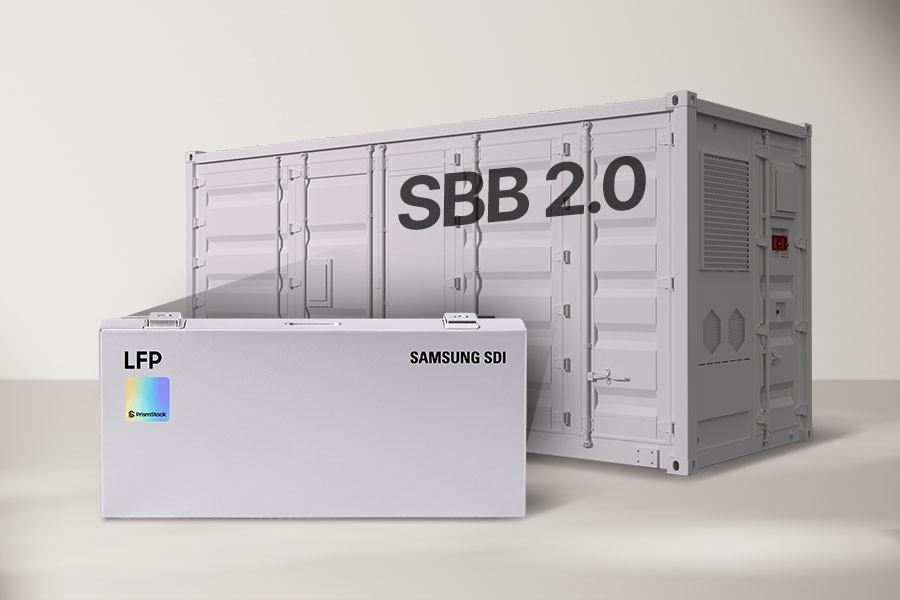
To keep pace with growing orders, Samsung SDI is expanding its US manufacturing capacity. Earlier this month, the company began mass-producing prismatic lithium iron phosphate batteries for ESS at its StarPlus Energy factory in Indiana. Battery cells began shipping in mid-October, and completed Samsung Battery Box units are scheduled for delivery to customers starting in December, following module and battery box assembly.
Cho said the company is converting and bringing online two additional lines to expand LFP production capacity next year, with a phased launch planned from the first half of next year. "Orders for the new lines have already been finalized, so we will prepare for mass production in line with the scheduled delivery timetable," Cho said.
Samsung SDI also plans to use its Synergy Cells factory in the US as an ESS battery production hub. The facility, originally designed for electric vehicle battery manufacturing, is being converted to produce high-capacity LFP batteries for ESS applications.
Cho said the company is working through an optimized design process to adapt the existing EV battery factory for ESS mass production, projecting a production launch between the second half of 2028 and early 2029. Production lines will then be added in stages to expand supply volume.
Samsung SDI is also preparing for the gradual phase-down of the US Advanced Manufacturing Production Credit beginning in 2030. The company is negotiating supply prices that reflect the reduced subsidy with key customers, while planning to cut manufacturing costs through improvements in battery energy density and productivity.
The company plans to commercialize solid-state batteries for humanoid robots in the second half of next year. Cho Han-jae, executive vice president and head of Samsung SDI's strategy and marketing division, said the company began supplying solid-state battery cell and pack samples for humanoid applications in September and that customers are currently conducting performance evaluations. "We are repeatedly refining and verifying performance to meet customer requirements, and are at the stage of finalizing product specifications for mass production next year," Cho Han-jae said.
Samsung SDI is simultaneously building a supply chain for key materials including cathode materials and solid electrolytes. The company is concentrating on related technology development, anticipating that battery safety will become an increasingly important competitive factor as the humanoid market expands from industrial to household applications.
Beyond humanoid robots, the company has also secured new customers in the aerospace sector. Cho Han-jae said supply volume from new businesses including humanoid robots and aerospace is expected to grow gradually from next year, forecasting that by 2028 these segments will account for more than 10 percent of revenue within the cylindrical battery business and make a meaningful contribution to overall earnings.
Samsung SDI is also cultivating the battery backup unit market, driven by the proliferation of AI data centers, as a new growth pillar. The company expects the BBU market to grow at an average annual rate of about 30 percent through 2030, noting that rising power consumption in servers is increasing the importance of high-capacity, high-output batteries.
In particular, Samsung SDI sees growing adoption of a "sidecar" architecture, in which BBUs previously installed inside server racks are moved to separate racks to increase capacity. In response, the company plans to broaden its product lineup with high-output cylindrical batteries and LFP cells, and to expand supply to global cloud service providers.
In the EV battery market, Samsung SDI expects regional demand divergence to persist. Europe is seeing a recovery in small and affordable EV sales, supported by high fuel prices and government subsidies in major markets, while the US is expected to see continued demand softness for now as automakers adjust their electrification strategies.
Samsung SDI said it plans to sustain earnings improvement in the fourth quarter, led by its ESS and small battery businesses.
Oh Jae-gyun, executive vice president overseeing management support at Samsung SDI, said fourth-quarter earnings are expected to maintain a company-wide profit trend on the back of steady growth in ESS and small batteries. "ESS revenue from utility-scale applications will increase significantly with the launch of the first LFP line at SPE in the US and expanded volume from existing NCA lines, and supply of UPS units to data centers will also grow," Oh said.
Proceeds from the sale of Samsung Display shares will also be used to fund investment in expanding production facilities.
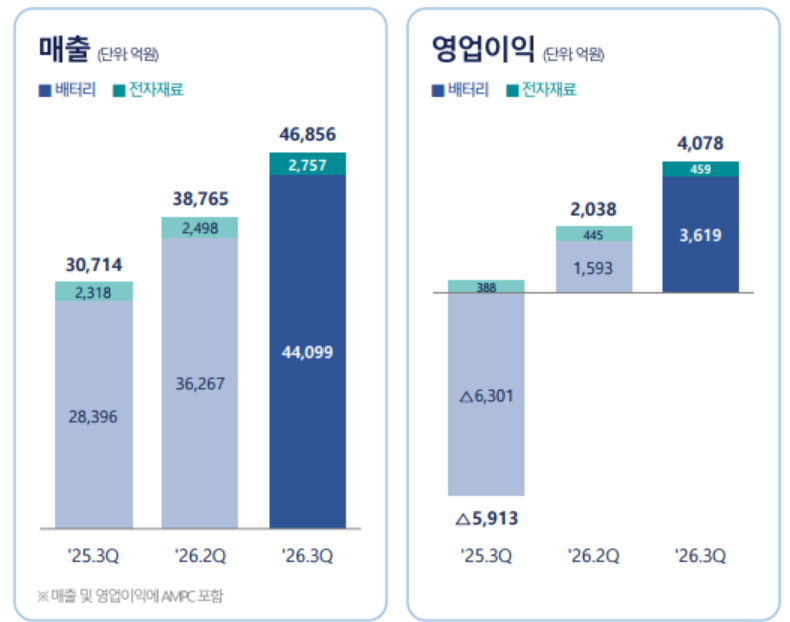
Samsung SDI posted sales of 4.69 trillion won ($3.51 billion) and operating profit of 407.8 billion won in the third quarter of this year. Sales rose 52.6 percent from a year earlier, and the company swung to a profit from an operating loss of 591.3 billion won in the same period last year. Expanded sales of batteries for ESS and AI data centers drove the earnings turnaround despite sluggish EV battery demand.
kwater@heraldcorp.com