
- Korea Research Institute of Bioscience and Biotechnology compares toxicity of two common plastics
- Both found to carry strong inflammation-inducing potential
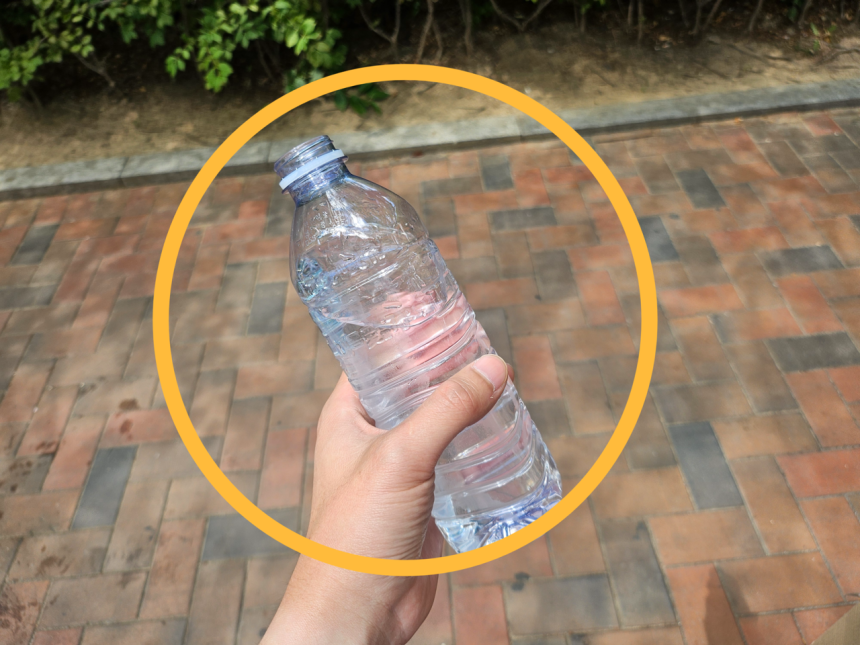
South Korean researchers have identified how nanoplastics shed from water bottles, disposable cups and plastic packaging penetrate deep into the lungs through the respiratory tract and trigger inflammation — with some nanoplastics provoking a stronger inflammatory response than diesel exhaust particles.
The Korea Research Institute of Bioscience and Biotechnology announced Thursday that a research team led by Dr. Jeong Jin-young of its Environmental Disease Research Center, working jointly with a team led by Professor Jo Wan-seop of Dong-A University, had identified the pulmonary toxicity and inflammation mechanisms of two widely used plastic materials.
The materials the research team analyzed were polyethylene (PE) and polypropylene (PP) — plastics found in a broad range of everyday products, including water bottle caps, food packaging and disposable containers.
Over time, these plastics wear down and break apart into invisible microscopic particles. Nanoplastics, which are particularly small, can become airborne and travel through the respiratory tract into the deepest recesses of the lungs.
Previous research into the health hazards of nanoplastics had focused largely on polystyrene (PS), because experimental-grade PS particles are relatively easy to obtain. The effects of PE and PP — plastics far more prevalent in daily life — on the lungs, and the specific processes by which they cause inflammation, had not been sufficiently studied.
The research team fabricated PE and PP nanoparticles and then compared their pulmonary toxicity against soot particles generated by diesel combustion.
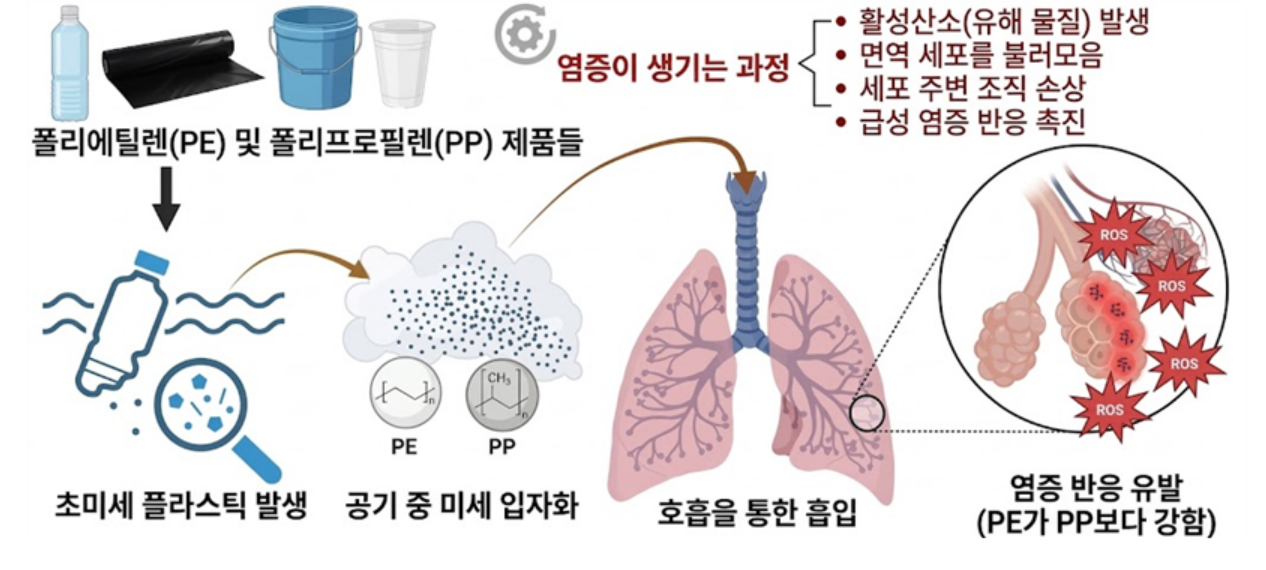
Experiments showed that both types of nanoplastics triggered acute inflammatory responses when they entered the lungs.
When compared by equal weight, PE nanoplastics induced a stronger inflammatory response than diesel soot particles. When compared by surface area, both PE and PP showed far greater inflammation-inducing potential than diesel exhaust.
The research team also identified the key mechanism by which nanoplastics cause lung inflammation.
When nanoplastics penetrate the alveoli, alveolar macrophages — immune cells that clear foreign harmful substances — respond to the intrusion. In the process, excessive amounts of reactive oxygen species (ROS), which can damage cells, are generated.
The ROS then stimulate surrounding immune cells and amplify the inflammatory response, causing damage to lung tissue. Gene expression analysis also revealed changes in the activity of genes involved in immune regulation and inflammatory responses.

The study demonstrates that assessing the hazards of nanoplastics requires consideration not only of particle mass but also of surface area and surface reactivity.
Current regulatory standards for air pollutants such as fine dust are set primarily around mass concentration. However, even at the same weight, the biological impact of particles can vary significantly depending on their size and surface area.
The findings reflect acute lung inflammation responses observed under experimental conditions and do not mean that everyday exposure to nanoplastics causes the same degree of lung damage in humans. Further research into exposure levels and long-term effects will be needed before conclusions about actual human health risks can be drawn.
"This research has demonstrated that when nanoparticles from the most widely consumed plastics in daily life enter the lungs through breathing, they induce pulmonary inflammation primarily through reactive oxygen species generation and surface reactivity," Jeong said. "We hope these findings will serve as a useful scientific basis for establishing more comprehensive environmental and public health standards that take into account the specific characteristics of nanoparticles."
The findings were published in the online edition of the Journal of Hazardous Materials Advances on Sept. 30.
nbgkoo@heraldcorp.com




