
Government to require all workplaces to set aside retirement benefits externally by 2030
Business lobby backs retirement income goal but calls for phased rollout and support
Fund-type pension raises investment loss concerns
Caution urged over National Pension Service's potential entry
South Korea's main business lobby said Thursday it supports the government's goal of securing retirement income for workers but called for a carefully phased rollout of mandatory external retirement benefit reserves, citing the financial burden on small and micro enterprises. On the introduction of fund-type retirement pensions, the lobby said adequate safeguards against investment losses are needed and that the National Pension Service's potential entry into the market warrants careful consideration.
The Korea Enterprises Federation issued a statement Thursday in response to the Ministry of Employment and Labor's announcement of a plan to strengthen the retirement pension system.
The federation welcomed the government's policy direction of securing workers' entitlement to retirement benefits and expanding their investment choices. However, it said the financial conditions of small and micro enterprises must be fully taken into account as the mandatory external reserve requirement is rolled out across all workplaces.
"Mandating external reserves for retirement benefits is in effect a requirement for all workplaces to adopt a retirement pension scheme," the federation said. "The financial conditions and administrative burden on small and micro businesses must be fully considered, and a more carefully calibrated phased implementation with policy support is needed."
External retirement benefit reserves require companies to set aside funds for employee retirement payments with outside financial institutions rather than holding them internally. The system is designed to reduce the risk of workers not receiving their retirement benefits when a company runs into financial difficulty or shuts down.
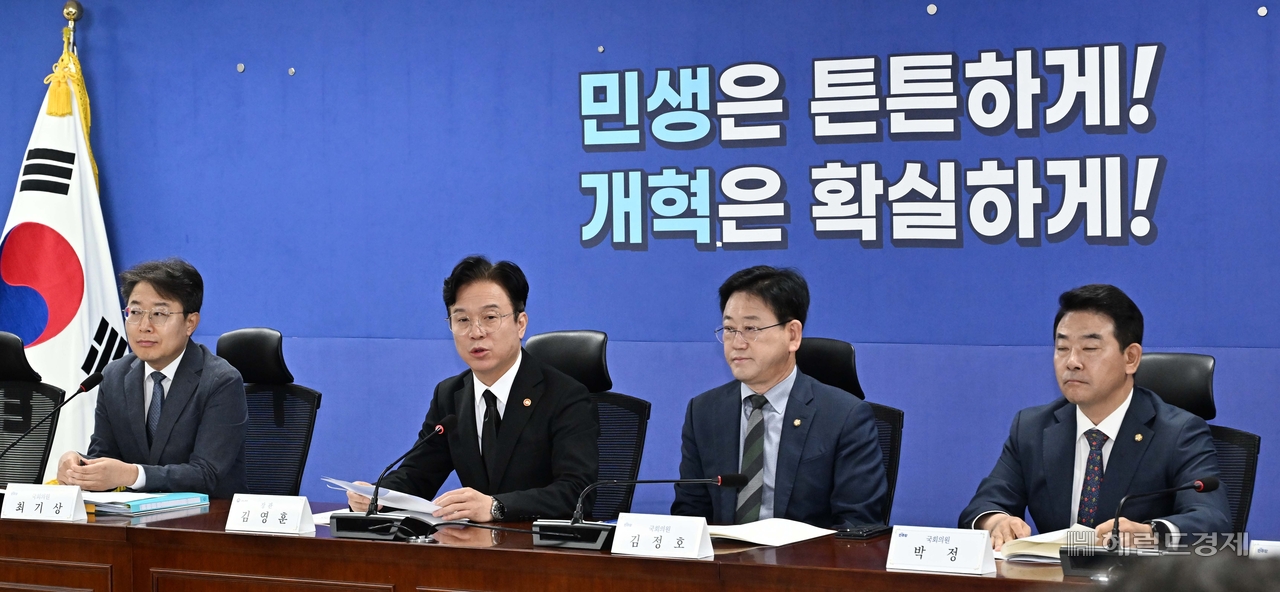
The government announced Thursday, following consultations with the ruling party, that it will make external retirement benefit reserves mandatory starting in 2028 for workplaces with 100 or more employees. The requirement will be extended to workplaces with 10 to 99 employees in 2029, and to those with fewer than 10 employees from 2030.
The government also outlined support measures to ease the burden on smaller businesses. Workplaces with fewer than 30 employees that adopt a retirement pension scheme ahead of the mandatory deadline will receive subsidies covering 10 percent of employer contributions for workers below a certain income threshold. Workplaces with fewer than 50 employees will also be eligible for a 2-percentage-point reduction in management loan interest rates when newly introducing a retirement pension. A total of 12.2 billion won ($9.13 million) has been allocated in next year's budget for these measures.
The business community also urged a cautious approach to the introduction of fund-type retirement pensions.
Under the fund-type model, retirement pension reserves from multiple workplaces are pooled and managed by a professional trustee. Unlike the existing system, in which individual workers or companies contract directly with financial institutions, the model aims to improve returns by leveraging the expertise of professional asset managers.
"Unlike the national pension, which is guaranteed by the state, fund-type retirement pensions place all investment gains and losses entirely on the subscriber, making adequate preparation for investment risk essential," the Korea Enterprises Federation said.
The federation added that rather than raising excessive expectations about higher returns, the focus should be on putting in place sufficient institutional safeguards for investment risk management and subscriber protection.
The government said it plans to apply a strict licensing process to fund-type retirement pension trustees and impose legal obligations requiring them to prioritize subscribers' interests. It is also pursuing measures to hold trustees liable for damages when losses arise from breaches of duty during fund management.
The business community also raised concerns about the possibility of the National Pension Service entering the fund-type retirement pension market.
The federation noted that the Korea Workers' Compensation and Welfare Service already operates a fund-type retirement pension scheme for small and medium-sized enterprises called "Pureunssiaat." It said the National Pension Service's entry into the same market "risks blurring the boundary between public and private pensions and could undermine fair competition and sound development in the retirement pension market, and therefore warrants careful review."
Meanwhile, the government plans to prepare an amendment to the Act on the Guarantee of Workers' Retirement Benefits reflecting the new measures next month and aims to pass it through the National Assembly before the end of the year.
kwater@heraldcorp.com




